Where to Buy Real Cavansite and Avoid Dyed or Glued Fakes
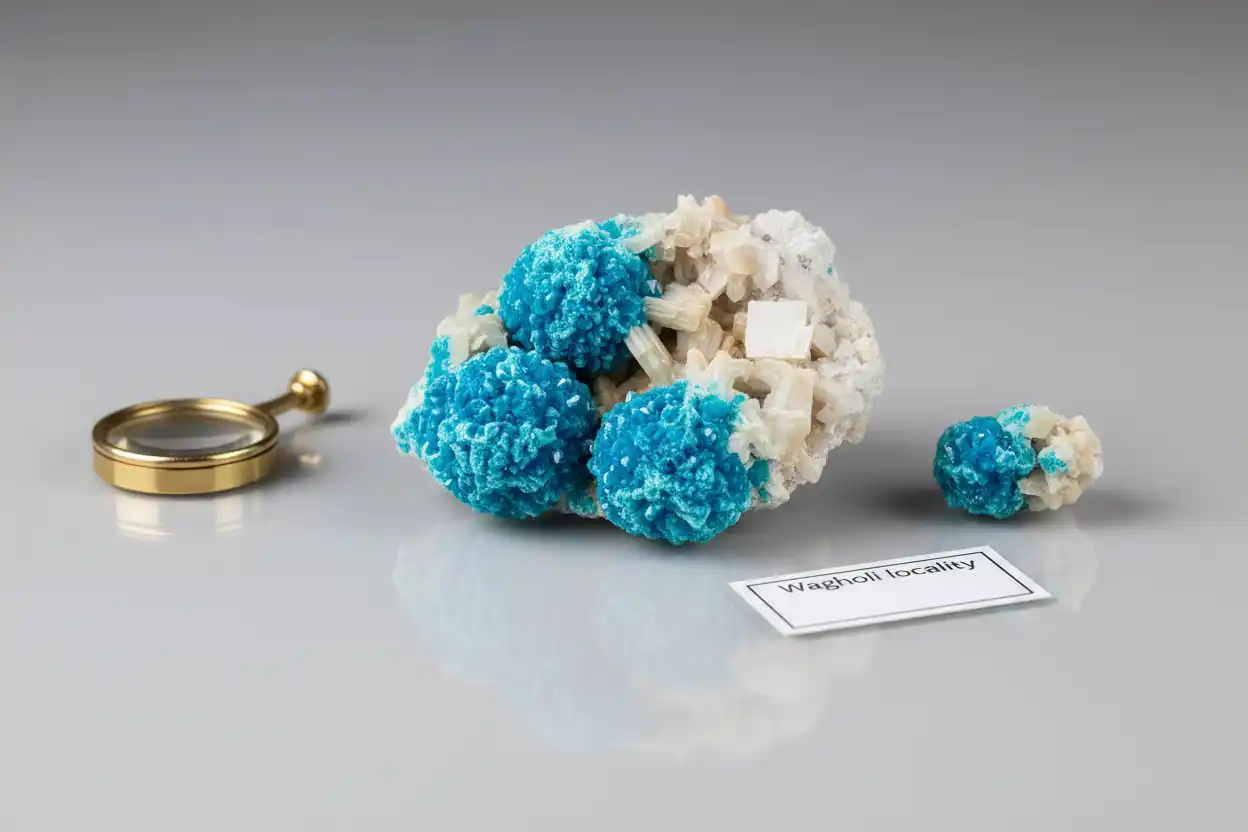
Real cavansite is primarily a collector mineral rather than a conventional jewelry stone. It usually appears as small brilliant blue to greenish-blue crystal rosettes on pale zeolite minerals or basaltic matrix. The color contrast can be extraordinary, which also makes the material vulnerable to dyed substitutes, glued assemblies and unsupported locality claims.
Cavansite is a hydrated calcium vanadium silicate. It is orthorhombic, brittle and relatively soft, with Mohs hardness around 3 to 4. Individual crystals are commonly very small, while rounded sprays and rosettes create the visible blue clusters sought by collectors.
The cavansite meaning and properties guide covers the mineral’s identity, formation and traditional symbolism. This page focuses on specimen dealers, natural crystal relationships, Cavansite versus Pentagonite, reconstruction, condition, provenance and safe ownership.
Buy Cavansite as a Mineral Specimen
Most genuine cavansite is sold attached to matrix. Loose crystals, faceted stones, polished towers and bead strands are not the normal market forms.
The best purchase is therefore evaluated as an entire specimen:
| Specimen element | What to examine |
|---|---|
| Blue cavansite | Crystal habit, luster, color, completeness and attachment |
| Associated minerals | Stilbite, heulandite, calcite, apophyllite or other documented matrix minerals |
| Host rock | Natural basaltic or volcanic matrix rather than a fabricated base |
| Condition | Broken sprays, crushed crystals, loose clusters and repaired areas |
| Locality | Label quality and chain of ownership |
| Restoration | Glue, filler, stabilization and reconstructed presentation |
| Packaging | Immobilization without pressure on the blue rosettes |
A large white matrix with one tiny blue spray may still be genuine, but its value should reflect the amount, placement and quality of cavansite.
Where to Buy Genuine Cavansite
Specialist mineral dealers
A dealer who regularly handles fine minerals is the strongest source. The listing should name cavansite, associated minerals, locality, dimensions and condition.
Request a full specimen label. “India” is not enough for a premium piece when the seller claims a specific Wagholi quarry or old collection.
A reliable dealer should also state whether any blue cluster was reattached, whether matrix was repaired and whether the specimen has a display base.
Mineral shows
Shows provide the best opportunity to examine the contact between cavansite and matrix.
Use a loupe to see whether the blue crystals emerge naturally from the surrounding stilbite, heulandite or volcanic rock. A cavansite cluster that sits in a clean round socket with a glossy halo deserves closer investigation.
Look at the underside. Reconstructed specimens often appear convincing from the display face but reveal filler, saw cuts or adhesive from behind.
Established online mineral shops
Online listings should show the exact specimen from the front, back, sides and base. A rotating video is particularly helpful because blue rosettes can hide damage in still photographs.
The online gemstone buying guide explains seller verification and payment protection, even though cavansite belongs more closely to the specimen market.
Request close-ups of every significant blue cluster. The seller should also state whether the specimen is mounted permanently or placed on a removable display stand.
Older collections and auctions
An older collection label can add important provenance. However, age claims need evidence.
A specimen sold as “old Wagholi stock” should include prior dealer labels, collection numbers, dated invoices or auction records. A newly printed card that merely says “old find” has limited evidentiary value.
Auction photographs should be detailed enough to distinguish historic labels from later replacements.
What Natural Cavansite Looks Like
Cavansite commonly forms tiny elongated crystals and rounded to spiky rosettes. The visible clusters may resemble blue balls, sprays or flower-like aggregates.
Color ranges from brilliant sky blue to greenish blue. Under some lighting, the green component becomes more noticeable, while digital photography may push the color toward pure electric blue.
Luster is typically vitreous. Fresh crystal faces can sparkle strongly, but the effect should come from individual crystals rather than glitter mixed into resin.
Natural rosettes are rarely perfectly spherical. Their outlines may be incomplete where they contact matrix, neighboring crystals or associated minerals.
Under magnification, crystals should show distinct edges and natural intersections. Dyed fibers, painted grains and rounded resin textures look different from real crystal faces.
Cavansite and the Zeolite Association
Cavansite often occurs with minerals commonly collected in the zeolite market. The zeolite guide provides group-level context, although cavansite itself is not simply another zeolite species.
Common associates can include stilbite, heulandite, calcite, apophyllite and other cavity minerals.
The apophyllite guide helps identify the glassy, commonly colorless or pale crystals that may share the matrix. The completed guide to buying real apophyllite addresses repairs and reconstructed zeolite specimens in that separate market.
Likewise, the planned guide to buying genuine stilbite will focus on fan-shaped stilbite and its own treatment issues.
A white matrix is not automatically stilbite. Dealers should identify associated species cautiously when no laboratory work has been performed.
Cavansite Versus Pentagonite
Pentagonite has the same chemical composition as cavansite but a different crystal structure. The two are dimorphs.
Cavansite more commonly forms compact rosettes and rounded sprays. Pentagonite often forms sharper, more open and elongated star-like arrangements.
However, appearance is not a perfect test. Some cavansite aggregates can appear spiky, while broken or crowded Pentagonite can look compact.
Color can also overlap. Cavansite often has a subtle greenish cast compared with purer blue Pentagonite, but photography and lighting can hide that distinction.
For an expensive specimen sold specifically as Pentagonite, request Raman spectroscopy, X-ray diffraction or expert mineralogical documentation. A seller should not charge a Pentagonite premium based only on one photograph.
Cavansite Versus Dyed Gyrolite or Other Rounded Minerals
Pale rounded mineral aggregates can be dyed blue to imitate cavansite. Gyrolite, okenite-like material, gypsum and other soft aggregates may absorb pigment or coating.
A dyed ball may show color concentrated at the exterior, in cracks or between fibers. Blue residue can also appear on the matrix immediately around the aggregate.
Do not rub the specimen aggressively or apply solvents. Those actions can damage natural crystals, coatings, labels and matrix.
Instead, use magnification, request untreated comparison material and rely on the return policy when construction remains unclear.
Glued Cavansite Clusters
A genuine cavansite cluster can be removed from one specimen and attached to a more attractive matrix.
The blue mineral remains real, yet the specimen is reconstructed because the current association did not form naturally.
Look for a glossy meniscus around the base, a cluster sitting above the matrix rather than entering it, mismatched broken surfaces and filler that bridges the contact.
Some legitimate repairs reattach a cluster that broke from its original position. That restoration can be acceptable when fully disclosed.
The difference lies in whether the cluster was returned to its documented original contact or assembled onto an unrelated matrix.
Artificially Enhanced Matrix
A seller may trim matrix to improve presentation, glue broken matrix blocks together or fill cavities beneath a blue rosette.
Trimming is routine in mineral preparation and is not automatically deceptive. However, the seller should disclose major reconstruction, artificial bases and extensive filler.
A specimen can also be mounted on acrylic, wood or mineral putty for display. Permanent mounting changes how the base can be inspected and should appear in the description.
The gemstone treatment and enhancement guide offers useful language for distinguishing stabilization, repair and assembly.
Cavansite Versus Blue Resin
Resin can be molded or textured to imitate a bright blue mineral aggregate. It may contain bubbles, rounded details and a smooth coating-like luster.
Natural cavansite should resolve into individual crystals under magnification. Resin often lacks sharp crystal junctions and may bridge directly across the matrix.
A manufactured product may also feel lighter or warmer, although those impressions are unreliable when only a tiny amount of blue material sits on a heavy rock.
The fake-crystal buyer’s guide explains why several observations should be combined.
How to Evaluate a Cavansite Specimen
Crystal development
The strongest specimens show recognizable individual crystals or complete rosettes. A dense blue crust may be genuine but offers less visible crystal structure.
Color
Rich blue color is desirable, yet photographs should not be excessively saturated. Request a neutral-light image next to white paper or a gray reference.
Luster
Fresh crystal faces should reflect light cleanly. Dullness can result from natural surface alteration, dust, handling damage or coating.
Condition
Examine every rosette for crushed points and missing sections. Fine cavansite crystals can break without leaving an obvious gap in a front photograph.
Placement
A well-positioned cluster stands out against the matrix and can be viewed without turning the specimen to an extreme angle.
Matrix
Stilbite, heulandite and other pale minerals can increase visual contrast. Matrix should be stable enough to support the cavansite during shipping and display.
Repairs
Ask about both crystal and matrix repair. A specimen can have an untouched blue rosette but a heavily reconstructed base.
Locality and Provenance
Cavansite was first described from the Owyhee Dam area of Oregon. Additional Oregon occurrences are known, but the most famous collector specimens have come from quarries around Wagholi near Pune, historically written Poona, in Maharashtra, India.
The matrix and associated minerals may support an Indian Deccan Trap origin, but appearance alone cannot identify a particular quarry.
A precise locality claim should come from old labels, dealer records or a trustworthy source chain.
Development and quarry access can change over time, so sellers sometimes use scarcity language. Treat claims about closed workings, final pockets and permanently exhausted supply cautiously unless documentation is provided.
Price and Value
Cavansite is priced as a mineral specimen rather than by carat.
Value depends on the number and size of blue clusters, crystal sharpness, luster, color, condition, matrix contrast, specimen balance, locality, provenance and restoration.
A small specimen with one complete well-positioned rosette can be more desirable than a large matrix containing several damaged blue spots.
Pentagonite should not be priced as cavansite or vice versa when the distinction affects value. Likewise, a reconstructed specimen should cost less than a comparable natural association unless its restoration has unusual historical importance.
The gemstone pricing guide explains why condition, scarcity, documentation and market demand interact even when weight is not the primary measure.
Seller Questions Before Purchase
Ask the seller to identify the blue mineral and every visible associated species.
Request the exact locality and the source of that information. Determine whether any rosette, crystal, matrix block or base has been glued, filled, stabilized or reconstructed.
Ask whether photographs show the exact specimen and whether color saturation has been adjusted. Request close-ups of blue-to-matrix contacts.
Confirm whether any crystals are loose and how the specimen will be packed. Finally, obtain a return policy that allows magnified inspection.
Professional Identification
Raman spectroscopy and X-ray diffraction can identify cavansite and separate it from Pentagonite or unrelated blue minerals.
Testing should target the blue crystals rather than the white matrix. A Raman result from stilbite does not identify the attached rosette.
Compositional analysis can detect calcium, vanadium and silicon, although chemistry alone may not separate cavansite from its dimorph because they share a formula.
The crystal identification guide explains why habit, associations and instrumental analysis should support one another.
Shipping and Returns
Cavansite should be immobilized by its matrix without pressure on the blue rosettes.
A professional seller may use a rigid specimen box, mineral tack beneath a stable base and a second cushioned outer box. Packing fibers should not touch delicate crystal sprays.
Photograph the package while opening it. Small broken blue crystals can become lost in packing material, making it difficult to document transit damage later.
The planned raw-versus-polished crystal guide is relevant because cavansite should normally remain in its natural specimen form rather than undergo polishing.
Ethical and Responsible Buying
Ask whether the specimen was collected legally and whether the locality information is credible.
The ethical crystal sourcing guide provides practical questions about legal extraction, local trade and traceability.
Avoid specimens represented as newly removed from protected parks or restricted sites. The Owyhee type locality name should not be used casually to imply legal contemporary collecting.
Cleaning and Storage
Do not soak cavansite. The blue crystals, associated zeolites, matrix and any adhesives may respond differently to moisture.
Start with a hand air blower or extremely soft dry brush used without pressure. Never scrub between rosettes.
The gemstone hardness chart shows why a Mohs 3–4 mineral scratches easily. The toughness-versus-hardness guide and cleavage guide explain why brittle crystals can break even without visible scratching.
Avoid ultrasonic cleaning because vibration can detach rosettes, matrix grains and old repairs. The planned ultrasonic-cleaner guide covers those risks.
Before exposing any mixed specimen to water, consult the planned crystal water-safety guide. For cavansite, dry conservation is usually the safer default.
Frequently Asked Questions
1. Is cavansite a real mineral species?
Yes. Cavansite is an approved hydrated calcium vanadium silicate mineral.
2. Where does most collector cavansite come from?
The most famous modern specimens have come from quarries around Wagholi near Pune, Maharashtra, India. The type locality is near Owyhee Dam in Oregon.
3. Is Cavansite the same as Pentagonite?
No. They have the same chemical formula but different crystal structures, making them dimorphs.
4. How can I distinguish Cavansite from Pentagonite?
Cavansite often forms rounded rosettes, while Pentagonite commonly has sharper open sprays. Appearance overlaps, so valuable specimens may require Raman or X-ray diffraction.
5. Is every blue ball on zeolite matrix Cavansite?
No. Pale rounded minerals can be dyed, coated or mislabeled. The blue aggregate should resolve into credible crystals and have a natural matrix contact.
6. Can genuine Cavansite be glued?
Yes. A real cluster may be repaired or attached to matrix. The specimen remains altered and the restoration must be disclosed.
7. Is Cavansite suitable for jewelry?
Generally, no. It is soft, brittle and normally occurs as tiny crystals on fragile matrix.
8. Does intense electric-blue color prove authenticity?
No. Digital saturation, pigment and resin can create intense color. Natural crystal structure and provenance matter more.
9. Should Cavansite have white matrix?
Many Indian specimens occur with pale stilbite or heulandite, but matrix color alone does not prove authenticity or locality.
10. Do I need laboratory testing?
Testing is usually unnecessary for an inexpensive well-documented specimen. It becomes worthwhile for costly pieces, Pentagonite claims or uncertain blue aggregates.
11. How should Cavansite be shipped?
The matrix should be immobilized inside a rigid specimen box without any packing material touching the blue crystals.
12. What is the biggest warning sign in a listing?
Be cautious when a perfect blue ball sits in a clean socket on white matrix and the seller refuses to show the contact, underside, locality label or repair history.
Buy the Natural Relationship Between Crystal and Matrix
Cavansite’s appeal comes from more than blue color. The way tiny crystals grow against pale associated minerals records a specific geological environment and gives each specimen its character.
The C crystal directory, C gemstone directory and visual gemstone guide provide broader collector context. Choose the specimen whose rosettes, matrix, repairs and locality remain coherent under close inspection.
Safety note: Cavansite contains vanadium and silica. Intact specimens can be handled normally with sensible hygiene, but they should not be ingested, licked, placed in drinking water or dry-cut, drilled, sanded or ground. Avoid creating or inhaling mineral dust.