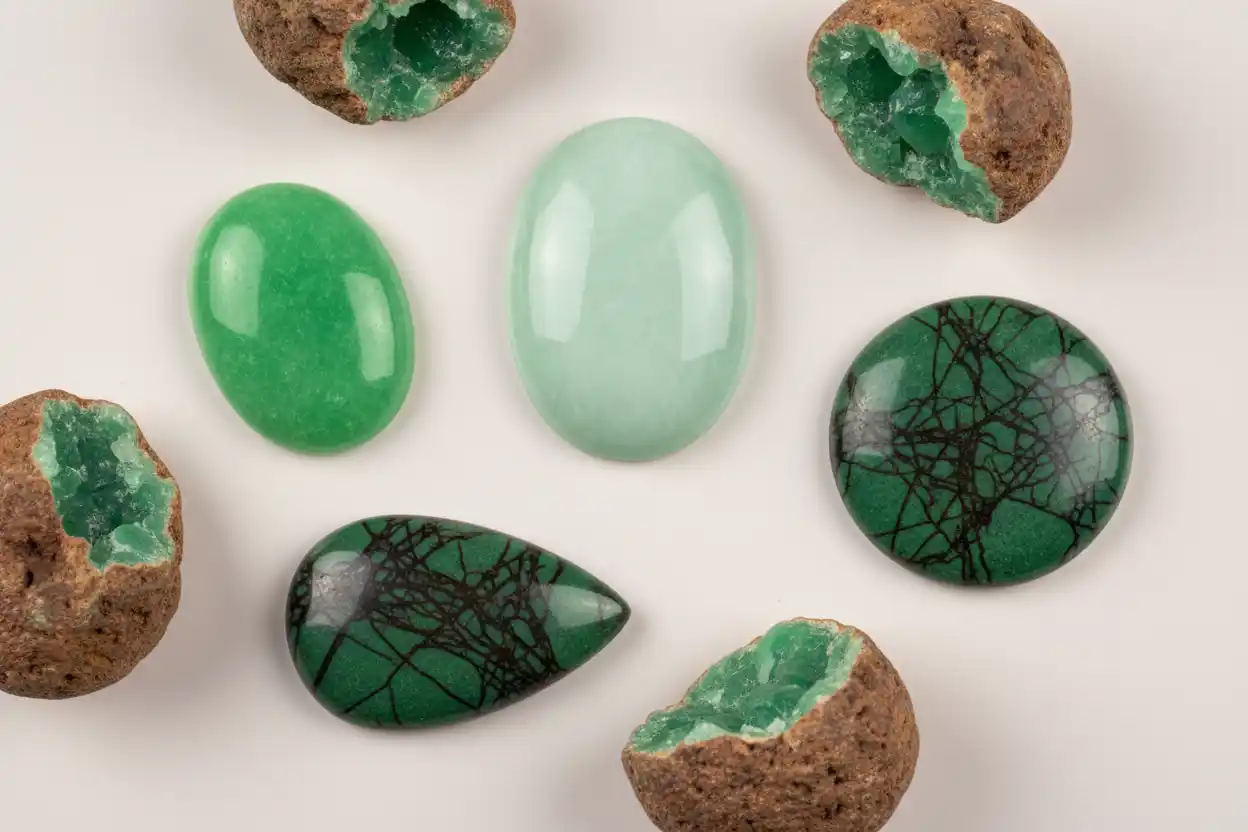
Variscite Meaning, Properties, Value and Identification
Variscite is a hydrated aluminum phosphate valued for its soft green, blue-green and yellow-green colors. It usually forms as opaque nodules, veins and cavity fillings rather than large individual crystals, making it especially suitable for cabochons, carvings and collector slabs.
Although variscite is frequently compared with turquoise, the two minerals differ in chemistry, hardness, color causes and geological formation. Variscite belongs among the ornamental materials covered in the broader types of gemstones guide, but its identity depends on aluminum-phosphate mineralogy rather than a turquoise trade label.
Variscite at a Glance
| Property | Variscite |
|---|---|
| Mineral class | Hydrated phosphate |
| Chemical formula | AlPO₄·2H₂O |
| Typical colors | Pale green, apple green, yellow-green, blue-green, gray-green, white and brownish green |
| Crystal system | Orthorhombic |
| Common habit | Nodules, crusts, veins, cavity fillings and fine-grained masses; distinct crystals are rare |
| Luster | Waxy to vitreous |
| Transparency | Translucent at thin edges to opaque |
| Refractive index | Commonly approximately 1.55–1.59 |
| Specific gravity | Commonly about 2.4–2.6 |
| Mohs hardness | Approximately 3.5–4.5 |
| Cleavage | Good in crystallized material but usually inconspicuous in massive lapidary pieces |
| Tenacity | Brittle |
| Common cuts | Cabochons, beads, tablets, carvings, inlay and free-form shapes |
| Main care concern | Soft, porous material can scratch, absorb contaminants and react poorly to heat or harsh chemicals |
What Is Variscite?
Variscite is a naturally occurring hydrated aluminum phosphate. Its chemical composition contains aluminum, phosphorus, oxygen and structurally bound water.
Most gem material consists of extremely small intergrown crystals. Consequently, polished variscite looks compact and waxy rather than showing obvious crystal faces.
Rare well-formed crystals occur, but they are usually too small for conventional faceting. The commercial market instead values dense nodules and seams that accept a smooth polish.
Variscite belongs to a mineral group that includes strengite, metavariscite and other hydrated phosphates. These related phases may occur together closely enough that a single cabochon contains more than one mineral.
Where Did Variscite Get Its Name?
The name comes from Variscia, an old Latin name associated with Germany’s Vogtland region, where the mineral was scientifically described during the nineteenth century.
“Utahlite” became a historical commercial name for green variscite from Utah. Although collectors still encounter the term, it is not a separate mineral species.
Lucin variscite refers to material associated with Lucin, Utah, while Nevada variscite identifies a broad geographic source rather than one consistent grade.
Damele, New Lander, Carico Lake and other mine-linked names may appear in the American lapidary market. However, some of those deposits contain intergrown variscite, turquoise and related phosphates, so the mine name does not always establish a pure mineral identity.
What Causes Variscite’s Green Color?
Chromium commonly contributes to variscite’s characteristic green coloration. Iron can produce yellow, brown, blue-green or muted gray-green tones, while the interaction of several trace elements may create more complex colors.
Research on Central Asian material found that iron and chromium were the principal contributors to different green and bluish-green areas, with vanadium playing a smaller role in the studied samples.
The exact color cause varies by deposit. Consequently, a vivid green stone should not automatically be described as chromium-rich without analytical evidence.
Texture also influences appearance. Dense fine-grained material often looks saturated and waxy, while porous or clay-rich pieces appear pale and chalky.
Variscite Colors and Patterns
Pale Green Variscite
Pale material ranges from mint and celadon to soft gray-green. A compact texture and even polish can make light-colored stones attractive despite lower saturation.
Very pale rough may require stabilization if it is porous or structurally weak. Buyers should therefore distinguish naturally dense material from treated chalk-like rough.
Apple-Green Variscite
Apple green is one of the most recognizable commercial colors. Fine stones show bright yellowish green without excessive gray or brown.
Even apple-green material can command good prices, especially when it comes from a documented American locality and takes a high polish.
Deep Green Variscite
Dark forest-green and emerald-green material is less common. Strong saturation can be desirable, but overly dark stones may lose visible pattern and appear nearly black in weak lighting.
Blue-Green Variscite
Some variscite approaches turquoise in color, particularly when iron, chromium and associated minerals alter the hue. These stones can be difficult to identify visually.
The color overlap explains why variscite appears frequently beside the material covered in the turquoise meaning guide, even though the minerals remain chemically distinct.
Matrix Variscite
Host rock and associated phosphates can create tan, brown, black, cream or white matrix. The pattern may appear as veins, webs, islands or irregular patches.
Attractive natural matrix can increase value, especially when it creates a balanced contrast. Weak, muddy or heavily fractured matrix generally reduces durability.
Spiderweb Variscite
Spiderweb material shows a network of thin matrix lines across the green body. Fine dark webbing can resemble collectible turquoise from Nevada or China.
A web pattern does not prove a particular mine. Reconstructed material, dyed matrix and resin composites can imitate the appearance.
Variscite, Strengite and Metavariscite
Strengite is the iron analogue of variscite. It commonly appears violet, red, brown or pinkish, although mixed compositions can produce subtler colors.
Metavariscite has the same broad chemical composition as variscite but a different crystal structure. It is a polymorph rather than a color variety.
Natural deposits may contain variscite intergrown with strengite, metavariscite, crandallite and wardite. Raman spectroscopy or X-ray diffraction may therefore identify several phases within one specimen.
Trade descriptions often simplify such material to variscite because that is the dominant visible component. For high-value or scientifically important pieces, a laboratory report provides a more accurate description.
How Variscite Forms
Variscite forms as a secondary mineral close to Earth’s surface. Phosphate-bearing groundwater moves through aluminum-rich rocks, soils or sediments and precipitates hydrated aluminum phosphate under suitable chemical conditions.
Some deposits form where phosphate-rich solutions derived from guano interact with volcanic or other aluminous rocks. In other environments, groundwater transports phosphate from weathered minerals or sedimentary material.
The mineral fills fractures, cavities and porous zones rather than crystallizing directly from molten rock. Repeated fluid movement can produce nodules with alternating green variscite, pale crandallite and darker host-rock matrix.
Because the process occurs at relatively low temperatures, porosity and fine-grained texture are common. Those features strongly influence cutting behavior and treatment absorption.
Important Variscite Sources
Utah produced many historically important American specimens, particularly around Lucin and Fairfield. Utah material commonly appears pale to bright green with cream, brown or dark matrix.
Nevada is now strongly associated with collectible lapidary variscite. Mines and districts such as Damele, New Lander, Candelaria and others have produced green material with distinctive webs and host-rock patterns.
However, naming practices differ among dealers. A stone sold under a Nevada mine name may contain variscite, turquoise or a mixed phosphate assemblage.
Australia produces substantial variscite, including material from Queensland and Western Australia. Australian rough can show bright green colors, dark matrix and broad patterned nodules.
Central Tajikistan has yielded pale blue-to-green material intergrown with strengite and related phosphates. Germany remains historically important, while occurrences are also documented in Spain, Poland, Brazil and several additional countries.
Inclusions and Internal Features
White or cream veins in variscite commonly consist of crandallite or another phosphate. Dark matrix may include iron oxides, clay, chert or altered host rock.
Partially healed fractures, porous zones and variations in grain size are common. These features can create attractive patterning but may also cause undercutting during polishing.
Some material contains small quartz, chalcedony or apatite-rich areas. A mixed cabochon can therefore show differences in hardness and luster across its surface.
Dye and resin may accumulate within pores, fractures and matrix boundaries. Under magnification, unnatural color concentration or flattened bubbles can indicate treatment.
Because the stone is opaque, internal examination is limited. Surface texture, spectrum, infrared response and chemical testing become more important than inclusion scenes seen through a transparent gem.
Variscite Versus Turquoise
Variscite and turquoise are both hydrated phosphate minerals, but their compositions differ. Variscite is an aluminum phosphate, whereas turquoise contains copper and aluminum.
Copper produces turquoise’s characteristic blue. Variscite lacks essential copper and is more commonly green because of chromium, iron and related trace-element effects.
Turquoise is usually harder, commonly measuring about 5–6 on the Mohs scale. Variscite typically falls around 3.5–4.5 and scratches more readily.
The complete range of turquoise colors, locality names and treatments belongs to the types of turquoise guide. Practical authenticity concerns appear in real versus fake turquoise, while treatment disclosure remains with the treated turquoise guide.
A visual comparison may remain inconclusive when green turquoise and blue-green variscite overlap. Raman spectroscopy, infrared spectroscopy or chemical analysis can identify the mineral reliably.
Other Variscite Lookalikes
Howlite and Magnesite
Howlite and magnesite are commonly dyed blue or green. They may show artificial color concentrated along pores and veins.
Untreated howlite is usually white with gray or black webbing, while magnesite often has a chalkier texture. Nevertheless, stabilized and dyed products can be convincing.
Chrysoprase
Chrysoprase is nickel-colored chalcedony. It is significantly harder, more translucent and composed predominantly of microcrystalline quartz.
Jade
Jade can overlap variscite in pale to deep green colors. Jadeite and nephrite generally offer greater toughness, different refractive properties and a more fibrous or granular internal texture.
Dyed Chalcedony
Dyed quartz and chalcedony can imitate bright green variscite. Their hardness near 7 and different spectral properties provide useful distinctions.
Serpentine and Other Green Rocks
Serpentine, calcite-rich rocks and various altered volcanic materials may receive misleading names such as green turquoise or variscite jasper. Precise mineral identification should take priority over marketing language.
Identifying Real Variscite
A gemologist combines refractive-index testing, specific gravity, microscopy, spectroscopy and chemical analysis. Massive variscite commonly produces a spot refractive-index reading within the mid-1.5 range.
Its low hardness provides supporting evidence, but scratch testing should not be used on finished jewelry. The gemstone hardness chart offers comparative context without encouraging destructive tests.
Natural material commonly displays irregular mineral boundaries, porous zones and geological matrix. Manufactured blocks may show repeated web patterns, rounded bubbles or a resin-rich surface.
Raman spectroscopy is especially valuable because it can distinguish variscite from turquoise, strengite, metavariscite, howlite and other visually similar minerals.
The broader crystal identification guide explains why color, locality claims and informal home tests cannot independently confirm authenticity.
Treatments, Stabilization and Composites
Wax and oil may deepen variscite’s color and improve surface luster. These treatments are relatively simple but can change under heat, solvents or long-term wear.
Polymer stabilization is more substantial. Resin enters pores and fractures, making chalky or fragile rough strong enough to cut and polish.
Stabilized variscite remains natural mineral material, but its appearance and durability partly depend on the polymer. Sellers should therefore disclose the treatment.
Dye can intensify pale green material or make a gray stone resemble high-grade turquoise. Dye may occur alone or alongside stabilization.
Backing is common for thin cabochons. A dark resin or stone base supports the variscite and may improve the face-up contrast, but it adds non-variscite weight.
Reconstructed products combine fragments or powder with resin. These materials should be sold as composite or reconstituted variscite rather than solid natural stone.
True synthetic variscite is not a significant jewelry-market product. Most manufactured substitutes are dyed minerals, resin composites or ceramic imitations.
Cutting and Polishing Behavior
Variscite is usually cut as a cabochon because its appeal comes from color and matrix rather than transparency or brilliance.
Free-form shapes allow cutters to follow the strongest areas of a nodule and preserve distinctive web patterns. Calibrated ovals and rounds are less efficient when the rough contains fractures or irregular seams.
The mineral’s softness allows relatively easy shaping, but porosity creates challenges. Weak areas can crumble, while mixed crandallite, quartz or host-rock grains may polish at different rates.
Undercutting occurs when softer areas wear away faster than the surrounding material. A patient progression through fine abrasives helps produce a level surface.
Variscite also suits small carvings and inlay, as discussed in the guide to gemstones for carving and cabochons. Dense rough may be included among tumbled stones, although mixed hardness and fractures make it less predictable than beginner-friendly quartz.
Anyone considering a rotary tumbler should first understand the limitations described in rock tumbling for beginners.
Durability and Jewelry Suitability
Variscite’s hardness of approximately 3.5–4.5 makes it vulnerable to scratches from household dust, metal objects and harder gemstones.
Its toughness varies with texture. Dense fine-grained material can be reasonably stable, while porous or matrix-rich pieces may fracture along internal boundaries.
Pendants, earrings and brooches are safer than rings. A ring requires a low protective bezel and should not be worn during manual work.
Bracelets expose the stone to repeated impacts and contact with skin products. Beads can still be worn, but their polish may dull gradually.
Variscite is unsuitable for engagement rings or other jewelry expected to withstand continuous wear. Its value lies in pattern, color and lapidary character rather than exceptional durability.
Variscite Prices in 2026
Variscite does not have a standardized global price chart. Dealers commonly price cabochons by piece, dimensions, mine attribution and pattern rather than carat weight alone.
Commercial stabilized cabochons and pale mass-produced stones may retail for approximately $0.50–$5 per carat. Better untreated or lightly treated material commonly falls around $5–$20 per carat.
Fine Nevada cabochons with vivid color and attractive matrix may reach approximately $20–$60 per carat. Exceptional Damele or other documented mine material can exceed that range when the pattern, provenance and workmanship are outstanding.
Small ordinary cabochons often sell for $10–$40 per piece, while collectible designer stones may range from $50–$200. Large high-grade or historically documented cabochons can exceed $300.
Rough material may sell from a few dollars per pound for lower grades to substantial per-piece prices for dense, vividly colored mine rough.
Buyers should not apply the ranges in the turquoise price guide directly to variscite. Although their markets overlap, treatment, mine reputation and collector demand operate differently.
What Determines Variscite Value?
Color generally leads the evaluation. Bright apple green, saturated blue-green and vivid yellow-green material receive more attention than gray, chalky or brown-dominant stones.
Pattern also matters. Fine spiderweb matrix, clean color islands and balanced contrasting veins can increase desirability.
Texture determines whether the stone accepts a smooth polish. Dense material with limited pores is usually more valuable than rough that requires heavy stabilization.
Mine attribution can add a premium, especially for documented Nevada material. However, a famous name should not replace mineral identification and treatment disclosure.
Large dimensions are useful only when the cabochon remains well proportioned and structurally sound. A large stone with broad fractures or weak matrix may be worth less than a smaller clean example.
Buying Guidance
Ask the seller to identify the mineral, locality, treatment and backing status separately. “Natural Nevada stone” does not specify whether the piece is variscite, turquoise or a mixed material.
Inspect photographs under neutral lighting. Highly saturated editing can make ordinary pale green material appear far more vivid.
Review the back and sides of a cabochon. Backing, resin concentration, white interiors or color gathered in fractures may reveal treatment or construction.
For expensive mine-attributed stones, request provenance information. A chain of ownership from the miner or established lapidary carries more weight than pattern resemblance.
Laboratory testing is appropriate when a stone is sold at a major premium as rare untreated variscite. General seller checks from the turquoise buying guide can help with opaque phosphate material, although the guide’s turquoise-specific grading criteria should not be transferred directly.
Cleaning, Water, Heat and Sunlight
Clean variscite with a soft, slightly damp cloth. If necessary, use a small amount of mild soap and remove it promptly with another damp cloth.
Do not soak the stone. Porous untreated material can absorb water, while dyed, stabilized, backed or glued pieces may respond unpredictably.
The general guide to crystals in water explains why mineral composition and treatment must be considered together.
Avoid ultrasonic and steam cleaners. Vibration can extend fractures, while heat can disturb wax, resin, adhesive and structurally bound water.
Acids, bleach, ammonia, alcohol and jewelry dips may etch the surface or remove treatments. Cosmetics and skin oils can also darken porous stones over time.
Variscite’s natural color is generally stable during ordinary indoor wear. Nevertheless, prolonged heat and intense sunlight can affect dyes, resins and waxes, so follow conservative display guidance from the sunlight-fading guide.
Store each piece in a soft pouch away from quartz, sapphire and harder gems. For belief-based cleansing practices, the dry options in how to cleanse crystals are safer than saltwater or prolonged outdoor exposure.
Meaning and Symbolism
Modern crystal traditions often associate variscite with encouragement, patience, emotional steadiness and appreciation of simple experiences. Its green color also supports personal symbolism involving renewal, hope and gradual growth.
Some people use variscite as a visual reminder to pause before reacting or to approach a difficult decision calmly. These interpretations can hold personal meaning without describing a scientifically established mineral effect.
The stone has much less documented ancient lore than turquoise or jade. Many current metaphysical associations therefore developed within relatively recent crystal and lapidary communities.
Variscite may appear in collections of green crystals, although color symbolism should remain separate from mineral identification and medical claims.
Frequently Asked Questions
1. Is variscite a type of turquoise?
No. Variscite is hydrated aluminum phosphate, while turquoise is a copper-aluminum phosphate. Their colors and appearance can overlap, but they are different minerals.
2. Why is variscite green?
Chromium commonly contributes green color, while iron and other trace elements influence yellow, blue-green, brown and gray modifiers.
3. What is Utahlite?
Utahlite is an old commercial name for variscite associated with Utah. It is not a separate mineral species.
4. What is Damele variscite?
The name refers to material associated with the Damele mining area in Nevada. Some mine material can contain variscite, turquoise or mixed phosphate phases, so the label should not replace testing.
5. Is spiderweb variscite natural?
Natural web patterns occur when matrix or related minerals form thin veins through the variscite. Similar patterns can also be manufactured in composites, making close inspection important.
6. How can variscite be distinguished from turquoise?
Variscite generally lacks essential copper, is softer and often appears greener. Raman spectroscopy, infrared testing or chemical analysis provides a reliable distinction.
7. Is variscite normally treated?
Dense material may be untreated, but porous stones are sometimes waxed, dyed, resin-stabilized or backed. Treatment should be disclosed.
8. Can variscite be worn in a ring?
It can be set in a protected occasional-wear ring, but its softness makes pendants and earrings safer choices.
9. Can variscite go in water?
Brief wiping is usually acceptable for sound untreated material, but soaking is not recommended because the stone can be porous and may contain dyes, resin or adhesive.
10. Is variscite suitable for rock tumbling?
Dense unfractured rough can be tumbled, but its low hardness and mixed mineral content may cause bruising, undercutting and an uneven polish.
11. How much does variscite cost?
Commercial cabochons may cost less than $5 per carat, while fine Nevada material can reach $20–$60 per carat or more. Exceptional designer cabochons may sell for several hundred dollars each.
12. Does variscite have scientifically proven healing properties?
No. Spiritual or emotional associations may be personally meaningful, but scientific research has not established healing effects from wearing or handling variscite.
Variscite rewards careful examination because its market sits at the intersection of mineralogy, lapidary craft and American mine history. Color may draw the eye first, but mineral identity, treatment disclosure, polish and genuine provenance determine whether a green cabochon deserves a collector-level premium.
Variscite appears in Crystals That Start With V and Gemstones That Start With V.