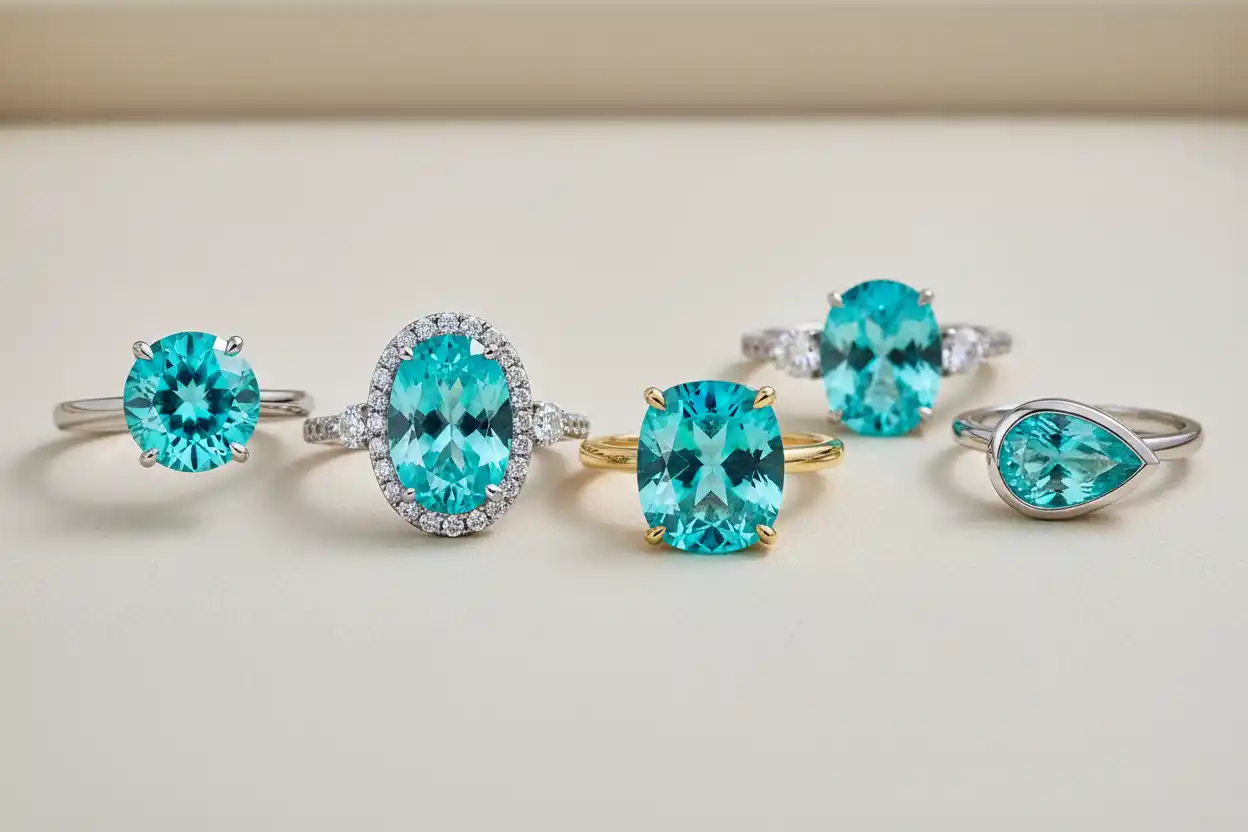
Paraiba Tourmaline Rings: Styles and Buying Tips
Paraiba tourmaline rings combine exceptional color with one of the most demanding jewelry formats. A ring displays the gemstone prominently, but it also exposes the stone to knocks, abrasion, pressure and contact with everyday surfaces.
The best designs respond to that reality. They use secure prongs or bezels, protect vulnerable corners and avoid creating an unnecessarily high profile. At the same time, the setting must allow the gem’s vivid blue-green color to remain visible rather than burying it beneath heavy metal.
This guide owns the ring-specific questions: style, setting, wearability, proportions, construction and purchase decisions. The gem’s broader identity and background remain covered in the Paraiba tourmaline meaning guide.
What Makes a Paraiba Tourmaline Ring Distinctive
Paraiba tourmaline is a copper-bearing tourmaline known for vivid blue, greenish-blue, turquoise, bluish-green and occasionally violetish shades. Fine stones can appear unusually bright because saturated color combines with transparency and efficient cutting.
A ring places that color in constant view. Unlike earrings, which are primarily seen by others, a ring can be appreciated by the wearer throughout the day. The format also allows strong design contrast through metal color, diamonds and side stones.
However, a ring is not automatically the safest use of a valuable Paraiba. Tourmaline has reasonable scratch resistance but only fair toughness, and included stones can be more vulnerable than clean material. The setting should therefore be selected for the individual gem rather than chosen from appearance alone.
The dedicated Paraiba tourmaline buying guide covers the underlying gemstone-quality assessment in greater depth.
Paraiba Tourmaline Ring Styles
| Ring style | Visual character | Protection level | Main consideration |
|---|---|---|---|
| Solitaire | Pure focus on one gem | Moderate | Prong placement and profile height |
| Diamond halo | Bright, larger appearance | Moderate to good | Halo should not dominate weak color |
| Bezel-set ring | Modern and protective | High | Metal thickness and cleaning access |
| Three-stone ring | Symbolic and balanced | Moderate | Side stones must complement the center |
| Cluster ring | Broad field of color | Variable | Replacement and matching of small stones |
| East–west setting | Contemporary and low-looking | Moderate | Side exposure and finger coverage |
| Cocktail ring | Dramatic and sculptural | Variable | Height, weight and occasional-wear suitability |
| Vintage-inspired ring | Detailed and romantic | Moderate | Fine milgrain and prong condition |
Solitaire Paraiba Tourmaline Rings
A solitaire gives the gemstone complete visual priority. Ovals and cushions are common because they balance weight retention, color and setting options. Pear, emerald and elongated cuts create a more individual appearance.
Four prongs expose the outline but provide less redundancy than six. Fine double prongs can support corners without appearing heavy. Pear and marquise shapes require special protection at their points.
The ring should not rely on excessively thin prongs to create delicacy. Paraiba tourmaline is too valuable for underbuilt construction. Prongs need enough metal to survive normal wear and future maintenance.
A cathedral setting raises the center and supports it from the shoulders. This can create an elegant profile, though a very tall head catches clothing and receives more impact.
Halo Rings
A halo surrounds the Paraiba tourmaline with diamonds or colored gems. It can increase apparent size, protect parts of the girdle and create strong contrast around vivid turquoise color.
A delicate halo works well with small, intensely colored centers. Double halos are more dramatic but may make a modest Paraiba look secondary. The design should be judged from a normal viewing distance rather than through enlarged product photography.
The halo’s outer edge needs smooth finishing. Sharp shared prongs can catch fabric, while poorly aligned stones create an uneven outline.
Blue, green or paraiba-colored accent stones should be disclosed accurately. A ring should not imply that every blue stone in the design is Paraiba tourmaline when only the center has that identity.
Bezel and Semi-Bezel Rings
A bezel encloses the girdle in metal and offers strong protection against edge impacts. It suits active wearers and contemporary designs.
The bezel must be evenly finished without covering excessive portions of the crown. A thick rim can make the gemstone appear smaller and may trap residue if the back is difficult to access.
Semi-bezels protect two sides while leaving the other portions visible. They can work well with ovals, emerald cuts and east–west designs, provided the open ends do not expose vulnerable corners.
Bezel setting requires skilled workmanship. Tightening or reshaping metal around an included tourmaline must be approached carefully to avoid pressure damage.
Three-Stone Designs
Three-stone rings use a Paraiba center with diamonds, sapphires, spinels or other colored gems on the sides. Side stones can increase finger coverage without requiring one very large Paraiba tourmaline.
Colorless diamonds create contrast and help the center look more saturated. Pale blue stones create a tonal transition, while yellow diamonds or warm gems produce complementary contrast.
The side stones should support the center rather than create confusion about identity. Their proportions also affect protection: tapered baguettes can shield the sides of an emerald-cut center, whereas small rounds leave more of the girdle exposed.
Cluster and Pavé Rings
Cluster rings combine several Paraiba tourmalines or use Paraiba melee as accents around another gem. Fine melee can show vivid color even at small sizes.
Color matching is critical. Calibrated stones should create a coherent field rather than alternating unpredictably between strong turquoise, dark green and pale gray-blue.
Pavé increases maintenance requirements. Tiny prongs can wear, and replacing a lost Paraiba melee stone with a close color match may be difficult. Ask whether the jeweler maintains access to replacement material.
Choosing Color for a Ring
Color is the first quality most buyers notice. The strongest rings use a center that remains vivid under diffused daylight and ordinary indoor lighting.
Blue-dominant stones often look crisp in platinum or white gold. Greenish-blue gems may appear especially rich beside yellow gold. Turquoise colors can work across metal types, although surrounding reflections influence perception.
Avoid judging the ring only beneath focused LED spotlights. Move it away from the display and observe it at arm’s length. Rotate the hand slowly to see whether large areas turn black, pale or transparent.
Fine saturation is more important than a marketing word such as “neon.” Sellers use descriptive language inconsistently. The gemstone itself should demonstrate brightness.
Clarity and Ring Durability
Tourmaline commonly contains inclusions. Fine Paraiba color can justify visible internal features, but a ring demands closer durability assessment than a pendant or earrings.
A feather or healed fissure beneath the table may affect transparency without creating immediate danger. A surface-reaching fracture near a corner, prong or thin girdle can be more concerning because the stone will experience local pressure and impact.
Ask to inspect the gem under magnification before final purchase. The seller should disclose chips, cavities, significant abrasions and any clarity-related treatment.
The gemstone toughness-versus-hardness guide explains why scratch resistance and impact resistance are different. The broader gemstone hardness chart places tourmaline’s Mohs rating in context.
Cut Quality and Face-Up Appearance
Paraiba rough is rare, so cutters often preserve weight. This can produce deep pavilions, asymmetrical outlines or nonstandard proportions.
Weight retention is understandable, but it should not excuse severe windowing. A transparent central window allows the finger or setting to show through and weakens color concentration.
Excessive depth produces the opposite problem. The ring may carry a higher carat weight while the stone looks smaller and darker from above.
Tourmaline’s pleochroism also affects orientation. A cutter may need to choose between maximum saturation, a preferred hue and a larger yield. Evaluate the finished stone rather than expecting standardized proportions.
The carat-versus-millimeter size chart can help compare rings whose center stones have similar weights but different face-up dimensions.
Best Shapes for Paraiba Tourmaline Rings
Oval
Ovals provide strong spread and fit many solitaire, halo and three-stone designs. Inspect the center for a dark bow-tie area and check that both ends are symmetrical.
Cushion
Cushions can concentrate color and offer a softer outline. Their proportions vary widely, so compare measurements rather than relying on carat weight.
Pear
Pear shapes create elegance and visual length. The pointed tip must be protected, and the shoulders should appear balanced.
Emerald Cut
Emerald cuts emphasize clarity, color zoning and facet precision. Their open pattern reveals inclusions and windowing more clearly than brilliant-style cuts.
Round
Rounds offer symmetry and easy setting options. Because cutting a round can waste more rough, fine round Paraiba tourmalines may be scarce.
Cabochon
Cabochons may be chosen for strongly included material, cat’s-eye effects or a distinctive collector style. Surface quality and polish become especially important.
Setting Height and Daily Practicality
A low-profile ring is less likely to strike doors, desks and countertops. However, the pavilion needs enough space beneath the stone, and the setting must allow cleaning access.
High-set solitaires create drama and may sit flush beside a straight wedding band. They also catch more easily on clothing and gloves.
Before buying, view the ring from the side. Check the height of the culet above the finger, the thickness of supporting metal and whether the gallery creates snag points.
A ring intended for occasional evening wear can tolerate more height and delicacy than one expected to survive daily commuting, childcare, cooking or hands-on work.
Paraiba Tourmaline Engagement Rings
Paraiba tourmaline can make an unusual engagement-ring center, especially for someone who prioritizes distinctive color over conventional durability.
It is not as hard or tough as diamond, sapphire or spinel. Daily wear therefore requires a protective setting, mindful habits and acceptance that maintenance may be necessary.
A bezel, halo or well-built six-prong setting is safer than a highly exposed tension-style mount. Sharp corners should be protected, and the wearer should remove the ring during sports, cleaning, gardening and mechanical work.
The completed guide to teal gemstones for engagement rings provides broader comparison context. Paraiba may deliver unmatched color, but durability, replacement difficulty and insurance should influence the decision.
Choosing Metal
Platinum
Platinum provides a naturally white appearance and strong prong construction. Its density gives the ring a substantial feel. It develops a patina rather than losing metal in the same manner as some lighter alloys.
White Gold
White gold offers a cool setting that reinforces blue and turquoise. Rhodium plating may need renewal over time, especially on frequently worn rings.
Yellow Gold
Yellow gold creates vivid contrast and can emphasize greenish-blue shades. White prongs may be combined with a yellow shank to prevent warm reflection immediately around the gem.
Rose Gold
Rose gold produces a contemporary complementary palette. It suits intense turquoise stones but may dominate pale material.
The metal should also be selected for skin sensitivity, maintenance preference and the strength required by the setting design.
Treatment Disclosure
Heat treatment is used with some copper-bearing tourmaline to modify color. It may reduce purple or red components and produce more desirable blue-to-green appearances.
A treated stone can still be natural and valuable. The problem arises when treatment is concealed or when unsupported claims of untreated status are used to justify a premium.
The gemstone treatments guide explains the distinction between routine enhancement, disclosure and more invasive processes.
Ask whether treatment information comes from the seller’s assumption, supplier disclosure or laboratory testing. The wording should remain precise.
Origin and Laboratory Reports
Copper-bearing tourmaline occurs in Brazil, Mozambique and Nigeria. Geographic origin can materially affect market perception, but color alone does not establish locality.
A reputable laboratory may use advanced chemical analysis to compare a stone with reference samples. Even then, origin is expressed as an expert opinion based on available evidence.
The gemstone certification guide outlines major reporting considerations. Use the gem lab report guide to understand whether the document addresses identity, treatment, origin or only an appraisal value.
The report measurements should correspond to the mounted stone. When the ring prevents accurate weighing, identification may rely on dimensions and photographs.
Authenticity and Imitations
Bright blue glass, synthetic materials, coated stones and other gems can imitate the general appearance of Paraiba tourmaline. Visual inspection is not enough for an expensive purchase.
A seller should clearly identify every gemstone in the ring and avoid using vague terms such as “Paraiba color” as though they prove copper-bearing tourmaline identity.
The broader tourmaline meaning guide and types of tourmaline help place Paraiba within its family. Its most relevant blue tourmaline comparison is indicolite, while elbaite covers an important mineral species associated with gem tourmaline.
Price and Value Considerations
Paraiba ring prices depend on center-stone color, origin, clarity, size, treatment representation, cut, documentation and craftsmanship. Diamonds, metal and brand premiums can add substantially to the finished price.
A small stone with exceptional saturation may cost more than a larger stone with weak color. Matched side stones or Paraiba melee can also add meaningful value.
The dedicated Paraiba tourmaline price guide should own detailed market figures. The broader tourmaline price guide helps compare the premium with other tourmaline varieties.
Collectors considering long-term market positioning can also review best gemstones for investment. Jewelry should still be purchased primarily for quality and enjoyment rather than guaranteed financial return.
Buying a Paraiba Ring Online
High-resolution images should show the exact ring from several angles. Video should include diffused daylight and neutral indoor illumination.
Request center-stone dimensions, carat weight, metal fineness, ring size, treatment disclosure, origin documentation, accent-stone details and return terms. Confirm whether resizing is possible without risking the gemstone.
The safeguards in how to buy gemstones online are particularly important for high-value colored gems. Independent inspection during the return period can reveal loose prongs, damaged girdles, undisclosed abrasions or discrepancies in documentation.
The family-level tourmaline buying guide provides additional comparison points, but Paraiba-specific premiums should be evaluated through the dedicated buying material.
Resizing and Repair
Resizing exposes a ring to heat, pressure and mechanical work. Tourmaline can fracture from thermal shock, and high heat can affect color.
Tell the jeweler that the center is Paraiba tourmaline and provide any treatment information before work begins. The gemstone may need to be removed for extensive resizing or repair.
Large size changes can distort the head, alter prong alignment or affect pavé settings. A ring with an eternity-style shank may have very limited resizing capacity.
Routine prong retipping also requires care. Select a jeweler experienced with included colored stones rather than assuming every diamond-repair method is appropriate.
The gemstone cleavage guide provides wider context on why hard gemstones can still be damaged during setting or repair.
Cleaning and Maintenance
Use warm water, mild soap and a soft brush. Clean beneath the center stone, where lotion and soap residue reduce brightness.
Avoid steam and ultrasonic cleaners. Heat, vibration and internal inclusions can increase risk. Follow the stone-specific instructions in how to clean Paraiba tourmaline jewelry safely.
Inspect the ring before cleaning. If the stone moves, a prong is lifted or the metal shows cracking, stop wearing it until a jeweler examines the setting.
Store the ring separately in a padded compartment. Do not allow diamonds or harder gemstones to rub against the tourmaline.
Coordinating Paraiba Jewelry
A Paraiba ring can stand alone because its color is visually strong. When building a set, exact matching is not always necessary. Similar saturation and a consistent metal often create greater harmony than forcing identical shades.
The completed Paraiba tourmaline bracelet guide covers wrist-based construction and exposure. Paraiba tourmaline earrings frame the face, while Paraiba tourmaline necklaces concentrate the color at the neckline.
Using all three simultaneously may feel formal. For everyday styling, the ring can be paired with simple diamond studs or a plain metal chain.
October Birthstone Rings
Tourmaline is one of October’s birthstones, and Paraiba offers a rare alternative to more familiar pink, green or multicolored tourmaline.
The October birthstone guide explains the month-level tradition. Paraiba also appears in the Gemstones That Start With P directory.
An October association can make the ring personally meaningful, but it should not replace gemological due diligence. Treatment, origin, durability and documentation still determine whether the purchase is sound.
Frequently Asked Questions
1. Is Paraiba tourmaline durable enough for a ring?
It can be used in rings, but it requires more care than diamond, sapphire or spinel. A protective setting and mindful wearing habits are important, especially for included stones.
2. Can a Paraiba tourmaline ring be worn every day?
Daily wear is possible for a well-set stone, although the ring should be removed during exercise, household cleaning, gardening, lifting and other impact-prone activities.
3. What is the safest setting for Paraiba tourmaline?
A well-made bezel, protective halo or substantial multi-prong setting provides good security. The safest design depends on the stone’s shape, inclusions and girdle condition.
4. Is Paraiba tourmaline suitable for an engagement ring?
Yes, for someone who accepts its care requirements and prioritizes rare color. It is less damage-resistant and harder to replace than conventional diamond or sapphire centers.
5. Which Paraiba ring color is most valuable?
Vivid blue, greenish blue and bluish green are all desirable. Saturation, brightness and overall beauty usually matter more than selecting one named hue.
6. Does a Paraiba tourmaline ring need a laboratory report?
A report is strongly advisable when the purchase price depends on copper-bearing identity, Brazilian origin, treatment representation or a major center stone.
7. Can Paraiba tourmaline rings be resized?
Many can be resized, but the jeweler must account for the stone’s heat sensitivity and inclusions. Large size changes or pavé-intensive designs may be difficult.
8. Are all Paraiba tourmalines from Brazil?
No. Copper-bearing tourmalines associated with the Paraiba trade category have also been found in Mozambique and Nigeria. Origin should not be assumed from color.
9. Is heat-treated Paraiba tourmaline still valuable?
Yes. Heat treatment is accepted in the market when disclosed. Color quality, rarity, origin, cut and documentation still influence value.
10. Why does my Paraiba ring look darker from some angles?
Pleochroism, facet orientation, extinction, lighting and reflections from the setting can change its appearance. Large persistent dark zones may also indicate cutting limitations.
11. Should I choose platinum or gold?
Platinum and white gold create a cool backdrop, while yellow and rose gold provide stronger contrast. Structural quality and personal maintenance preferences matter more than a universal metal ranking.
12. How often should the ring be inspected?
A frequently worn ring should be checked regularly at home and professionally whenever a prong catches, the stone moves or the setting receives a hard impact. Annual professional inspection is a reasonable baseline for many valuable rings.
A Paraiba tourmaline ring should be chosen as a complete piece of engineering, not merely as a rare gemstone held by decorative metal. The strongest ring combines vivid face-up color with a cut that avoids major windowing, a setting that protects the gem’s vulnerable areas and documentation proportionate to the price. That balance allows the electric blue-green center to remain wearable rather than becoming too fragile or anxiety-inducing to leave the jewelry box.