
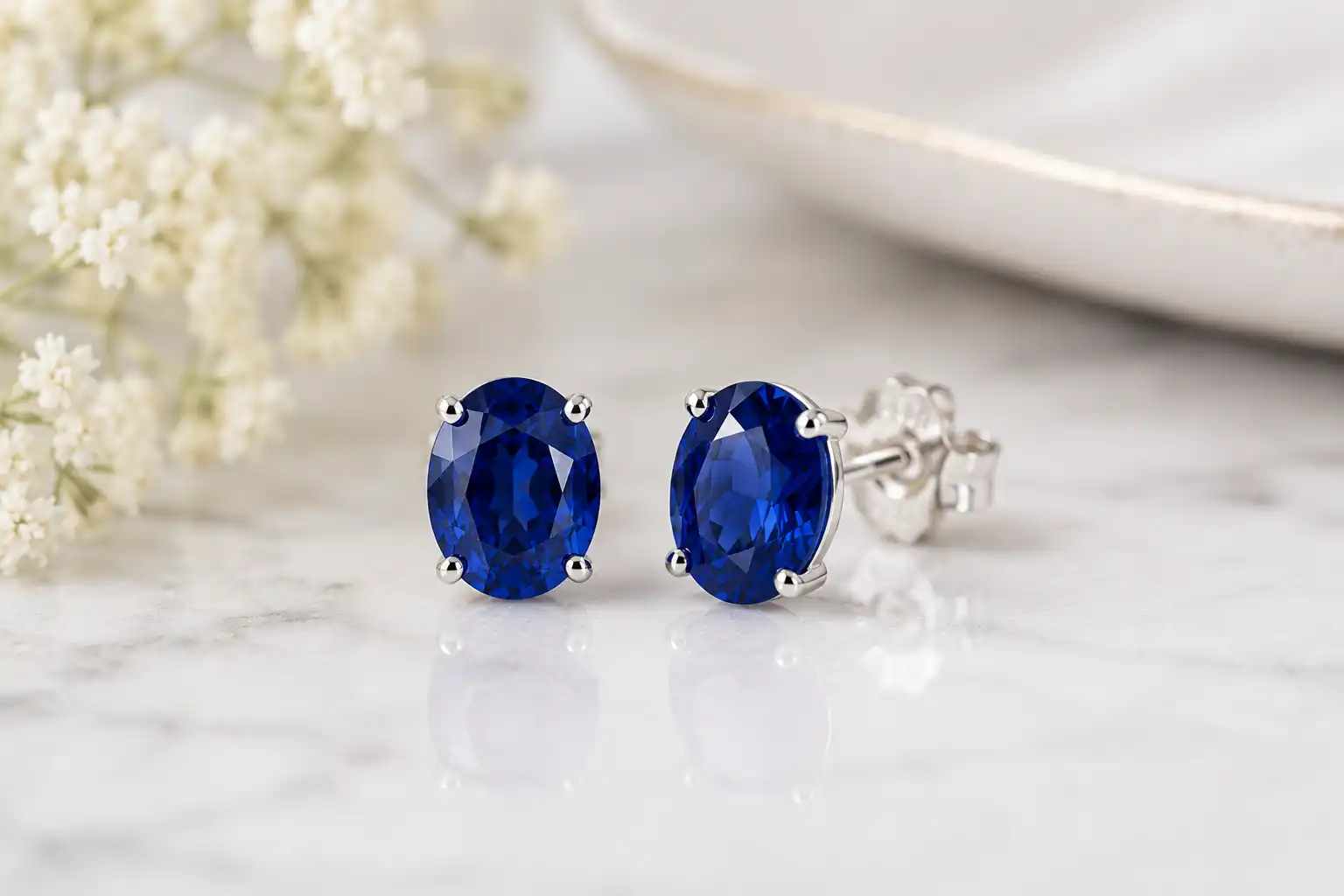

Sapphire studs are the closest thing to a permanent earring. At hardness 9 with no cleavage, they survive being slept in, dropped on bathroom tiles, and worn every day for forty years — which is exactly why they’re a classic heirloom gift. The one thing that genuinely takes work is matching: sapphire’s color varies enormously between stones, so a well-matched pair costs meaningfully more than two single stones.
This guide covers sapphire earrings from every angle. You’ll learn the matching problem, styles, backs and weight, and how to judge a pair. At Gems Lore, we want you to choose with confidence.
A quick note first. This is general educational information, not appraisal advice.
Sapphire Earrings at a Glance
- The heirloom stud. Effectively permanent at hardness 9.
- Matching is the real cost. Sapphire color varies widely.
- Watch “ctw.” Total weight means half each.
- Never fades. Wear them in the sun forever.
Why Sapphire Studs Are a Classic
There’s a reason sapphire studs get passed down.
Earrings live an easy life — they hang beside your face and collide with almost nothing. But they also get forgotten: slept in, showered in, dropped on tile floors, worn continuously for years without a thought.
Most gems punish that. Opal chips, pearls dissolve in perfume, emeralds lose their oil. Sapphire, at hardness 9 with no cleavage, simply doesn’t care. Our gemstone hardness chart shows why: household dust contains quartz at 7, and sapphire is far beyond its reach.
Add color that never fades and needs no maintenance, and you have jewelry that genuinely survives a lifetime of neglect. That’s the whole case for sapphire studs.
The Matching Problem
This is the one genuine difficulty, and it’s specific to earrings.
You aren’t buying a stone. You’re buying two stones that have to agree. And sapphire’s color varies enormously — that’s the same variability that makes the species interesting, and it works against you here.
Two sapphires can both be lovely and still look wrong together. The differences that show:
Tone. The most visible mismatch by far. One stone slightly darker reads as an error. Hue. A slightly greenish blue next to a slightly violet blue clashes. Extinction. One stone showing more dark patches than the other. Cut and brilliance. One stone livelier than its partner.
Matched pairs carry a real premium over two single stones of the same total weight. That premium is legitimate — it reflects genuine selection work and rejected material, not a markup.
How to Check a Pair
Twenty seconds, and it saves real disappointment.
Hold both earrings side by side at arm’s length in daylight, then again in ordinary indoor light. Never judge under the jeweler’s spotlight, which makes every sapphire look royal blue and flattens the differences you’re hunting for.
Look for tone difference first — it’s the mismatch people notice. Then hue, then liveliness.
Then step back a few feet, which is how people actually see earrings. Small differences vanish at conversational distance; tone differences don’t.
Buying online? Insist on a photo of both stones together in daylight, not one stone photographed twice. That’s a real practice worth watching for.
Sapphire Earring Styles
- Studs. The classic. A single stone at the lobe, versatile and permanent.
- Halo studs. Diamonds frame the sapphire, supplying the sparkle sapphire lacks and adding visual size.
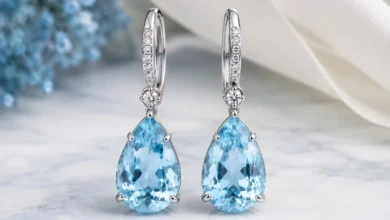
- Drops. A stone suspended below a post, swinging with movement.
- Huggies and hoops. Sapphire accents on a close-fitting hoop.
- Chandeliers. Multiple stones cascading, for real statement.
- Journey and graduated. Several sapphires in ascending size.
Halo studs deserve a specific note. Sapphire’s dispersion is only 0.018, against diamond’s 0.044, so sapphire produces very little fire. Ringing it with small diamonds is genuinely effective rather than decorative: the diamonds supply the flash, the sapphire supplies the color. Near the face, where people actually look at you, that partnership works.
Backs, Weight, and Comfort
The practical details people regret ignoring.
Backs. Friction backs are standard but loosen over time. Screw-backs thread on securely and are worth it for anything valuable — and for studs you’ll sleep in. Lever-backs hinge closed and suit drops.
Weight. Corundum is dense, denser than quartz or beryl. A large sapphire drop has real heft, and over a long evening that pulls on the lobe. Studs are rarely a problem; big chandeliers can be.
Sensitive ears. Choose posts in solid gold (18k+), platinum, titanium, or niobium — not plated base metal. Nickel is the usual culprit, as our best gemstones for sensitive skin guide explains. The stone is never the problem.
The ctw Trap
This catches people constantly, and it matters more in earrings than anywhere.
A pair advertised as “2 ctw” means two carats total across both earrings — one carat each, not two each.
With sapphire this compounds, because the per-carat rate jumps around 3 carats and again at 5. Two 1-carat stones cost far less than one 2-carat stone, which is part of why earrings can look like better value than they are.
Always ask for the individual stone weight or millimeter dimensions. That’s what determines how they actually look.
Choosing the Stones
Sapphire’s standard quality rules, applied twice.
Judge color in daylight and indoor light. Screen for stones that go inky or blackish indoors — the most common fault in mass-market sapphire — plus greenish or grayish casts.
Ask “heated, or diffused?” Roughly 95% of sapphires are heated, which is normal, permanent, and accepted. Diffusion, where color is driven in and can be skin-deep, is worth dramatically less and must be disclosed. Our buy sapphire guide covers this properly.
Both stones should be eye-clean. Sapphire is a Type II gem, so inclusions are normal, but nothing should be obvious face-up.
Size and Budget
Earrings need two stones, so the math differs from a ring.
The good news: staying under 3 carats each keeps you below sapphire’s price jumps, and heated Ceylon or Madagascar material in fine-but-not-top color is genuinely affordable. Our sapphire price guide covers the tiers.
Strategy: prioritize matched color over size. Two vivid, well-matched 0.75-carat sapphires will look better than two mismatched 1.5-carat stones, and cost less.
Metal Choices
White gold and platinum keep blue sapphire crisp and cool. The classic stud pairing.
Yellow gold gives a warm, antique effect that’s striking against blue.
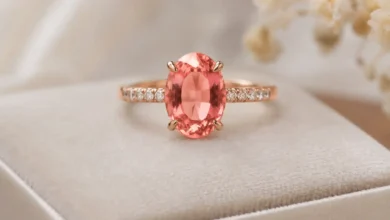
Rose gold suits peach, champagne, pink, and padparadscha stones.
Near the face, cohesion with your glasses, necklace, and other jewelry matters more than it does for a ring.
Caring for Sapphire Earrings
Easy, with one earring-specific note.
Clean with warm water, mild soap, and a soft brush, working behind the stones where hairspray, product, and skin oil accumulate. That film is why earrings stop sparkling — the stone itself can’t realistically be scratched. Our how to clean sapphire jewelry guide covers the method.
Put earrings on after hairspray and perfume. Check the backs and posts periodically — those fail long before sapphire does.
They will never fade. And store them in their own pouch: sapphire will scratch nearly everything else in your jewelry box.
Frequently Asked Questions
Why are sapphire studs considered heirloom jewelry?
Because they survive neglect. At hardness 9 with no cleavage, sapphire can be slept in, showered in, dropped on tile, and worn daily for decades without damage, and its color never fades. Most gems punish that treatment; sapphire simply doesn’t care, which is why they get passed down.
Are sapphire earrings hard to match?
Yes, more than most gems. Sapphire’s color varies enormously between stones, so two lovely sapphires can still look wrong together. Tone difference is the most visible mismatch. Matched pairs carry a legitimate premium over two single stones, reflecting real selection work rather than a markup.
What does “2 ctw” mean for sapphire earrings?
It means two carats total across both earrings, so one carat each, not two each. This matters especially with sapphire, since the per-carat rate jumps around 3 carats and again at 5. Always ask for individual stone weight or millimeter dimensions.
Why do sapphire halo studs work so well?
Because they’re a genuine partnership. Sapphire’s dispersion is 0.018 against diamond’s 0.044, so it produces very little fire. Surrounding it with small diamonds means the diamonds supply the sparkle and the sapphire supplies the color, which reads well near the face.
What earring backs should I choose for sapphires?
Screw-backs for anything valuable, especially studs you might sleep in, since friction backs loosen over time and losing one stud ruins a matched pair. Lever-backs suit drops. Choose solid gold, platinum, titanium, or niobium posts if you have sensitive ears.
Where to Go From Here
Sapphire studs are the most genuinely permanent earrings you can buy, and the only real work is at the point of purchase: judge the pair together, in daylight, before you commit. Get the match right and they’ll look identical in forty years, because nothing in ordinary life can touch them.
Learn the stone in our sapphire meaning guide, or coordinate with our sapphire rings and sapphire necklaces guides.
Thinking of sapphire earrings? Tell us your dream style in the comments.
This guide is for general educational purposes and is not appraisal advice.