Sapphire Rings: Styles, Colors, Settings and Buying Tips
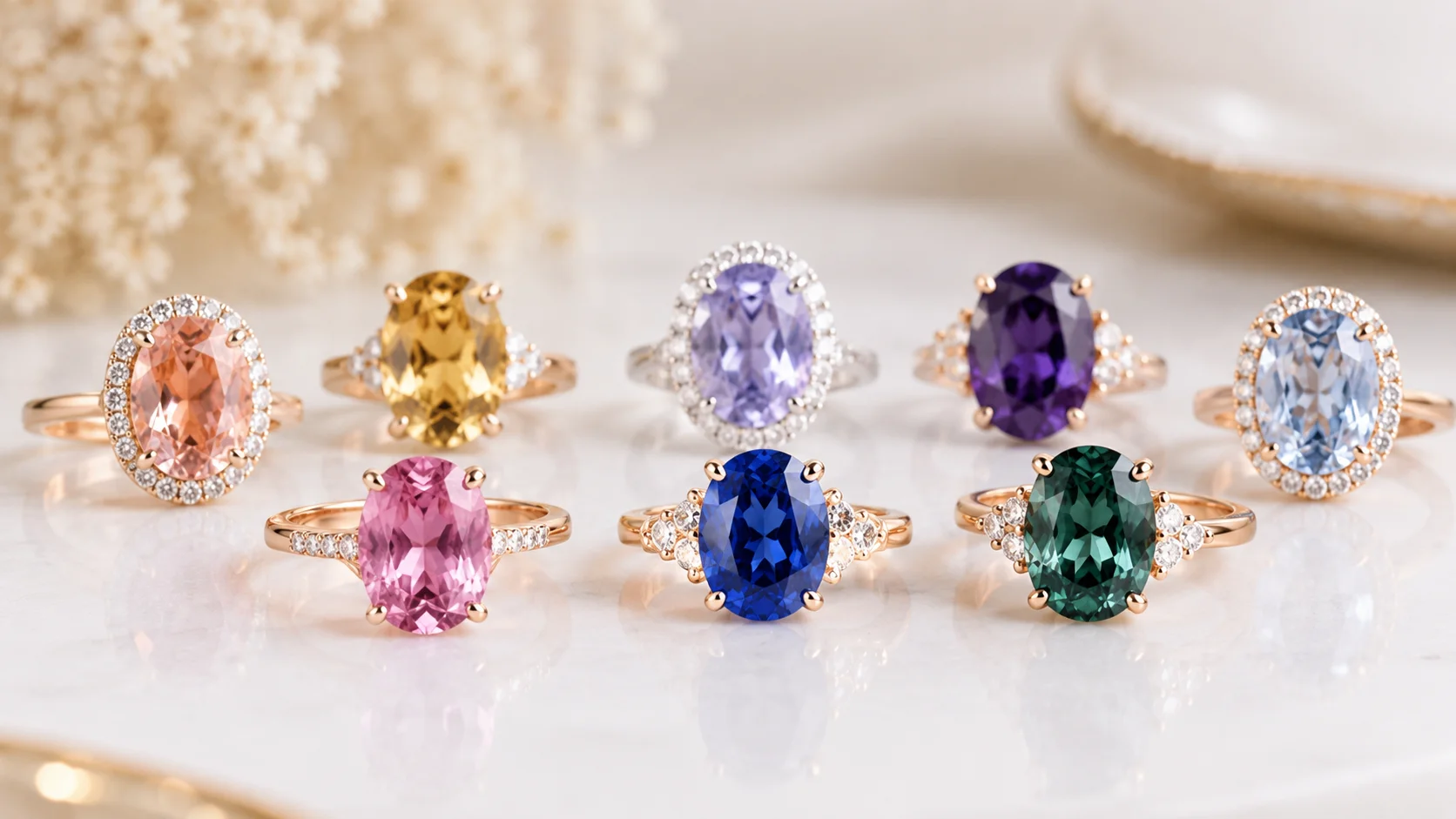
Sapphire rings range from understated birthstone bands and low-profile signets to vivid cocktail rings set with major blue, pink, yellow, parti-colored or star sapphires. The gemstone’s hardness and lack of cleavage make it one of the best natural colored stones for hand jewelry.
Sapphire ranks 9 on the Mohs scale, giving it exceptional resistance to ordinary scratches. Nevertheless, a ring can still be damaged by sharp impact, major surface-reaching fractures, extensive glass filling or an insecure setting.
The best sapphire ring therefore combines attractive color with construction suited to the wearer’s activities. A bright medium-sized sapphire in a low bezel may provide more reliable everyday wear than a larger dark stone held in thin, high prongs.
This guide focuses on fashion, birthstone, cocktail, signet, eternity and general sapphire rings. Proposal and bridal decisions belong in the Sapphire Engagement Ring guide.
Sapphire Rings at a Glance
| Ring style | Appearance | Practical strength | Main concern |
|---|---|---|---|
| Solitaire | One principal sapphire | Clear focal point and easy inspection | Exposed stone receives impact |
| Bezel | Metal surrounds the girdle | Excellent edge protection | Thick metal can deepen dark color |
| Halo | Sapphire framed by bright accents | Larger visual footprint | Numerous small settings require maintenance |
| Three-stone | Center with two companion gems | Balanced and symbolic | Adjacent stones must not rub |
| Cluster | Several small sapphires | Strong color at moderate cost | Shared prongs and trapped residue |
| Cocktail | Large or decorative center | Dramatic statement jewelry | Height, weight and impact exposure |
| Signet | Recessed sapphire in substantial metal | Low profile and strong protection | Less side light |
| Eternity band | Continuous sapphire line | Color from every angle | Limited resizing and underside wear |
| Stackable band | Narrow row of small gems | Flexible styling | Rubbing against neighboring rings |
| Star sapphire ring | Cabochon showing asterism | Distinctive optical effect | Star quality and dome exposure |
| Multi-color ring | Several fancy sapphire hues | Individual contemporary design | Color and treatment balance |
| Vintage-inspired ring | Milgrain, engraving and filigree | Historical character | Fine metalwork wears over time |
Why Sapphire Is Suitable for Rings
Sapphire is one of the most durable natural colored gemstones.
It resists abrasion better than emerald, tourmaline, garnet, quartz, opal and moonstone.
Corundum has no perfect cleavage, reducing the chance of splitting along one predictable structural plane.
However, sapphire remains brittle enough to chip.
Pointed shapes, thin girdles and fractures near prongs require protection.
The Gemstone Hardness Chart places sapphire among other stones, while Gemstone Toughness vs Hardness explains why it is durable rather than indestructible.
Sapphire Solitaire Rings
A solitaire places one sapphire at the center.
Round, oval and cushion cuts are the most common.
Rounds offer balanced brilliance. Ovals often appear larger for their weight, while cushions create broad color flashes.
Four prongs expose more stone. Six add redundancy and suit larger rounds and ovals.
The sapphire should sit level in the basket.
A low mounting reduces snagging and impact, while a tall cathedral profile creates greater exposure.
The girdle must remain supported without direct pressure on a surface-reaching fracture.
Bezel-Set Sapphire Rings
A bezel surrounds all or part of the sapphire’s girdle.
It is the strongest practical setting for frequent wear.
The metal protects the edge and creates a smooth profile.
A full bezel can darken deep blue or black sapphire. Open-backed construction and a narrower rim preserve more brightness.
Partial bezels expose more stone but protect fewer areas.
The rim should be even and free from gaps.
Bezel rings work well for active wearers, signets and cabochons.
Halo Sapphire Rings
A halo surrounds sapphire with diamonds, white sapphires or moissanite.
The border enlarges the visual footprint and intensifies color contrast.
A low halo can protect part of the center’s perimeter.
Diamond accents must not rub directly against the sapphire because diamond is harder.
Shared prongs and pavé require periodic inspection.
An open gallery makes cleaning easier and prevents residue from darkening the center.
Three-Stone Sapphire Rings
A three-stone ring may represent past, present and future or another personal sequence.
A sapphire center commonly appears with diamonds, white sapphires or smaller colored sapphires.
Side stones should not touch the center girdle.
Half-moons, trapezoids and pears can frame an oval or cushion efficiently.
The center should remain visually dominant unless an equal-size arrangement is intentional.
Review the ring from the side to ensure that all three stones sit at compatible heights.
Sapphire Cluster Rings
Clusters combine several small sapphires into a broad design.
Floral, geometric and starburst arrangements provide strong color without one rare large center.
The stones should appear intentionally matched or graduated.
Shared prongs reduce visible metal but create connected maintenance risk.
A damaged shared support may loosen multiple gems.
Clusters also collect lotion and soap readily, so accessible backs are important.
Cocktail Sapphire Rings
Cocktail rings use a large center, elaborate setting or substantial group of stones.
Opaque cabochons, laboratory-grown sapphires, star stones and large fancy colors can create dramatic size without the cost of an equivalent fine natural blue gem.
The ring’s height and weight increase impact exposure.
A top-heavy design needs an adequate shank and accurate size to prevent constant spinning.
Cocktail rings are better removed for work, exercise, cleaning and tasks involving tools.
Sapphire Signet Rings
A signet sets sapphire within a broad metal surface.
The stone may be bezel-set, flush-set or recessed.
This low profile offers strong protection and works well for all styles and wearers.
Opaque, cabochon, star and small faceted sapphires suit signet construction.
A deep recess can reduce side light, so the sapphire should have enough brightness before setting.
Broad bands feel tighter than narrow rings and may require additional sizing allowance.
Sapphire Eternity Bands
A full-eternity band places sapphires around the entire circumference.
It creates continuous color but has limited resizing options.
Half- and three-quarter-eternity bands are easier to adjust and protect the underside from continual contact.
Channel settings create a smooth surface. Shared prongs admit more light but expose additional edges.
A full-eternity ring should fit accurately because stones cannot simply be removed or added without changing the pattern and structure.
Stackable Sapphire Bands
A narrow sapphire band can be worn alone or combined with plain metal, diamond and other gemstone rings.
Channel and bezel settings provide the smoothest stacking surfaces.
Exposed diamond girdles should not rub directly against sapphire.
Sapphire can also scratch softer neighboring stones such as quartz, opal, tourmaline and pearl.
A thin plain-metal spacer can reduce contact.
The complete stack should remain comfortable when the fingers close.
Star Sapphire Rings
Star Sapphire contains aligned inclusions that produce a moving star.
Cabochon orientation is essential.
A fine stone should show attractive bodycolor and a star that remains reasonably centered and complete.
Synthetic star sapphire and diffusion-treated material occur.
A bezel protects the perimeter, though a high dome remains exposed at the top.
The star should move with the light rather than appearing fixed on the surface.
Blue Sapphire Rings
Blue remains the traditional choice.
Fine stones show strong-to-vivid blue or violetish blue with enough brightness to remain visibly colored indoors.
Very dark navy stones can appear black in closed settings.
White gold and platinum create crisp contrast. Yellow gold produces a warmer traditional appearance.
The stone should be viewed under daylight-equivalent and warm light before purchase.
Trade descriptions such as royal blue and cornflower are not universal grades.
Pink Sapphire Rings
Pink sapphire offers corundum durability in shades ranging from blush to magenta.
It provides a stronger daily-wear option than rose quartz, morganite and many pink tourmalines.
Rose gold creates a tonal appearance, while white metal increases contrast.
The boundary between vivid pink sapphire and ruby depends on dominant hue and classification policy.
Choose the color that is visually attractive rather than paying primarily for a label near the boundary.
Yellow, Green and White Sapphire Rings
Yellow Sapphire ranges from lemon to golden and orangish yellow.
Green sapphire can be olive, blue-green or forest green.
White Sapphire provides durable colorless corundum but less brilliance than diamond.
These varieties may offer accessible alternatives to fine blue or padparadscha sapphire.
Treatment disclosure remains important because heat and diffusion can alter yellow, orange, green and other colors.
Padparadscha Sapphire Rings
Padparadscha Sapphire combines pink and orange within a narrow accepted range.
Its dedicated Padparadscha Sapphire Ring guide owns setting and purchase details.
Not every peach sapphire qualifies.
A significant stone should have a respected report addressing natural or laboratory-grown origin, treatment, color stability and classification.
Its corundum durability makes it suitable for rings, but rarity increases the importance of setting protection.
Parti-Colored Sapphire Rings
Parti sapphire shows separate zones, often blue with yellow or green.
Every stone is individual.
A good cut displays the zoning clearly rather than blending it into an unattractive intermediate shade.
Parti sapphires work well in solitaires and geometric settings because the entire face remains visible.
The ring should be examined in several orientations and light sources.
Choosing Sapphire Color
Color should remain attractive in ordinary light.
Blue should avoid excessive darkness unless a near-black appearance is intended.
Pink and purple should have a pleasing undertone.
Yellow and orange should avoid unwanted brown or gray.
Green sapphires need sufficient brightness to prevent a dull olive appearance.
Parti stones should show coherent zoning.
The complete symbolism belongs in Sapphire Color Meaning, while Types of Sapphire owns the gemological variety list.
Clarity
Natural sapphire commonly contains crystals, silk, fingerprints, clouds and color zoning.
Small inclusions are acceptable when the stone remains bright and structurally sound.
A surface-reaching fracture near a prong creates greater concern.
Completely clean stones can be natural or laboratory-grown.
A heavily included sapphire can still be attractive as a cabochon, while transparent faceted material requires enough clarity for light return.
Clarity should be evaluated with cut, color and treatment rather than treated as an independent rank.
Cut Quality
Cut determines brightness and visible color.
Deep sapphires can retain weight while appearing dark.
Shallow stones may show windows.
Rounds and cushions often return balanced light. Ovals provide good finger coverage, while pears and marquises need protected points.
Step cuts display color zoning and inclusions clearly.
The sapphire should look lively across most of its surface rather than bright only around the edge.
Carat Weight and Millimeter Size
Carat measures weight.
Sapphire’s high density means it can look smaller than diamond, quartz or beryl of the same weight.
The Carat vs Millimeter Size Chart explains this relationship.
Millimeter dimensions show the ring’s face-up size more clearly.
A halo, broad bezel or side stones can increase finger coverage without requiring a rare large sapphire.
Natural Sapphire Rings
Natural sapphire carries geological rarity.
Most market material has received some heat treatment.
An unheated claim should receive independent laboratory support when it affects price materially.
Natural does not automatically mean beautiful or durable. A dark, fractured, poorly cut unheated sapphire may be less desirable than a vivid, well-cut heated gem.
The Sapphire Buying Guide explains how to prioritize these factors.
Laboratory-Grown Sapphire Rings
Lab Sapphire is manufactured corundum.
It shares natural sapphire’s hardness and basic optical properties.
Lab-grown material can provide vivid color, high clarity and large dimensions at a lower price.
The dedicated Lab Sapphire Ring guide owns manufactured-material styles and value.
A lab sapphire is not glass, but it should not be represented as natural or priced according to geological rarity.
Heated and Diffusion-Treated Rings
Conventional heating is common and stable.
A heated sapphire remains natural.
Lattice diffusion adds color-causing elements during high-temperature treatment.
Some diffusion-related color penetrates deeply, while some remains near the surface.
Repolishing shallow treated material can alter the color.
Treatment should be documented before sizing, repair or recutting.
The complete distinction appears in How to Spot Treated or Synthetic Sapphire.
Fracture-Filled Sapphire Rings
Fractures and cavities may contain glass or another filler.
Filling can improve apparent clarity, but the material becomes more vulnerable to acids, heat and repair work.
An extensively filled sapphire is a weaker choice for a high-value daily ring.
The invoice should disclose filling prominently.
A jeweler must know the treatment before using a torch, chemical bath or ultrasonic cleaner.
Sapphire Lookalikes
Glass, synthetic spinel, iolite, tanzanite, kyanite and other stones can resemble selected sapphire colors.
The Real vs Fake Sapphire guide covers natural, lab-grown, treated and imitation materials.
Direct comparisons include Kyanite vs Sapphire and Tanzanite vs Sapphire.
A blue stone should not be identified through color, hardness claims or a retailer’s verbal assurance alone.
Choosing the Metal
White gold and platinum create strong contrast with blue, pink and yellow sapphire.
Yellow gold produces a traditional warm appearance and suits green, blue and golden stones.
Rose gold works naturally with pink, purple and padparadscha colors.
Sterling silver provides an accessible option but tarnishes and is softer than many gold or platinum settings.
The metal should have enough thickness for the stone’s size and intended wear.
Ring Profile and Setting Height
A low profile is more practical for frequent wear.
High cathedral and peg-head settings expose the sapphire to additional leverage and snagging.
The gallery should provide light and cleaning access without leaving the girdle unsupported.
A top-heavy ring that rotates may need resizing, sizing beads or a wider shank.
The setting should fit actual activities rather than an idealized studio photograph.
Ring Sizing
Measure the finger at more than one time of day.
Heat, cold and activity affect size.
Wide bands generally fit more tightly than narrow ones.
Full-eternity, heavily engraved and pavé rings have limited resizing ranges.
Treatment status must be known before heat-based repair.
Ask how the design can be resized before purchasing it.
Birthstone and Symbolic Rings
Sapphire is September’s birthstone.
The September Birthstone guide explains its history, while September Birthstone Jewelry compares gift formats.
Blue sapphire traditionally symbolizes loyalty, wisdom and truth.
Fancy colors carry additional modern meanings.
A ring may mark a birthday, anniversary, achievement or personal commitment.
The stone cannot guarantee fidelity or success.
Coordinating Sapphire Jewelry
A Sapphire Necklace repeats color away from the hand.
Sapphire Earrings provide a protected matching format, while a Sapphire Bracelet creates a stronger formal set.
Matching the metal often provides enough coordination.
Separate sapphires do not need identical color or origin unless the pieces are sold as a matched suite.
Buying a Sapphire Ring
Decide how often the ring will be worn.
For frequent use, prioritize a low bezel, substantial prongs or recessed signet setting.
Ask whether the sapphire is natural or laboratory-grown and whether it has been heated, diffusion-treated, filled, dyed or coated.
Request millimeter dimensions, carat weight, metal fineness and resizing information.
A significant natural sapphire should have suitable documentation.
The Gemstone Certification guide explains reports, while How to Read a Gem Lab Report helps interpret treatment and locality wording.
For remote transactions, follow How to Buy Gemstones Online.
Current value factors remain in the Sapphire Price Guide.
Cleaning and Maintenance
Warm water, mild soap and a soft brush suit sound untreated, heated and many diffusion-treated sapphires.
Filled, cavity-filled, dyed or uncertain material requires gentler care.
The complete procedure appears in How to Clean Sapphire Jewelry.
Remove the ring before exercise, gardening, household cleaning and manual work.
Inspect prongs whenever they catch fabric or no longer touch the sapphire fully.
Store the ring away from diamond and from softer stones it can scratch.
Frequently Asked Questions
1. Is sapphire suitable for an everyday ring?
Yes. Sapphire is one of the strongest colored gemstones, provided the stone is sound and the setting is secure.
2. Which sapphire ring setting is most protective?
A low full or partial bezel offers excellent girdle protection and reduced snagging.
3. Are sapphire rings always blue?
No. Pink, yellow, green, orange, purple, white, gray, black, parti and color-change sapphires are available.
4. Is heated sapphire suitable for daily wear?
Yes. Conventional heat treatment is generally stable and compatible with ordinary ring use when disclosed.
5. Is lab-grown sapphire durable?
Yes. Laboratory-grown sapphire is corundum and shares natural sapphire’s basic hardness.
6. Is fracture-filled sapphire suitable for a ring?
It can be used in lower-cost jewelry, but it requires much greater care and is a weaker choice for a valuable daily ring.
7. Why does a blue sapphire ring sometimes look black?
Excessive tone, deep cutting and closed settings can produce broad dark extinction.
8. Can sapphire rings be resized?
Many can, but eternity settings, complex pavé, unusual metals and treated stones may limit safe resizing.
9. Can sapphire be stacked beside diamond rings?
Yes, provided the settings prevent exposed diamond edges from rubbing directly against the sapphire.
10. Are star sapphire rings natural?
Natural star sapphires exist, but laboratory-grown and diffusion-treated star corundum also occurs.
11. Does a sapphire ring need a laboratory report?
A report is advisable when natural origin, treatment, locality or substantial value depends on the claim.
12. What does a sapphire ring symbolize?
Sapphire traditionally represents wisdom, truth, loyalty, commitment and September birthstone identity.
A sapphire ring should be evaluated as a complete wearable object. Strong color may create the attraction, but treatment disclosure, secure metalwork, comfortable sizing and a profile suited to real activities determine whether it remains practical through years of use.
Sapphire is indexed in Crystals That Start With S and Gemstones That Start With S.