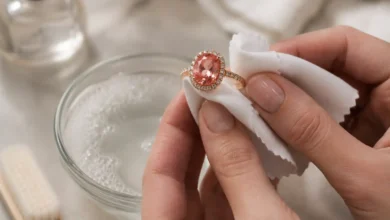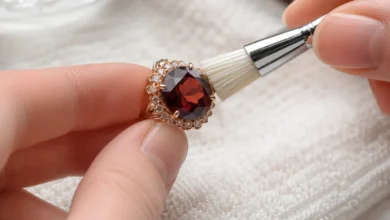

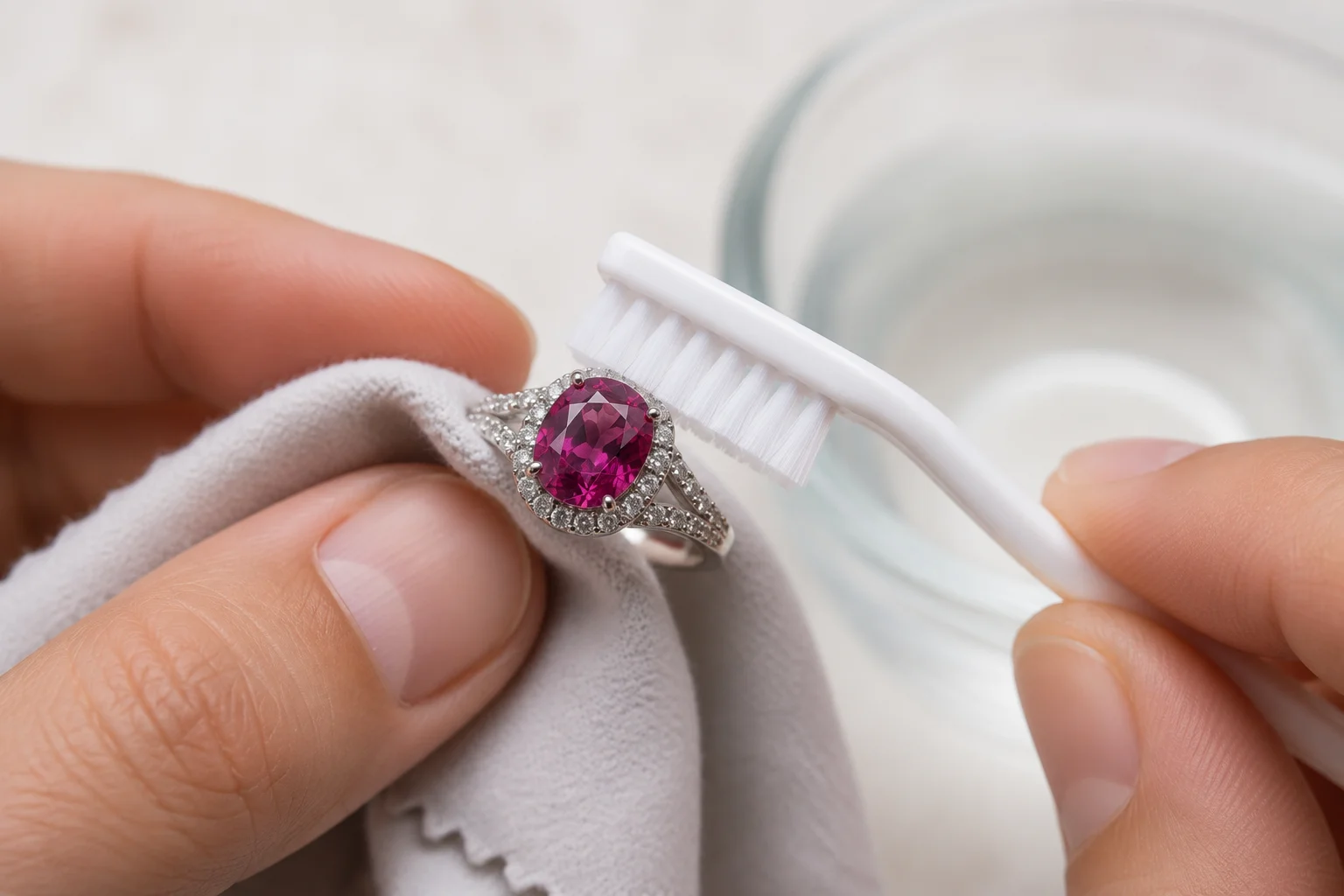

Rhodolite is one of the easiest colored gems to care for: clean it with warm water, a drop of mild dish soap, and a soft brush, then rinse and pat dry. It’s hard, non-porous, and its natural color won’t fade in sunlight, so it asks very little of you. The main things to avoid are harsh chemicals, prolonged soaking, and ultrasonic cleaners if your stone has visible inclusions.
This guide covers rhodolite care from every angle. You’ll learn the safe method, what to avoid, how to store it, and why rhodolite is so forgiving. At Gems Lore, we want your jewelry to last.
A quick note first. This is general educational information, not appraisal advice.
Rhodolite Care at a Glance
- Warm water and mild soap. The safest, most effective method.
- Soft brush. Clean behind the stone, where grime dulls it.
- Sun-safe. Natural color won’t fade, unlike amethyst.
- Avoid. Harsh chemicals, long soaking, ultrasonics on included stones.
Why Rhodolite Is Easy to Care For
Three properties make rhodolite forgiving, and it’s worth knowing why, because they tell you what you can relax about.
It’s hard. At 7 to 7.5 on the Mohs scale, rhodolite resists everyday scratches, as our gemstone hardness chart shows. It has no cleavage. Unlike moonstone or topaz, it won’t split along a weak plane from a knock. It’s non-porous. Unlike turquoise or opal, it doesn’t absorb liquid, so water and soap can’t stain or seep into it.
Add its untreated, stable color, and rhodolite has essentially none of the vulnerabilities that make other colored gems fussy. Our is garnet durable guide covers the family’s toughness in full.
The Step-by-Step Method
Cleaning rhodolite takes about five minutes and needs nothing special.
Start with a bowl of warm, not hot, water and a few drops of mild dish soap. Let the piece soak for a few minutes to loosen oils and grime. Sudden temperature changes are best avoided, so skip boiling water.
Take a soft brush, an old soft toothbrush is ideal, and gently work over the stone and setting. Pay attention to the back of the stone, underneath the setting. This is where lotion, soap film, and skin oils collect, and it’s the single biggest cause of a dull-looking gem. Most people clean the top and wonder why the sparkle hasn’t returned.
Rinse in clean water, holding the piece over a bowl rather than an open drain. Then pat dry with a soft, lint-free cloth, and let it air-dry fully before storing, so no moisture sits against the metal.
What to Avoid
Rhodolite is tough, but a few things still deserve care, mostly to protect the setting rather than the stone.
Harsh chemicals. Bleach, chlorine, and household cleaners can pit and discolor metal settings and dull a polished surface over time. Take rings off before cleaning the house.
Prolonged soaking. A brief bath is fine; leaving jewelry in water for hours can loosen glued components and work moisture into places it shouldn’t sit.
Ultrasonic and steam cleaners. Clean, flawless rhodolite usually tolerates ultrasonics, but if your stone has visible inclusions or fractures, the vibration can worsen a weak spot. When in doubt, skip it. Soap and water does the job anyway.
Hard knocks. No faceted stone loves being banged against a countertop. Chips happen at exposed facet edges.
Sunlight: No Problem
Here’s a genuine relief. Rhodolite’s color is entirely natural and untreated, so there’s no enhancement to break down under UV.
Amethyst, rose quartz, and citrine all fade with prolonged sun exposure, and many treated stones lose their enhanced color. Rhodolite doesn’t. You can wear it in bright sun, leave it on a windowsill, and store it near a window without worrying about the raspberry fading. Our is garnet safe in water guide covers the family’s light and water tolerance.
The only heat caution is the extreme kind: don’t leave jewelry baking on a car dashboard, which stresses settings and any included stones.
Water and Everyday Wear
Rhodolite handles water well, which is why soap and water is the recommended cleaning method in the first place.
That said, taking jewelry off before showering and swimming is a good habit. Not because water harms rhodolite, but because soap and shampoo leave a film that dulls the stone, and chlorine and salt water attack metal settings. Swimming also risks knocks against pool edges.
For daily-wear rings, remove them for washing up, gardening, sports, and heavy work. This protects the setting and prevents the grime build-up that makes cleaning necessary so often.
Cleaning vs Cleansing
Two different ideas get blurred, so it’s worth separating them clearly.
Cleaning is physical: removing dirt and oils so the stone looks bright again. It demonstrably works, and it’s what this guide covers.
Cleansing is a spiritual ritual based on the belief that stones hold energy. There’s no scientific evidence for that, though many people find the ritual personally meaningful. Rhodolite is water-safe and sun-safe, so it tolerates most cleansing methods without risk. Our how to cleanse garnet guide covers the practice, and our garnet healing properties guide covers the lore honestly.
Storing Rhodolite
Good storage means less cleaning and fewer scratches. The principle is simple: keep gems from touching each other.
Store each piece in its own soft pouch or a lined box compartment. This matters in both directions. Harder stones like sapphire and diamond will scratch rhodolite, and rhodolite will scratch softer stones like opal, pearl, and moonstone if they’re jumbled together.
Keep it away from heat sources and harsh chemicals. That’s genuinely all rhodolite needs.
When to See a Jeweller
Home cleaning handles appearance. A jeweler handles security, which matters more.
Have prongs and settings checked roughly once a year on pieces you wear daily. A loose stone is a lost stone, and rhodolite’s affordability doesn’t make it any less annoying to lose. A professional clean and check also catches wear before it becomes damage. Our how to clean garnet jewelry guide covers the family more broadly.
Frequently Asked Questions
How do you clean rhodolite garnet jewelry?
Soak it briefly in warm water with a few drops of mild dish soap, gently brush the stone and setting with a soft brush, paying attention to the back of the stone where grime collects, then rinse in clean water and pat dry with a soft cloth. That’s all rhodolite needs.
Can rhodolite garnet go in water?
Yes. Rhodolite is hard and non-porous, so water won’t harm it, which is why soap and water is the recommended cleaning method. Avoid prolonged soaking, hot water, and salt or chlorinated water, which can damage metal settings rather than the stone itself.
Does rhodolite fade in sunlight?
No. Rhodolite’s color is entirely natural and untreated, so it’s stable in sunlight, unlike amethyst, rose quartz, or citrine, which can fade with prolonged exposure. You can wear and store it in bright light without worry. Only extreme, prolonged heat should be avoided.
Can I use an ultrasonic cleaner on rhodolite?
Clean, flawless rhodolite usually tolerates ultrasonics, but avoid them if your stone has visible inclusions or fractures, since the vibration can worsen weak spots. Gentle soap and water with a soft brush achieves the same result with no risk, so it’s the safer default.
Why does my rhodolite look dull?
Almost always a film of skin oil, lotion, and soap on the back of the stone, blocking light from entering and returning. Cleaning only the top won’t fix it. Brush gently underneath the setting with soapy water, and the raspberry brilliance usually returns immediately.
How often should I clean rhodolite jewelry?
Every few weeks for pieces worn daily, or whenever the stone looks filmy or lifeless. Rings need it most, since hands encounter lotion and soap constantly. Regular light cleaning is easier than occasional deep cleaning, and it keeps the stone bright.
Where to Go From Here
Rhodolite is about as low-maintenance as colored gems get: hard, non-porous, cleavage-free, and sun-stable, with no treatment to protect. Warm soapy water, a soft brush, attention to the back of the stone, and separate storage will keep it glowing for a lifetime.
Learn about the stone in our rhodolite garnet meaning guide, choose one with our buy rhodolite garnet guide, or see styles in our rhodolite garnet ring guide.
Have a rhodolite care question? Ask us in the comments.
This guide is for general educational purposes and is not appraisal advice.