
Third Eye Chakra Crystals: The Best Stones for Intuition and Insight

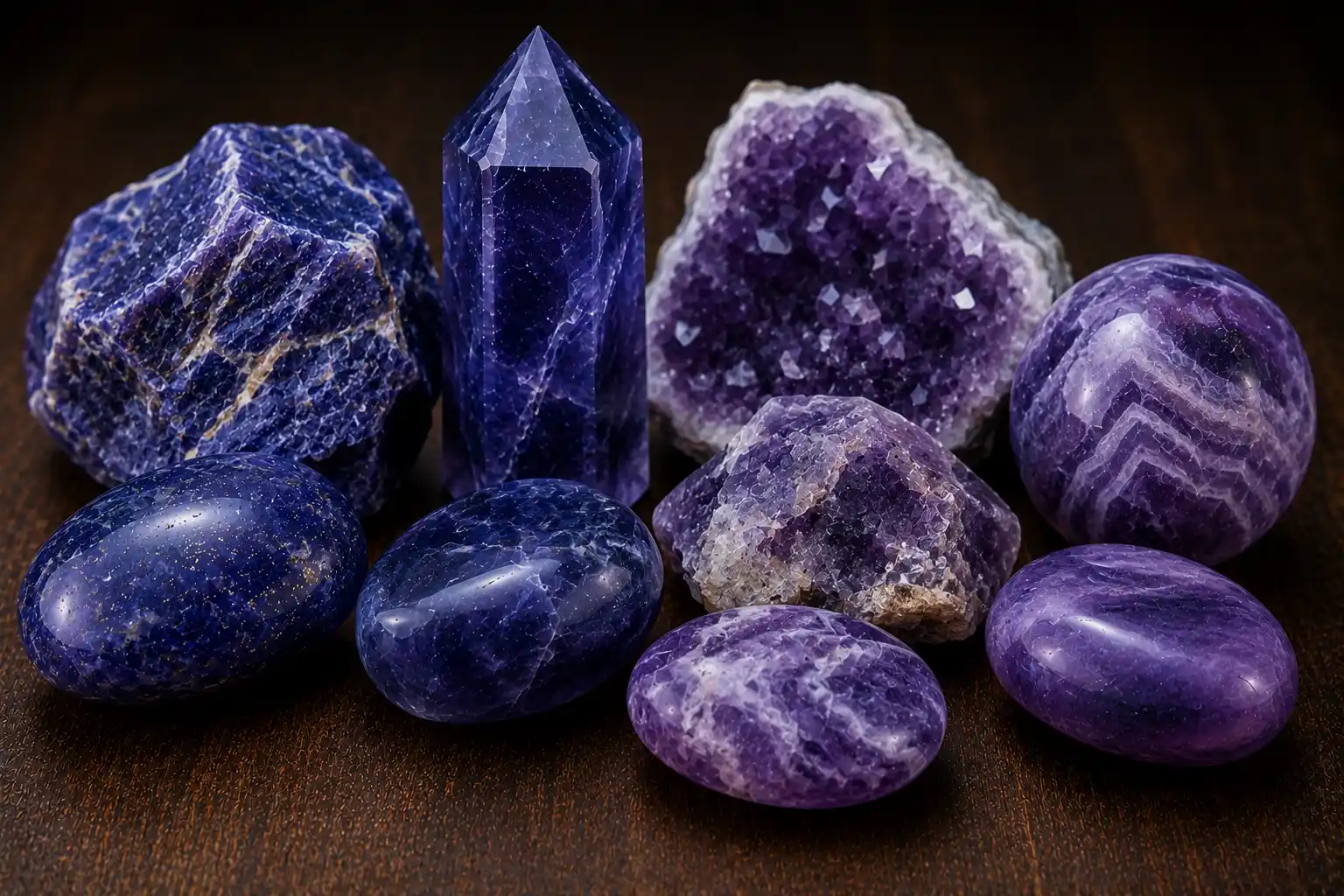
Third eye chakra crystals are stones used symbolically to support reflection, discernment, imagination and intuitive awareness. Amethyst, Lapis Lazuli and Sodalite are the most familiar choices, while Labradorite, Iolite, Moonstone and other blue or violet materials offer different themes.
No crystal can scientifically open a chakra, activate the pineal gland or guarantee psychic perception. The most useful stone is one that supports a grounded practice: observing carefully, checking assumptions and translating insight into responsible action.
The main third eye chakra guide explains Ajna, balancing practices and safety. This page owns the detailed crystal list.
Third Eye Chakra Crystals at a Glance
| Crystal | Symbolic role | Practical use | Main care concern |
|---|---|---|---|
| Amethyst | Calm discernment | Meditation and journaling | Strong light and impact |
| Lapis Lazuli | Truth and judgment | Communication reflection | Porosity, dye and acids |
| Sodalite | Organized thought | Study and decision-making | Cleavage and treatment |
| Labradorite | Imagination and perspective | Creative visualization | Feldspar cleavage |
| Purple Fluorite | Mental organization | Desk or study practice | Mohs 4 and perfect cleavage |
| Clear Quartz | Focus and intention | Simple meditation prompt | Fractures and imitation |
| Iolite | Direction and self-navigation | Goal review | Cleavage and pleochroic darkness |
| Moonstone | Inner cycles and reflection | Dream journaling | Feldspar cleavage |
| Azurite | Deep inquiry | Protected display or meditation | Softness and copper-mineral sensitivity |
| Sapphire | Disciplined insight | Durable jewelry | Treatment disclosure |
| Lepidolite | Gentle transition | Quiet reflection | Mica softness and flaking |
| Charoite | Integration and change | Cabochon or palm-stone practice | Moderate hardness and imitation |
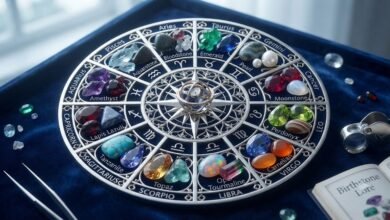
How Third Eye Crystals Are Chosen
Most third-eye lists favor blue, indigo, violet and colorless stones.
That pattern reflects modern color symbolism. Blue is associated with thought and communication, violet with spiritual reflection and colorless material with clarity.
Mineral identity still matters more than color for physical care. Purple Fluorite, Amethyst and Charoite may share a color family but differ substantially in hardness, cleavage and chemical composition.
Choose a stone according to the practice and environment. A durable Sapphire can be worn regularly, while soft Azurite is better kept as a protected specimen.
1. Amethyst
Amethyst is the most widely recognized third eye chakra crystal.
Modern traditions associate its purple color with calm awareness, moderation and the ability to observe thoughts without reacting immediately.
It works well for short meditation because it is visually engaging without requiring an elaborate practice. Hold a polished stone or place it on a stable surface and consider one question that needs patient examination.
Amethyst is Quartz with a Mohs hardness near 7. It is durable enough for many jewelry formats, though hard impact can chip it and prolonged strong light may affect some color.
Natural, treated and synthetic material all occur. The completed guide to real versus fake Amethyst explains common imitations, while treated Amethyst covers heating and synthetic material.
2. Lapis Lazuli
Lapis Lazuli is a blue metamorphic rock composed principally of Lazurite with variable Calcite, Pyrite and other minerals.
Its modern symbolism centers on truth, judgment and speaking from considered understanding rather than immediate reaction.
For third-eye practice, Lapis can support the transition from inner observation to clear language. Write an interpretation, then ask how it can be expressed accurately without exaggeration.
The material is softer and more porous than Quartz. Dye, wax and reconstruction are common, and acids can damage Calcite components.
The completed real-versus-fake Lapis Lazuli guide covers imitations. Use the completed guide to cleaning Lapis Lazuli jewelry rather than soaking it.
3. Sodalite
Sodalite is a blue feldspathoid mineral commonly marked with white Calcite veins.
It is associated symbolically with organizing thought, reducing mental contradiction and separating a fact from an interpretation.
A practical Sodalite exercise uses three columns: what happened, what was assumed and what still needs verification.
Sodalite has moderate hardness and cleavage. It may scratch or chip when carried loosely with harder stones.
Dyed and misidentified blue materials occur. The completed real-versus-fake Sodalite guide provides authentication clues, and Sodalite versus Azurite separates two different blue minerals.
4. Labradorite
Labradorite is feldspar known for broad blue, green, gold or multicolored labradorescence.
Its shifting optical effect supports symbolism based on perspective, imagination and recognizing that one situation can appear different from another angle.
Use Labradorite during creative planning. Generate several possible explanations or solutions before selecting one.
The stone has feldspar cleavage and a hardness around 6–6.5. It can scratch and chip, particularly around thin cabochon edges.
The completed Labradorite buying guide explains flash orientation, while Labradorite versus Moonstone distinguishes related feldspar effects.
5. Purple Fluorite
Purple Fluorite is used symbolically for mental organization, prioritization and flexible thinking.
Its color zoning can provide a useful visual metaphor: several ideas can coexist while still forming one structure.
Fluorite works well as a protected desk specimen during study or planning. It is less suitable for pockets, rough handling or daily rings.
The mineral ranks only 4 on the Mohs scale and has perfect cleavage. It scratches easily and can break after impact.
Do not soak it, expose it to thermal shock or store it beside harder crystals. The completed guide to types of Fluorite explains its broad color range.
6. Clear Quartz
Clear Quartz is associated with clarity, focus and intentionally defined goals.
Its transparency makes it a neutral choice for practitioners who do not want a strongly color-based stone.
Write one question on paper and place the Quartz beside it. The physical arrangement can help keep the meditation focused instead of expanding into unrelated symbolism.
Quartz ranks 7 on the Mohs scale, but internal fractures and sharp points can still chip.
Glass and synthetic Quartz may resemble natural material. The completed real-versus-fake Clear Quartz guide explains identification limitations.
7. Iolite
Iolite is a blue-to-violet Cordierite gemstone with strong pleochroism.
Its directional colors inspire symbolism based on navigation, orientation and choosing a path after examining several viewpoints.
Iolite suits goal review. Name the destination first, then evaluate whether the current action actually moves toward it.
The stone is durable enough for careful jewelry but has cleavage and may appear dark or gray if cut poorly.
Its similarity to Tanzanite creates market confusion. The completed Iolite versus Tanzanite guide explains their different mineral properties.
8. Moonstone
Moonstone is feldspar displaying a floating optical glow called adularescence.
It is associated with cycles, emotional reflection and noticing how perception changes with context.
Moonstone works naturally with a dream or mood journal. Record an experience first and interpret it later, when immediate emotion has settled.
Its hardness is around 6–6.5, and feldspar cleavage makes rings and loose pocket use more demanding.
The completed guide to real versus fake Moonstone covers glass imitations and misleading trade names. The guide to types of Moonstone explains white, peach, black and rainbow material.
9. Azurite
Azurite is a deep-blue copper carbonate mineral.
Modern crystal traditions associate it with deep inquiry, confronting an avoided question and examining assumptions beneath the surface.
Azurite is best used as a protected specimen or stable cabochon rather than a loose bedside or pocket stone.
It is relatively soft and sensitive to acids. Copper-mineral dust should not be inhaled, and the stone should not be used in drinking water or elixirs.
The completed Malachite versus Azurite guide explains the relationship between these copper minerals.
10. Sapphire
Sapphire represents disciplined insight, loyalty to truth and judgment that survives careful testing.
Blue and violet Sapphires fit the third-eye color tradition, but the gem’s practical advantage is durability.
Corundum ranks 9 on the Mohs scale and suits rings, earrings, necklaces and bracelets when the setting and stone are sound.
Heat treatment is common, while diffusion, filling and laboratory-grown Sapphire also occur. The completed real-versus-fake Sapphire guide explains origin and treatment concerns.
Sapphire is a good choice for someone who wants a third-eye symbol in frequently worn jewelry rather than a delicate specimen.
11. Lepidolite
Lepidolite is a lithium-bearing mica that commonly appears lilac, pink or purple.
Modern traditions connect it with transition, gentle reflection and reducing pressure to solve every uncertainty immediately.
Its layered sparkle can support a slow review practice. Ask which part of a problem requires action and which part simply requires time.
Lepidolite is soft, has perfect mica cleavage and may flake. Rough pieces should not be carried with harder crystals or rubbed against skin repeatedly.
The mineral contains lithium structurally, but holding it does not provide a pharmaceutical lithium dose.
12. Charoite
Charoite is a purple ornamental rock known for swirling, fibrous and feathered patterns.
Its modern symbolism centers on integrating change, recognizing fear and moving forward without denying uncertainty.
The complex pattern works well for reflection on a situation containing several emotions or competing priorities.
Charoite is usually cut as cabochons, beads or carvings. It has moderate hardness but can include softer or fractured areas.
Dyed stone, resin and lookalike purple materials may be sold under its name. A reputable seller should identify the material and any stabilization accurately.
A Grounding Companion: Black Obsidian
Black Obsidian is not a primary third-eye color stone, but it can serve as a grounding companion.
Its symbolism focuses on direct observation and uncomfortable truths rather than visions or abstraction.
Place it below the other stones rather than on the forehead. The physical layout can represent returning insight to practical reality.
Obsidian is natural volcanic glass. It can form extremely sharp edges when broken and should be kept away from beds and loose floor-level arrangements.
The broader Obsidian guide explains its natural-glass identity.
Best Third Eye Crystal for Beginners
Amethyst is the easiest starting choice because it is widely available, reasonably durable and familiar.
Sodalite is useful for structured journaling, while Labradorite suits creative reflection.
A beginner does not need a complete set. One clearly identified stone and one consistent practice provide more value than collecting many crystals without using them intentionally.
The planned healing-crystals beginner guide provides a broader introduction.
Best Crystal for Intuition
Labradorite and Iolite are strong symbolic choices when intuition means considering possibilities and direction.
Lapis Lazuli is better when intuition must be translated into truthful communication.
Sapphire suits decisions that require discipline and long-term commitment.
The planned guide to crystals for intuition covers a broader list. No stone makes intuition infallible.
Best Crystal for Dreams
Moonstone, Amethyst and Labradorite are commonly associated with dreams.
Keep a journal beside the bed and record dreams before handling the stone or checking a phone.
Do not place loose crystals beneath a pillow. Sharp points, broken edges and heavy stones can create physical risk.
The planned guide to crystals for dreams explores this search intent, while the completed article on wearing crystals to sleep covers safe placement.
Best Third Eye Crystal for Study
Sodalite and Purple Fluorite are the most direct symbolic choices for organizing information.
Clear Quartz can mark one defined study objective, while Sapphire represents disciplined attention.
Keep soft Fluorite in a stable tray rather than moving it repeatedly across a crowded desk.
The stone should support study behavior, not replace reading, practice or rest.
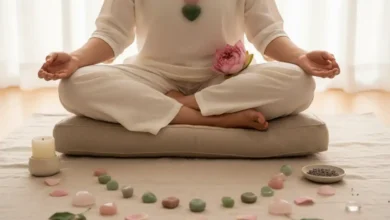
How to Meditate With a Third Eye Crystal
Choose one stone and place it on a table or hold it loosely.
Sit comfortably with the feet or body supported. Begin by noticing physical contact with the floor or chair.
Bring attention to one question. Avoid trying to force images or sensations.
After a few minutes, write what you observed and separate it into facts, interpretations and unanswered questions.
The planned guide to crystals for meditation covers other meditation styles.
Should a Crystal Be Placed on the Forehead?
A small smooth stone may be rested briefly on the forehead while lying still, but placement is not necessary.
Do not use a heavy, sharp, unstable or chemically sensitive specimen. Do not fall asleep with a stone balanced above the eyes.
Holding the stone or placing it nearby provides the same symbolic function with less physical risk.
A crystal does not become more effective because it is pressed against a chakra location.
Third Eye Crystal Pairings
Amethyst and Lapis Lazuli combine calm reflection with truthful expression.
Sodalite and Clear Quartz pair structured thought with a defined intention. Labradorite and Iolite create a perspective-and-direction theme.
Purple Fluorite can be paired symbolically with Black Obsidian to balance mental exploration with grounding.
Physical compatibility is separate from symbolism. Hard Quartz can scratch Fluorite, Lepidolite, Azurite and other softer stones.
The completed crystal-pairings guide explains both considerations.
Connecting Third Eye Stones With Other Chakras
Third-eye work is commonly paired with the throat chakra so insight can be expressed clearly.
The crown chakra adds spiritual meaning, while the completed root chakra brings attention back to practical stability.
The planned crystals-for-chakras guide compares stones across the complete seven-center model.
Using grounding practices first can be helpful for anyone who becomes anxious or overly absorbed in upper-chakra symbolism.
Cleansing Third Eye Crystals
Use a method suited to the mineral rather than its chakra assignment.
Sound, visualization and wiping with a clean dry cloth are broadly conservative.
Amethyst and Clear Quartz tolerate brief gentle washing when structurally sound. Lapis Lazuli, Azurite, Fluorite and Lepidolite require more caution.
Do not soak a mixed collection. Water-safe Quartz does not make a neighboring porous or cleavage-prone stone safe.
The completed guide to cleansing crystals explains material-specific limits.
Storage
Store each crystal according to hardness and structure.
Sapphire and Quartz can scratch Fluorite, Azurite, Lepidolite, Sodalite and feldspar stones.
Use padded compartments rather than one shared bag. Keep sharp points capped or positioned where they cannot damage softer specimens.
Avoid permanent sunlight display for Amethyst and other potentially light-sensitive material.
Accurate identification should come before care. Similar colors do not imply identical durability.
Frequently Asked Questions
1. What is the best crystal for the third eye chakra?
Amethyst is the most common starting choice. Lapis Lazuli, Sodalite and Labradorite are also widely associated with Ajna.
2. Can a crystal open the third eye?
No scientific evidence shows that a crystal physically opens a chakra or creates paranormal perception. Stones can function as symbolic meditation aids.
3. Which third eye crystal is best for intuition?
Labradorite and Iolite are popular symbolic choices, while Lapis Lazuli emphasizes truthful judgment and Sapphire represents disciplined insight.
4. Which third eye crystal is best for beginners?
Amethyst is accessible, durable and easy to use in a simple meditation or journaling practice.
5. Can I use more than one third eye stone?
Yes, but a small intentional pairing is usually easier to use than a large unfocused collection.
6. Should I put the crystal between my eyebrows?
It is not necessary. Holding the stone or placing it nearby is safer, particularly for heavy, sharp or fragile specimens.
7. Can I sleep with third eye crystals?
Keep them on a stable bedside surface rather than loose in the bed. Do not sleep with sharp, heavy or brittle stones beneath a pillow.
8. Which third eye stone is best for dreams?
Moonstone, Amethyst and Labradorite are commonly used symbolically with dream journaling.
9. Which third eye crystal is most durable for jewelry?
Sapphire is the most durable major option. Amethyst and Quartz also handle many jewelry formats better than Fluorite, Azurite or Lepidolite.
10. Can all third eye crystals be cleansed in water?
No. Lapis Lazuli, Azurite, Fluorite, Lepidolite and several other stones require conservative dry care.
11. Are indigo stones automatically third eye crystals?
No. Indigo is a modern symbolic association. Mineral identity, tradition and personal use all matter.
12. Can third eye crystals replace meditation or therapy?
No. They can support a reflective routine but do not replace mental-health treatment, medical care or the practical work of meditation.
Third-eye crystal meanings, intuition claims and chakra associations belong to spiritual traditions and are not scientifically established medical or anatomical effects. Do not ingest stones, prepare crystal drinking water with unidentified minerals or use crystal practices in place of qualified healthcare.