
Best Crystals for a Happy Marriage: Love, Trust and Harmony

Crystals for marriage are traditionally used to symbolize affection, honest communication, commitment and the willingness to repair problems together. They cannot guarantee marital happiness or change a partner’s behavior, but they may serve as meaningful reminders of the habits that help a long-term relationship remain respectful and connected.
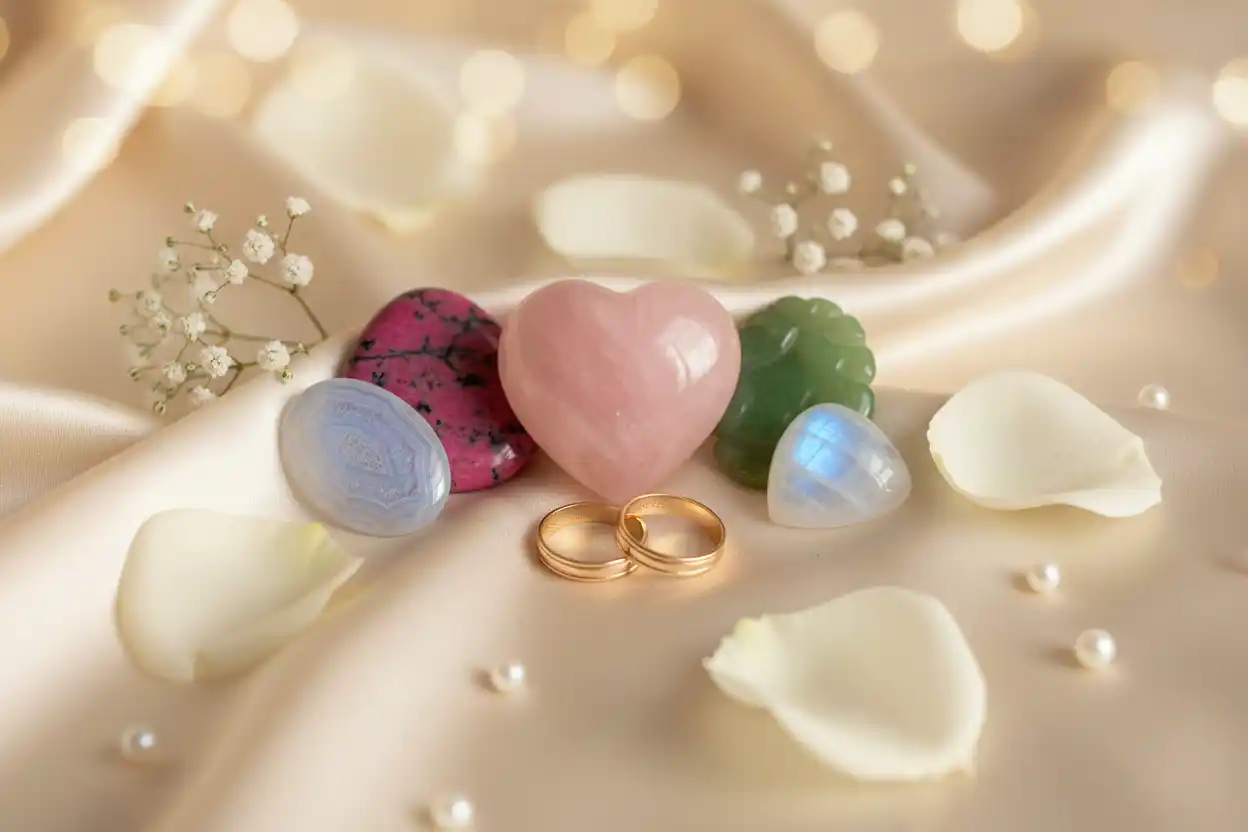
Rose quartz represents compassion, blue lace agate supports measured communication and rhodonite suits accountability after conflict. Meanwhile, moss agate and jade reflect the patience and consistency required to build a shared life over many years.
Best Crystals for Marriage at a Glance
| Crystal | Traditional marriage theme | Best suited to | Practical relationship cue |
|---|---|---|---|
| Rose quartz | Affection, compassion and warmth | Everyday emotional connection | Express appreciation directly |
| Rhodonite | Repair, accountability and forgiveness | Recovering after conflict | Identify what can realistically be repaired |
| Blue lace agate | Calm and considerate communication | Difficult conversations | Slow down and state one clear message |
| Lapis lazuli | Honesty, trust and understanding | Discussing important decisions | Separate facts from assumptions |
| Moonstone | Emotional cycles and transitions | Changes in family life or routine | Recognize what has changed |
| Moss agate | Patience and gradual growth | Long-term partnership | Value steady effort over dramatic gestures |
| Jade | Harmony, stability and stewardship | Shared resources and future planning | Protect what the marriage is building |
| Carnelian | Affection, creativity and initiative | Restoring playfulness and shared activity | Take the first step toward connection |
| Black tourmaline | Boundaries and symbolic protection | Managing outside pressures | Protect time and personal limits |
| Clear quartz | Intention and clarity | Defining shared priorities | Turn a broad wish into one practical agreement |
What a Happy Marriage Requires
A happy marriage is not one without disagreement. Long-term partners will encounter changing responsibilities, financial pressure, health concerns, family expectations and periods of reduced emotional capacity.
The strength of the marriage depends less on avoiding every conflict than on how each person responds when a problem appears. Respectful communication, accountability, emotional and physical safety, affection, shared responsibility and room for individuality all matter.
A crystal practice can give those principles a visible symbol. However, the stone does not create the behavior. The couple must still listen, communicate, follow through and seek qualified support when a problem exceeds what they can resolve alone.
The broader guide to crystals for love and romance focuses on attraction and romantic relationships generally. Marriage requires the additional work of sustaining trust, shared commitments and practical partnership over time.
Rose Quartz for Everyday Affection
Rose quartz is one of the most familiar love stones. Its pale pink color and traditional connection with compassion make it a natural symbol of tenderness within marriage.
Its most useful role involves ordinary care rather than dramatic romance. A partner might keep rose quartz near a shared journal or calendar as a reminder to acknowledge contributions that could otherwise become invisible.
Instead of saying only, “Thank you for everything,” identify the specific action and its effect. For example, appreciation may involve recognizing that a partner handled a difficult appointment, completed an unpleasant household task or offered support during a demanding week.
Rose quartz can also symbolize self-respect. Compassion should extend to both people, and one spouse should not be expected to maintain harmony by suppressing every personal need.
Rhodonite for Repairing Conflict
Rhodonite is traditionally associated with accountability, forgiveness and emotional repair. It suits marital conflicts where one or both partners need to recognize the effect of their behavior.
A constructive repair process begins with observable facts. Identify what happened, how it affected the relationship and what needs to change.
A sincere apology avoids phrases that transfer responsibility back to the hurt partner. It should acknowledge the action, express regret and include a realistic plan for preventing repetition.
Forgiveness does not automatically restore trust. Trust generally returns through consistent changed behavior rather than one conversation or symbolic ritual.
The dedicated guide to crystals for forgiveness explains the differences between forgiveness, reconciliation and restored trust in greater depth.
Blue Lace Agate for Calm Communication
Blue lace agate is traditionally linked with gentle expression and emotional composure. It may help couples prepare for conversations that tend to become rushed, defensive or unfocused.
Before speaking, identify one issue rather than combining several unrelated grievances. Then describe the behavior, its effect and the requested change.
For example, “When we make a financial decision without discussing it first, I feel excluded. I would like us to review purchases above an agreed amount together,” provides more useful information than making broad claims about irresponsibility.
Blue lace agate can also represent listening. Each partner should be able to summarize the other person’s main concern before responding.
The completed guide to crystals for communication explores speaking, listening and clear expression across many situations.
Lapis Lazuli for Honesty and Trust
Lapis lazuli has longstanding associations with truth, wisdom and articulate communication. It may suit conversations involving money, family, future plans or another subject where incomplete information can damage trust.
Honesty should remain accurate and relevant. It does not require voicing every passing criticism or using truth as an excuse for cruelty.
Use lapis lazuli while preparing to explain a concern in language that the other partner can understand and act upon. Separate the known facts from interpretations and fears.
Trust also requires consistency between words and behavior. A promise becomes meaningful when actions repeatedly support it.
Moonstone for Changes in the Marriage
Moonstone is traditionally associated with cycles, transition and emotional awareness. Marriage often moves through phases that alter how partners relate to one another.
A move, new job, pregnancy, caregiving responsibility, retirement or change in health may disrupt established routines. Even positive transitions can produce stress and conflicting emotions.
Use moonstone during a relationship check-in focused on what has changed. Each partner can identify one routine that no longer works, one need that has become more important and one part of the relationship they want to preserve.
The stone does not predict how the marriage will develop. Instead, it symbolizes the need to update expectations when circumstances change.
Moss Agate for Long-Term Growth
Moss agate is traditionally associated with patience, natural cycles and gradual development. It provides an especially suitable symbol for marriage because most relationship strength grows through repetition rather than dramatic events.
Small acts of reliability matter. Following through on plans, communicating changes in capacity and sharing routine responsibilities all contribute to long-term trust.
Moss agate may be placed near a shared planner, garden or household project. Its purpose is to represent something the couple is developing together.
Growth does not mean that every stage will look the same. A healthy marriage can change form while retaining care, respect and shared commitment.
Jade for Stability and Shared Stewardship
Jade carries historical associations with harmony, protection, longevity and prosperity in several cultures. Those themes make it a meaningful marriage stone, particularly for shared resources and long-term planning.
Within a grounded practice, jade can represent stewardship rather than effortless fortune. A couple might use it during conversations about budgeting, housing, retirement or family responsibilities.
The objective is not to make every financial choice together in equal detail. Instead, both partners should understand the major agreements, risks and priorities affecting their shared life.
Jade can also symbolize protecting the relationship from preventable instability through honest planning and realistic expectations.
Carnelian for Playfulness and Shared Initiative
Carnelian is traditionally associated with vitality, creativity and action. It may help symbolize the effort required to maintain enjoyment after work and household routines become demanding.
Connection does not always return through a serious conversation. Sometimes a couple needs a shared activity, new experience or uninterrupted time together.
Use carnelian as a reminder to make a specific invitation. “Would you like to take a walk after dinner on Saturday?” is more actionable than saying that the marriage needs more fun.
The activity should suit both partners rather than becoming another obligation. Shared enjoyment works best when each person has input.
Black Tourmaline for Marital Boundaries
Black tourmaline is traditionally associated with grounding and symbolic protection. Within marriage, it can represent boundaries that protect the partnership without isolating it from healthy community and support.
Outside expectations may involve relatives, work demands, social commitments or pressure to disclose private information. Couples benefit from discussing which matters remain private and how they will respond when another person crosses a limit.
Personal boundaries also remain important within marriage. Partners do not lose the right to privacy, rest, friendships or time alone simply because they are married.
The completed guide to crystals for setting boundaries examines limits in greater detail. A boundary should describe what the person or couple will do rather than attempting to control every external response.
Clear Quartz for Shared Priorities
Clear quartz is commonly used as an intention-setting stone. It may help a couple turn an abstract wish for a happy marriage into one specific practice.
Possible intentions include:
- Eat one meal together without devices each week.
- Review the household budget on a set date.
- Discuss schedule changes before making commitments.
- Express appreciation for one specific action each day.
Choose only one or two priorities at a time. A long list of ideal relationship behaviors may become difficult to maintain.
Clear quartz can remain beside the written agreement until the habit becomes established or needs revision.
Choosing Marriage Crystals by Relationship Need
| Relationship need | Suggested crystals | Practical action |
|---|---|---|
| Restore warmth | Rose quartz and carnelian | Plan affectionate or enjoyable time together |
| Resolve a conflict | Rhodonite and blue lace agate | Take responsibility and make a specific request |
| Rebuild trust | Lapis lazuli and rhodonite | Use honest disclosure and consistent behavior |
| Navigate a major transition | Moonstone and clear quartz | Update roles, routines and expectations |
| Strengthen long-term commitment | Moss agate and jade | Maintain shared plans through regular review |
| Establish healthier boundaries | Black tourmaline and blue lace agate | Agree on a clear limit and communicate it |
| Reduce emotional reactivity | Smoky quartz and rose quartz | Pause before discussing the issue |
| Clarify shared priorities | Clear quartz and tiger’s eye | Choose criteria and make one decision |
Friendship Within Marriage
A successful marriage often includes friendship, although romantic partnership and friendship are not identical. Shared humor, mutual interest and the ability to enjoy ordinary time together can protect connection when life becomes demanding.
The completed guide to crystals for friendship focuses on trust, reciprocity and maintaining platonic bonds. Within marriage, those same qualities support companionship alongside romance, shared responsibility and intimacy.
Partners do not need to share every hobby. Instead, each person can show interest in what matters to the other while maintaining an independent identity.
A Weekly Marriage Check-In
A short weekly check-in can prevent practical and emotional issues from accumulating.
Choose one or two crystals that reflect the present focus. Rose quartz may represent appreciation, while blue lace agate can support communication.
Each partner can answer four questions:
- What felt supportive this week?
- What created strain?
- What practical issue needs attention?
- What would help during the coming week?
Keep the conversation focused on understanding and planning rather than determining who performed better. When a major issue appears, schedule enough time to address it properly instead of forcing it into a short check-in.
Using Crystals During Marital Conflict
A crystal should never be used to prove that one partner has better energy or spiritual awareness. Both people remain responsible for their words and actions.
Place the chosen stone on a stable table rather than passing it back and forth if that feels artificial or distracting. Use it as a cue to slow down, avoid interruption and return to the central issue.
When voices continue rising or one person becomes overwhelmed, pause the discussion and agree on a specific time to return. A pause should not become indefinite avoidance.
The guide to crystals for inner peace may support individual reflection before the conversation resumes.
Marriage Crystals as Anniversary Gifts
A crystal gift can commemorate a relationship milestone when the recipient enjoys gemstones and understands the symbolism.
Rose quartz may represent affection, moss agate can symbolize gradual growth and jade may reflect long-term stability. The meaning should be explained as a personal intention rather than a promise that the stone will protect the marriage automatically.
Consider the recipient’s jewelry style and the durability of the material. A display specimen may suit someone who does not wear gemstone jewelry.
Avoid using a gift as a substitute for a needed conversation or apology.
Placing Marriage Crystals at Home
Place stones where the related behavior occurs. Rose quartz may remain near a shared journal, while jade can sit beside a household planning area.
Blue lace agate may be kept near a space used for important conversations. Moss agate can accompany a shared plant or long-term project.
Heavy, pointed or unstable specimens should never rest above a bed, sofa or frequently occupied chair. Crystals also need secure placement around children and pets.
A bedroom arrangement should remain uncluttered and physically safe rather than following a rigid rule about a particular corner.
Caring for Marriage Crystals
Different stones require different physical care. Moonstone can chip along cleavage planes, while lapis lazuli should remain away from acids and prolonged soaking.
Use a soft cloth and a material-compatible cleaning method. Sound, visualization and careful dry placement can support symbolic cleansing without exposing sensitive stones to water or salt.
The general guide to cleansing crystals explains several options. No cleansing method can resolve a marriage problem that requires communication or changed behavior.
When a Marriage Needs Professional Support
Some problems benefit from support beyond a private relationship ritual. Couples counseling, individual therapy, financial advice or legal guidance may help when communication repeatedly fails or a practical issue has become complex.
The broader guide to crystals for emotional healing may complement individual reflection, but crystals should not replace qualified care.
Abuse, coercive control, stalking, financial restriction and threats are not ordinary relationship conflicts. Safety planning and specialist support take priority over couple rituals or joint counseling when one partner is dangerous.
Conclusion
The best crystals for marriage symbolize the behaviors that sustain a long-term partnership. Rose quartz encourages affection, blue lace agate supports communication and rhodonite represents accountability after conflict. Lapis lazuli emphasizes honesty, while moonstone, moss agate and jade reflect transition, patience and shared stewardship.
No crystal can guarantee a happy marriage. Its most meaningful role is to remind both partners that connection grows through consent, respect, consistent behavior and willingness to address problems honestly.
Frequently Asked Questions
1. What is the best overall crystal for marriage?
Rose quartz is one of the most versatile marriage stones because it symbolizes affection, compassion and emotional warmth. Rhodonite may be more useful when repair after conflict is the main need.
2. Which crystal symbolizes a long-lasting marriage?
Moss agate and jade both suit long-term commitment. Moss agate represents gradual growth, while jade carries traditional associations with harmony and longevity.
3. Which crystal helps married couples communicate?
Blue lace agate supports calm expression, while lapis lazuli symbolizes honesty and thoughtful communication.
4. Can crystals repair a troubled marriage?
No crystal can repair a marriage by itself. Repair requires mutual participation, accountability, communication and, when appropriate, professional support.
5. Which stone is suitable after an argument?
Rhodonite is traditionally associated with responsibility and repair. Blue lace agate may help symbolize a calmer follow-up conversation.
6. Can marriage crystals restore trust?
Crystals cannot restore trust. Trust returns through truthful disclosure, reliable behavior and enough time to evaluate whether the change is consistent.
7. Where should marriage crystals be placed?
Place each stone near the behavior it represents, such as rose quartz near a shared journal or jade beside financial-planning materials.
8. Can a couple use several marriage crystals together?
Yes. A balanced set might include rose quartz for affection, blue lace agate for communication and moss agate for long-term growth.
9. Is it appropriate to give crystals as an anniversary gift?
Yes, when the recipient enjoys crystals. Choose a stone whose symbolism and physical form suit the relationship and the person’s preferences.
10. Do marriage crystals need to be cleansed?
There is no scientific requirement. Someone following a spiritual practice may perform a gentle symbolic reset using a method safe for the mineral.
11. Can crystals prevent divorce or infidelity?
No. Crystals cannot control another person’s behavior, guarantee fidelity or prevent a relationship from ending.
12. Can crystals help an abusive marriage become safe?
No. Abuse requires safety planning and qualified support. A crystal ritual should never replace action needed to protect someone from coercion, threats or violence.
Disclaimer: Crystals cannot guarantee marital happiness, repair trust automatically or change a partner’s behavior. They should never replace communication, counseling, legal advice, financial guidance or safety planning. Abuse and coercive control require qualified specialist support.