

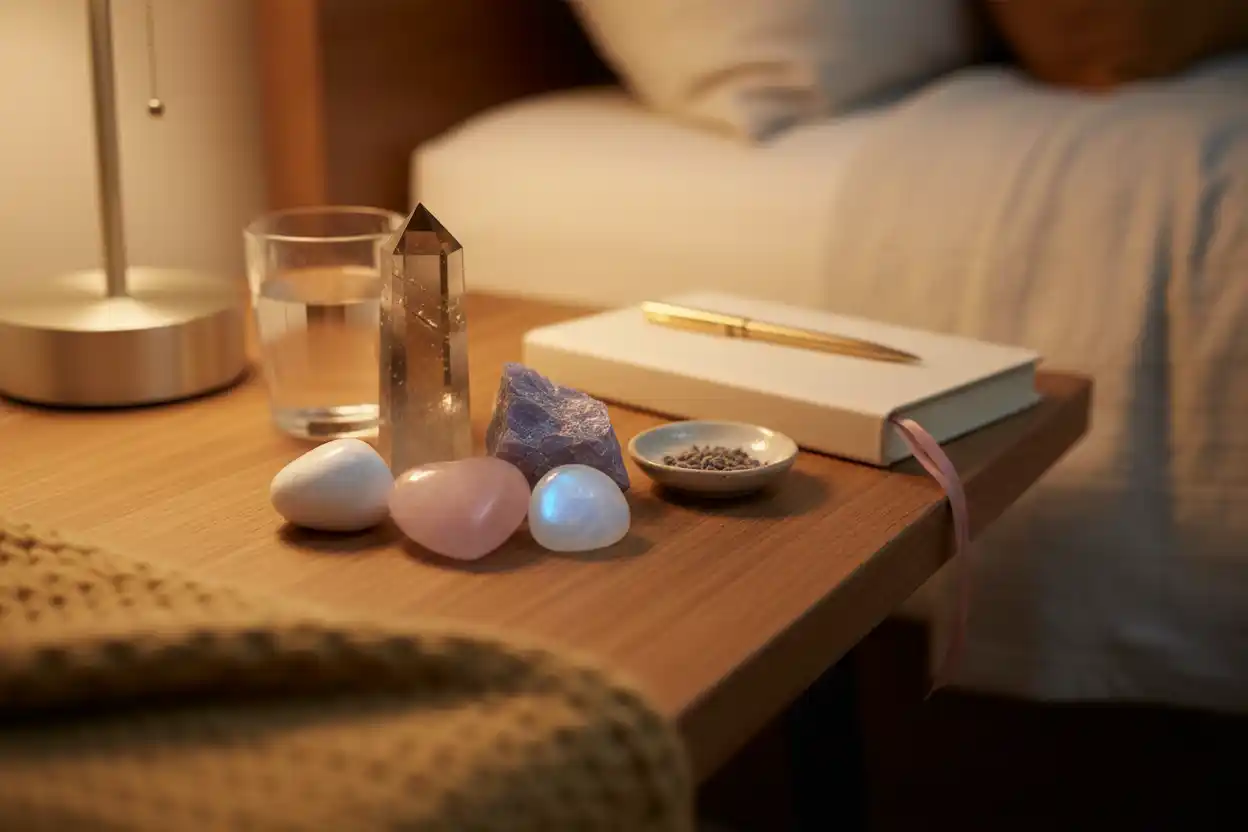

Crystals for nightmares are traditionally used as calming bedside symbols, grounding objects and reminders to create a consistent sleep routine. They cannot guarantee dreamless sleep or treat the physical and psychological causes of recurring nightmares, but they may support a gentler transition into rest and provide a familiar focal point after waking.
Howlite and smoky quartz suit calming and grounding routines, while rose quartz supports self-compassion after a disturbing dream. Lepidolite can represent simplifying an overstimulating evening, and sodalite may help separate dream imagery from present-day facts.
Best Crystals for Nightmares at a Glance
| Crystal | Traditional nighttime association | Best practical use | Important caution |
|---|---|---|---|
| Howlite | Patience, quiet awareness and calm | Slowing the bedtime routine | Porous and commonly dyed; avoid soaking |
| Smoky quartz | Grounding and present awareness | Reorienting after waking | Keep heavy pieces off the bed |
| Lepidolite | Transition and emotional steadiness | Reducing evening stimulation | Soft and water-sensitive |
| Rose quartz | Compassion and emotional comfort | Responding gently after a nightmare | Does not remove the cause of nightmares |
| Blue lace agate | Calm communication and composure | Settling racing internal dialogue | Protect from impacts and chemicals |
| Sodalite | Logic, truth and mental organization | Reality-checking dream content | Avoid prolonged soaking |
| Moonstone | Cycles and emotional awareness | Tracking recurring dream patterns | May increase dream focus for some people |
| Black tourmaline | Boundaries and grounding symbolism | Marking a safe bedtime space | Not a literal protective shield |
| Chevron amethyst | Reflection and evening spiritual practice | Short pre-sleep meditation | Dream recall may feel stronger for some users |
| Clear quartz | Intention and routine | Defining one bedtime cue | Avoid assigning it many conflicting purposes |
Can Crystals Actually Stop Nightmares?
No crystal has been scientifically shown to stop nightmares or alter dream content reliably. Nightmares can be influenced by stress, trauma, medication, fever, sleep deprivation, alcohol, substances and sleep disorders.
A crystal can still play a limited practical role. For example, a smooth smoky quartz stone may provide a sensory focal point after waking, while howlite can mark the beginning of a lower-stimulation bedtime routine.
The useful effect comes from the routine connected with the object. Consistent sleep timing, reduced evening stimulation and appropriate professional care matter more than the stone itself.
Nightmares Versus Vivid Dreams
Nightmares are distressing dreams that often produce fear, anxiety or awakening. Vivid dreams may feel detailed or emotionally intense without necessarily being frightening.
The completed guide to crystals for vivid dreams and dream recall focuses on remembering and exploring dreams. That goal may not suit someone who wants less attention directed toward disturbing dream content.
Some crystals associated with dreams, intuition or lunar symbolism may make the bedtime ritual feel more dream-focused. When increased recall becomes distressing, simplify the practice and use a grounding stone instead.
1. Howlite for a Slower Bedtime Routine
Howlite is traditionally associated with patience, awareness and a calmer mental pace. Its subdued white-and-gray appearance suits a low-stimulation sleep environment.
Place a howlite stone beside a written bedtime sequence. The routine might include dimming lights, preparing the room, putting away work and completing one quiet activity.
The stone should not become a promise that sleep will happen immediately. Instead, it marks the point at which the day’s problem-solving is ending.
Howlite is porous and often dyed to imitate turquoise. Keep it away from soaking, oils, perfumes and harsh cleaners.
2. Smoky Quartz for Grounding After a Nightmare
Smoky quartz is traditionally linked with grounding, release and practical perspective. It is one of the most useful stones after waking from a frightening dream.
Keep a smooth piece on a stable bedside table. After waking, notice its temperature, weight, color and texture.
Then identify factual details about the present environment: the room, current date, locked door, familiar sounds and the fact that the dream has ended.
This process does not erase the emotional reaction immediately. However, it helps redirect attention from dream imagery toward present sensory information.
Heavy clusters and pointed pieces should never be placed loose in the bed.
3. Lepidolite for Reducing Evening Overload
Lepidolite is traditionally associated with transition, calm and emotional steadiness. It may support an evening routine when excessive input continues until bedtime.
Place it near the area where phones, tablets or work materials are put away. Assign the stone one instruction: no additional work, news or emotionally intense content after the chosen time.
Lepidolite naturally contains lithium within its mineral structure, but holding it does not provide a medicinal lithium dose or treat a sleep or mental-health condition.
The material is relatively soft and should remain dry and protected from harder stones.
4. Rose Quartz for Comfort After Disturbing Dreams
Rose quartz is traditionally associated with compassion, affection and emotional gentleness. It may be helpful when a nightmare leaves someone criticizing themselves for feeling frightened.
A dream can create a strong physical and emotional reaction even when the person understands that it was not real. Rose quartz can symbolize responding to that reaction without shame.
Use a simple statement such as, “That dream was distressing, and I am safe enough to return attention to the room.”
Self-compassion does not require analyzing the dream immediately. Rest may be more useful than attempting to interpret every image during the night.
5. Blue Lace Agate for Quieting Internal Dialogue
Blue lace agate is traditionally associated with composed communication and gentle expression. It may suit people whose nightmares trigger long internal arguments or repeated imagined conversations.
Before bed, write down any discussion that needs attention the next day. Include the main issue and one planned action.
Blue lace agate can mark the decision not to continue rehearsing the conversation during the sleep period.
After a nightmare, use a short factual phrase rather than extended interpretation. The objective is to settle the immediate response, not solve every emotional issue at 3 a.m.
6. Sodalite for Reality-Checking Dream Content
Sodalite is traditionally associated with truth, logic and coherent thought. It can support reality-checking after a dream that feels unusually convincing.
Separate the experience into three categories:
| Category | Example |
|---|---|
| Dream content | What happened within the dream |
| Present fact | What can be observed now |
| Possible concern | A real-life issue worth considering later |
A nightmare about an accident does not predict that an accident will occur. Likewise, dreaming about betrayal does not prove that another person is being dishonest.
Sodalite can symbolize keeping dream imagery separate from evidence.
7. Moonstone for Tracking Emotional Patterns
Moonstone is traditionally associated with cycles, emotional awareness and dreams. It may help someone notice whether nightmares appear around particular stressors or schedule changes.
Record the date, sleep timing, major events, medication changes and the dream’s general theme. Avoid writing extensive detail when that increases distress.
Moonstone may increase attention toward dreams for some people because of its strong lunar symbolism. Stop using it at bedtime when the practice makes dream recall more intense or sleep more anxious.
Because moonstone has cleavage, keep it on a secure surface away from falls and harder objects.
8. Black Tourmaline for a Bedtime Boundary
Black tourmaline is traditionally associated with grounding and protection. It may function as a symbolic boundary between daytime demands and the sleep period.
Place the stone near the bedroom entrance or another safe location. When entering the room, leave work materials and avoid conversations that can wait until morning.
Black tourmaline does not create a literal barrier against nightmares, entities or harmful energy. The boundary must be supported by practical behavior.
A small stone is sufficient. Large towers or heavy specimens should remain far from bed edges and overhead shelves.
9. Chevron Amethyst for Brief Evening Reflection
Chevron amethyst combines purple amethyst and white quartz in banded patterns. It is traditionally associated with reflection and spiritual contemplation.
Use it during a short evening meditation focused on closing the day. Record unfinished tasks for tomorrow, then stop planning.
Amethyst-related stones may increase dream attention or recall for some users. Therefore, chevron amethyst is not automatically the best choice for everyone experiencing nightmares.
Remove it from the bedroom when dream intensity appears to increase. The symbolic meaning should never take priority over actual sleep quality.
10. Clear Quartz for a Simple Sleep Intention
Clear quartz is commonly used for intention-setting. It can support a concise bedtime routine when assigned one realistic purpose.
Suitable intentions include:
“I will follow the same wind-down sequence.”
“I will orient toward the room if I wake frightened.”
“I will discuss recurring nightmares with a qualified professional.”
Avoid assigning the crystal the task of preventing every dream or controlling the unconscious mind. A specific behavioral cue is more grounded and easier to follow.
A Bedtime Crystal Routine for Nightmares
Choose one stone rather than creating a stimulating display of many crystals. Place it on a stable bedside surface where it cannot fall.
Begin the routine at roughly the same time. Reduce light, put away work and avoid distressing media.
Write down any unresolved responsibility that can wait until tomorrow. Then spend several minutes noticing the breath, body and room.
The ritual should remain brief. An elaborate process can create anxiety about completing every step perfectly before sleep.
The completed guide addressing whether crystals can be worn to sleep explains why loose stones and uncomfortable jewelry generally belong outside the bed.
What to Do Immediately After a Nightmare
Sit up only when doing so feels safe. Turn on a gentle light and identify the present location.
Name several things that can be seen and heard. Touch the bed, floor or a smooth grounding stone.
Avoid checking frightening interpretations online during the night. Likewise, do not assume the dream predicts an event.
When returning to sleep feels possible, use a quiet and familiar activity. If the body remains highly activated, leave the bed briefly and return when drowsiness begins.
Should a Nightmare Crystal Go Under the Pillow?
Placing crystals under a pillow is generally unnecessary and may create discomfort or physical risk.
Hard stones can press against the head or neck, while small pieces may become lost in bedding. Raw crystals may have sharp points or loose fragments.
A stable bedside table provides the same visual symbolism without placing the object in the sleep area.
Children, pets and anyone who may place objects in their mouth should not have access to loose stones.
Nightmare Journaling Without Reinforcing Fear
A nightmare journal can help identify patterns, but detailed recording is not helpful for everyone.
Use short entries containing the date, general theme, emotional intensity and relevant daytime stressors. Record whether alcohol, illness, medication changes or severe sleep loss were present.
Do not repeatedly reread distressing entries before bed. Review the journal during daylight and consider sharing recurring patterns with a qualified professional.
Dream interpretation should remain tentative. Similar images can hold different meanings for different people.
Crystals, Trauma and Recurring Nightmares
Recurring nightmares may occur after traumatic experiences. A crystal ritual cannot process trauma or replace trauma-informed care.
Grounding stones may provide a familiar object during a coping routine, but the practice should stop when it intensifies memories, dissociation or fear.
The completed guide to crystals for anxiety and stress covers general grounding and worry-oriented routines. Trauma-related nightmares require a more specialized response.
Qualified clinicians can assess treatment options and determine whether medication, therapy or sleep-focused interventions are appropriate.
Medication, Substances and Nightmares
Certain medications, supplements, alcohol withdrawal and recreational substances may affect dreaming or sleep quality.
Do not stop prescribed medication suddenly because nightmares appear. Contact the prescribing professional or pharmacist for guidance.
A crystal cannot identify whether a medicine is responsible. Keep a record of timing and recent changes so that the concern can be discussed accurately.
Children and Nightmares
Children commonly experience frightening dreams, but adults should not assume that a crystal provides medical or psychological treatment.
A smooth stone may be used only when it is developmentally appropriate, too large to swallow and placed outside the bed. Avoid fragile, sharp, toxic or dusty materials.
A predictable bedtime routine, reassurance and age-appropriate discussion are more important than crystal symbolism.
Frequent nightmares, major behavioral changes, breathing problems during sleep or severe fear deserve professional attention.
Cleaning Bedside Crystals
Frequently handled stones can collect dust, oils and residue. Clean each crystal according to its material properties.
Howlite and lepidolite should not be soaked, while moonstone requires impact protection. Selenite and many other soft materials also need dry care.
The general guide to cleansing crystals safely outlines symbolic methods that do not require water, salt or prolonged sunlight.
Keep crystals away from drinks, medication and food on the bedside table.
When Nightmares Need Professional Attention
Seek qualified support when nightmares occur frequently, cause fear of sleeping, produce significant daytime impairment or follow trauma.
Professional assessment is also important when nightmares accompany sleepwalking, breathing pauses, violent movements, confusion, fever or medication changes.
Urgent help is needed when a person may harm themselves or someone else.
A crystal routine can remain a personal comfort practice, but it should not delay appropriate evaluation.
Conclusion
The best crystals for nightmares provide calming and grounding cues rather than guaranteed dream control. Howlite supports a slower bedtime routine, smoky quartz helps with present-moment orientation and rose quartz encourages self-compassion after waking. Sodalite separates dream content from evidence, while black tourmaline can symbolize a clear boundary around the sleep period.
Recurring nightmares may have medical, psychological or medication-related causes. Restful routines and qualified support remain more important than any particular stone.
Frequently Asked Questions
1. What is the best overall crystal for nightmares?
Howlite is a gentle all-purpose choice for a slower bedtime routine. Smoky quartz may be more useful for grounding after waking from a nightmare.
2. Can crystals stop nightmares completely?
No. Crystals have not been shown to prevent nightmares reliably or control dream content.
3. Which crystal is suitable after waking from a bad dream?
Smoky quartz and sodalite can support sensory grounding and reality-checking. The person should focus on present facts rather than dream interpretation.
4. Can amethyst cause vivid dreams?
Some people report stronger dream attention when using amethyst-related stones, although this is not a scientifically established effect. Remove the stone when sleep feels worse.
5. Should a nightmare crystal be placed under the pillow?
No. A bedside surface is safer because stones under a pillow can cause pressure, break or become lost.
6. Which crystal is suitable for children with nightmares?
A large, smooth rose quartz or howlite stone may be used only as a supervised symbolic object outside the bed. It must not create a choking or injury hazard.
7. Can black tourmaline protect against nightmares?
Black tourmaline may symbolize a bedtime boundary, but it cannot create a proven energetic shield or prevent disturbing dreams.
8. How many nightmare crystals should I use?
One or two stones are enough. A large arrangement may make the bedtime practice more stimulating or complicated.
9. Should I write down every nightmare?
Not necessarily. A short pattern log may help, but detailed journaling should stop when it increases fear or rumination.
10. Can crystals treat trauma-related nightmares?
No. Trauma-related nightmares require appropriate professional assessment and care. Crystals may only serve as optional grounding objects.
11. Can medication cause nightmares?
Some medications and substances may affect sleep and dreaming. Do not stop prescribed medication without consulting the prescribing professional.
12. When should recurring nightmares be evaluated?
Seek help when nightmares are frequent, severe, connected with trauma or medication changes, or significantly disrupt sleep and daytime functioning.
Disclaimer: Crystals cannot diagnose, prevent or treat nightmares, trauma, sleep disorders or medication effects. Do not stop prescribed medication without professional guidance. Recurring, severe or dangerous sleep symptoms require qualified medical or mental-health assessment.