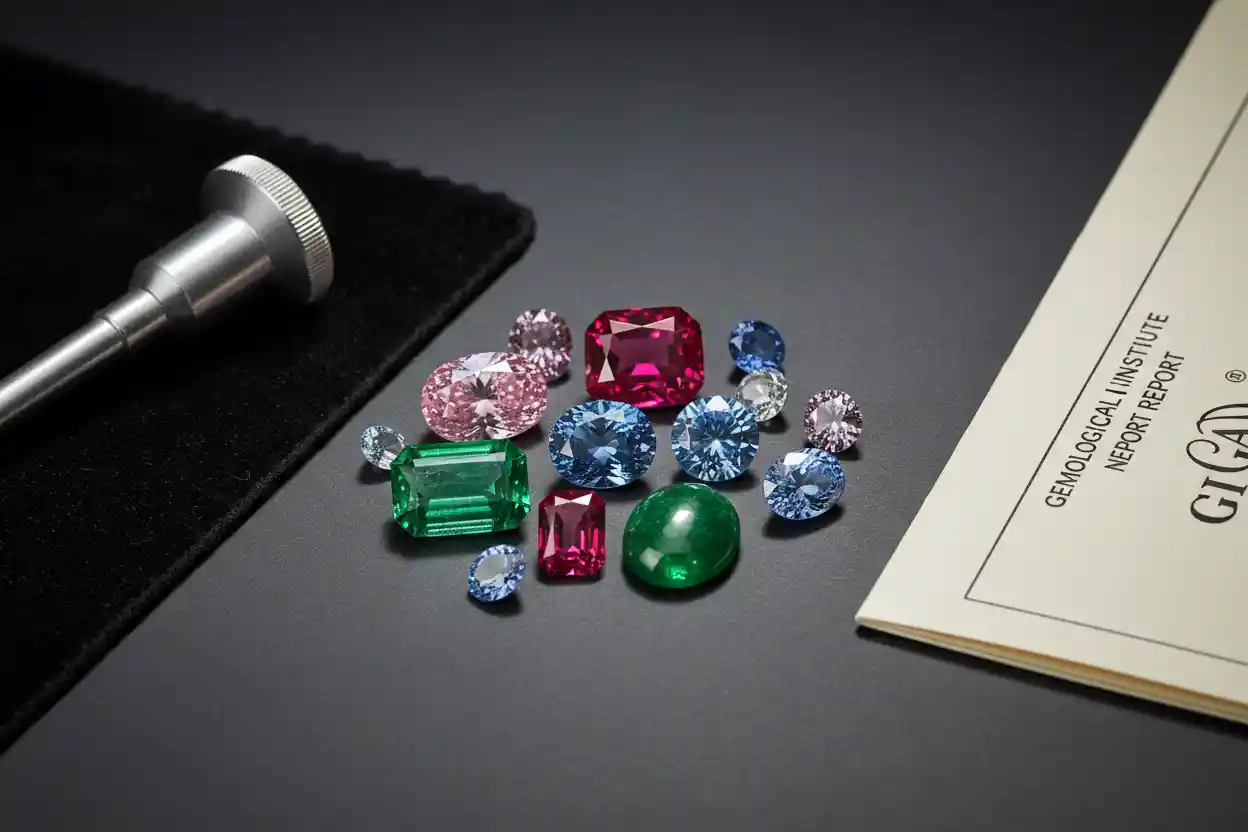
Most Expensive Gemstones: Rare Stones, Record Values & Price Drivers
The most expensive gemstones in the world are not simply the minerals that appear on lists of the rarest stones. Extreme value usually develops when several forms of scarcity intersect at once: an already desirable gem species, exceptional color, unusual size, attractive clarity or transparency, minimal treatment, respected geographic origin where origin matters, excellent cutting, convincing laboratory documentation, distinguished provenance and enough collector demand to create serious competition when the stone reaches the market. Public auctions make this especially visible because a single extraordinary gem can attract multiple wealthy bidders and produce a price far outside ordinary retail ranges. At the top of the documented auction market, colored diamonds dominate the largest individual prices: Sotheby’s states that the 59.60-carat CTF Pink Star realized $71.2 million and remains the most expensive gemstone or jewel sold at auction, while other exceptional colored diamonds have also reached tens of millions of dollars. Ruby leads the non-diamond colored-stone market at its extreme, with Sotheby’s reporting $34.8 million for the 55.22-carat Estrela de FURA, while exceptional sapphire, jadeite, emerald and paraíba-type tourmaline provide additional examples of how rarity, quality and collector demand can turn a gemstone into an eight-figure or multimillion-dollar object.
Those auction headlines need careful interpretation because a record price is not a universal price list for the gemstone species. A ruby selling for tens of millions does not mean rubies generally cost millions, just as the record for a pink diamond does not establish the price of every pink diamond. GIA explains that colored-stone value depends on interacting factors including color, color uniformity, geographic origin, size, clarity, shape and quality of cutting, with color often dominating the assessment for colored gems. Diamond valuation uses its own established framework based on color, clarity, cut and carat weight, while rarity within specific combinations of these characteristics can create dramatic premiums. The practical lesson is that “most expensive gemstone” is meaningful only after defining the basis of comparison: total auction price, price per carat, gemstone species, individual stone, finished jewel or typical market value.
Most Expensive Gemstones at a Glance
| Gem or jewel | Reported sale value | Why the result matters |
|---|---|---|
| CTF Pink Star, 59.60 ct pink diamond | $71.2 million | Sotheby’s identifies it as the most expensive gemstone or jewel sold at auction |
| Oppenheimer Blue, 14.62 ct vivid blue diamond | About $57.54 million | Set a world auction record for a blue diamond at its sale |
| Williamson Pink Star, 11.15 ct pink diamond | $57.5 million | One of the highest-priced diamonds ever sold and an extraordinary price relative to its size |
| Estrela de FURA, 55.22 ct ruby | $34.8 million | Sotheby’s record for a ruby |
| Ethereal Jadeite Necklace, 61 jadeite beads | About $25.55 million | Major recent demonstration of top-tier jadeite demand |
| Blue Belle of Asia, 392.52 ct sapphire | About $17.30 million at its record-setting sale | Christie’s reported a world auction record for sapphire |
| Rockefeller Emerald, 18.04 ct emerald | $5.51 million | Christie’s reported a record price per carat for emerald at its sale |
| Tiffany & Co. paraíba-type tourmaline necklace | $4.223 million | Christie’s reported a world auction record involving paraíba tourmaline |
These examples should be read as exceptional public-auction results rather than normal retail quotations. They also mix loose-stone economics with the value added by jewelry design, provenance and collector competition, so the table is best used to understand the upper end of the market rather than to rank every gemstone species by an absolute price. Auction records can also change, and the same gem can sell for a different amount when it returns to market because bidder composition, economic conditions, provenance narrative, estimate strategy and competition differ from sale to sale.
What Is the Most Expensive Gemstone Ever Sold?
Based on documented public-auction results, the CTF Pink Star occupies the top position. Sotheby’s describes the 59.60-carat Fancy Vivid Pink, Internally Flawless diamond as the most expensive gemstone or jewel ever sold at auction after it realized $71.2 million. Its significance comes from much more than size. The stone combines an exceptionally desirable pink color grade, unusual weight for a diamond of that color, extremely high clarity and the rarity of a polished diamond possessing all of those characteristics simultaneously. Sotheby’s also notes that the stone came from much larger rough and required extensive cutting and polishing before reaching its final form, illustrating how record value often begins with exceptional rough but depends on the success of cutting decisions that preserve color, weight and optical appeal.
Calling the Pink Star the most expensive gemstone does not mean pink diamond is automatically the most valuable gemstone species in every transaction. Auction value exists at the level of an individual object. A much smaller pink diamond with a weaker color grade, lower clarity or less desirable proportions may sell for a tiny fraction of the record amount, while a top ruby, sapphire or emerald could be worth substantially more than an ordinary colored diamond. The market rewards specific combinations of rarity and desirability rather than the gem name printed on a report.
Colored Diamonds Dominate the Highest Auction Prices
Colored diamonds occupy an unusual place in the high-end gemstone market because intense natural color in diamond is itself rare, and extreme combinations of color saturation, size and clarity can become extraordinarily scarce. Sotheby’s current review of major pink-diamond records places the CTF Pink Star at $71.2 million and the Williamson Pink Star at $57.5 million, demonstrating how exceptional pink diamonds can command extraordinary totals even when one stone is much smaller than the other. Christie’s also documented the 14.62-carat Oppenheimer Blue at approximately $57.54 million when it established a world auction record for a blue diamond, illustrating how an extraordinarily rare color can make a relatively modest carat weight compete financially with vastly larger gemstones.
Color terminology is especially important in this market. Diamond professionals distinguish among color grades and intensities, and a small change in the combination of hue, saturation and rarity can produce an enormous difference in desirability. The phrase “blue diamond” therefore tells a buyer far less than a complete grading report does. Natural versus treated color, exact color grade, clarity, cut quality, carat weight and laboratory documentation all matter, which is why exceptional colored diamonds should not be valued by comparing them casually with stones that merely look similar in photographs.
The CTF Pink Star and the Power of Rare Color
The CTF Pink Star demonstrates how several premium factors can converge inside one stone. Sotheby’s identifies the diamond as a 59.60-carat Fancy Vivid Pink, Internally Flawless diamond and notes its position as the record-holding gemstone or jewel at auction. Large diamonds are already far less common than small ones, but large diamonds with vivid natural pink color and extremely high clarity occupy an even narrower part of the supply curve. That compounding scarcity is a major reason why record gemstone prices should never be understood through carat weight alone.
A buyer comparing a record pink diamond with another pink stone must therefore compare quality categories rather than only size. A larger but weaker-colored diamond may be less desirable than a smaller vivid stone, while a heavily included stone can appeal differently from an internally flawless example. At the elite level, buyers are not merely purchasing grams of mineral material; they are competing for combinations that may have almost no direct substitute.
The Williamson Pink Star and Price Per Carat
The Williamson Pink Star provides another useful lesson because its total sale price of $57.5 million came from a stone weighing only 11.15 carats, according to Sotheby’s current summary of major pink-diamond auction results. A smaller stone can therefore achieve an extraordinary total when the rarity and quality combination is sufficiently exceptional. Total price and price per carat answer different questions, and confusing them can distort comparisons among expensive gemstones.
Price per carat is particularly useful when comparing stones of broadly similar quality and type, but even then it does not behave linearly. A ten-carat stone does not necessarily cost ten times as much as a one-carat stone because larger fine-quality gems can be exponentially rarer. For many gemstone categories, the price per carat increases as size enters a scarcity tier where high-quality examples become much harder to find. GIA specifically notes that size can cause significant price-per-carat increases for colored gems when high-quality material becomes rare at larger weights.
Blue Diamonds and the Oppenheimer Blue
Blue diamonds represent another extreme rarity category. Christie’s reported that the 14.62-carat Oppenheimer Blue realized approximately $57.54 million and established a world auction record for any blue diamond at its sale. Christie’s later highlighted the stone’s vivid blue color, substantial size, emerald cut and historic association with Sir Philip Oppenheimer as qualities that made it extraordinary. The result demonstrates how provenance can reinforce gemological rarity: a stone may already be exceptional on laboratory characteristics, then acquire additional collector interest because of an important ownership history.
Recent auction results also show how narrowly defined color categories create their own records. Christie’s reported that the Ocean Dream realized about $17.37 million and became the most expensive Fancy Vivid blue-green diamond sold at auction. That does not displace the Oppenheimer Blue in the broader blue-diamond comparison; it illustrates how auction houses and collectors distinguish very specific categories when discussing records. Buyers should therefore read the wording of any “world record” carefully because the record may apply to a precise color designation, jewelry type or price-per-carat category rather than every gemstone in the broader family.
Ruby: The Most Expensive Major Colored Gemstone at the Top End
Ruby occupies a special position among non-diamond colored gemstones. GIA states that ruby can command the highest prices of any colored gemstone and that fine-quality examples have repeatedly broken auction records. At the extreme end of the market, Sotheby’s reports that the 55.22-carat Estrela de FURA realized $34.8 million, establishing a new auction record for ruby. The stone combined enormous size for gem-quality ruby, strong color, notable transparency and no indications of heat treatment, producing a rarity profile that ordinary commercial ruby cannot approach.
Ruby is particularly sensitive to color. GIA explains that the finest ruby is generally a pure vivid red to slightly purplish red and that small color differences can cause substantial value differences, especially when excellent color is combined with strong clarity. Size also matters dramatically because fine rubies become increasingly rare as carat weight rises, causing the per-carat price of superior examples to increase sharply. This explains why a truly exceptional large ruby can command an auction result vastly above ordinary ruby jewelry while still belonging to the same mineral variety.
Why Unheated Ruby Commands a Premium
Treatment status is one of the most important value distinctions in ruby. Heating is common and widely accepted in the trade, but GIA states that fine rubies accompanied by independent laboratory evidence showing no indications of heat can command a premium because unheated material of high quality is rarer. Diffusion-treated or glass-filled rubies generally occupy much lower value categories. This is why two visually similar red stones can have dramatically different values once their treatment history is known.
A buyer considering an expensive ruby should therefore regard the laboratory report as part of the value evidence rather than as an optional accessory. The report can identify whether the material is natural or laboratory-grown, document detectable treatments and, when appropriate testing is requested and possible, provide an opinion about geographic origin. A high price based on claims such as “unheated” or a prestigious origin should be supported by appropriate independent documentation.
Sapphire and the Blue Belle of Asia
Exceptional sapphire can also reach eight-figure territory. Christie’s reported that the 392.52-carat Blue Belle of Asia realized approximately $17.30 million in its record-setting sale, establishing a world auction record for sapphire. The gem combined extraordinary size with the prestige associated with fine Ceylon sapphire and the visual appeal required to attract elite collectors. Yet the same sapphire later returned to auction and realized about $11.3 million, an unusually instructive example of why an auction record should never be interpreted as a permanent intrinsic value attached to a stone.
That later result is one of the clearest illustrations of market context in gemstone valuation. The sapphire did not become a different mineral merely because the hammer environment changed. Auction prices depend on who is bidding, how strongly competing collectors want the object at that moment, market sentiment, estimate strategy, provenance narrative and many other variables. The gemological properties provide the foundation for value, but the realized price is also a market event.
What Makes Fine Sapphire Expensive?
Sapphire value depends heavily on color, but origin and treatment can matter strongly at the elite end. GIA notes that exceptional sapphire from Kashmir receives a particularly strong market premium, while fine examples also come from Myanmar, Sri Lanka, Madagascar and other localities. Geographic origin does not automatically make a stone excellent, because every deposit produces a range of qualities, but origin can add significant scarcity and historical desirability when combined with exceptional color and transparency. GIA also states that confirmation of no heat treatment can add rarity and value to fine-quality sapphire.
This distinction matters when comparing sapphires that look broadly similar online. A heavily treated sapphire, an ordinary heated sapphire and a documented exceptional unheated sapphire from a premium origin may occupy entirely different markets. The gem name alone therefore provides almost no meaningful valuation information.
Jadeite Can Reach Extraordinary Jewelry Prices
Jadeite demonstrates why gemstone value cannot always be reduced to faceted stones and carat weight. High-end jadeite is often valued through color, translucency, texture, uniformity, size and matching quality, particularly when fashioned into beads, bangles or carved jewelry. Christie’s recently reported that the Ethereal Jadeite Necklace, consisting of 61 closely matched jadeite beads, realized HK$200.2 million, approximately $25.55 million, and became the most valuable masterpiece sold in Asia during that season.
The result is especially informative because matching can itself become a form of rarity. Finding one high-quality jadeite area is difficult; producing dozens of beads with compatible color, translucency and appearance can require exceptional rough and significant material loss during cutting. A finished necklace may therefore possess a scarcity profile that no individual bead expresses alone. This is one reason jewelry-level records should not be compared mechanically with loose gemstone records.
Emerald and the Importance of Color, Clarity and Origin
Emerald can command enormous premiums when rich color, transparency, substantial size, minimal enhancement and important origin combine. Christie’s reports that the Rockefeller Emerald realized $5,511,500 and, at $305,516 per carat, broke the world auction record for emerald price per carat at the time of its sale. The result demonstrates a recurring pattern in high-value gemstones: the most important comparison is rarely average stone versus record stone, but exceptional stone versus the tiny number of other examples capable of competing with it.
Readers interested specifically in how emerald prices are formed can continue to the Gems Lore Emerald Price guide, where the value question can be treated at the species level rather than through headline auction records. The important distinction is that an elite auction emerald represents the extreme tail of the market. Commercial emerald jewelry occupies a much broader range in which color quality, transparency, enhancement, size, cutting and origin documentation produce large differences in price.
Why Emerald Treatment Matters So Much
Emerald commonly contains fractures, and clarity enhancement is therefore widespread in the trade. Buyers should understand whether an emerald has been treated and how significantly because enhancement can affect desirability and value, especially among collectors seeking exceptional natural appearance. A laboratory report is particularly useful when a seller makes important claims about geographic origin or enhancement level.
This principle extends well beyond emerald. The high-end gemstone market rewards rarity that can be documented, which is why “natural,” “untreated,” “no indications of heating,” “minor enhancement” and similar phrases matter only when they come from credible gemological evidence rather than sales language.
Paraíba-Type Tourmaline and the Value of Electric Color
Copper-bearing tourmaline marketed under the paraíba trade name provides a modern example of a gem category whose high value depends heavily on distinctive color and scarcity. GIA notes that the trade term can apply to copper- and manganese-bearing tourmaline from multiple localities and that geographic origin can matter to price, particularly when a stone is documented as Brazilian. This illustrates why the trade name alone cannot establish origin or value; laboratory testing is needed when country-of-origin claims materially influence price.
At the auction level, Christie’s reported $4.223 million for a Tiffany & Co. tourmaline and diamond necklace centered on a 13.54-carat paraíba-type tourmaline and described the result as a world auction record for a paraíba tourmaline. That result reflects more than mineral rarity because the finished jewel, Tiffany provenance and collector competition also contribute to the final price. It nevertheless confirms that exceptional copper-bearing tourmaline can occupy a serious high-jewelry market far removed from ordinary commercial tourmaline.
Musgravite, Alexandrite and Other Rare Gems
Some gemstones are exceptionally scarce yet rarely produce auction totals comparable with famous diamonds, rubies or sapphires. Musgravite is a good example of why rarity and maximum market value should not be treated as synonyms. A mineral can be geologically rare but occur mostly in small sizes, have a comparatively narrow collector base or lack the worldwide recognition needed to generate the same bidding competition as an iconic ruby or colored diamond. Readers comparing extreme rarity with market pricing can explore the separate Gems Lore Musgravite Price guide and the upcoming Rarest Gemstones in the World article, because those pages answer different questions from this one.
Alexandrite presents another useful example because fine natural stones can be extremely desirable when they show a strong color change and occur in meaningful size, yet the species does not routinely dominate absolute auction-price rankings. The Gems Lore Alexandrite Price guide can address that gemstone’s specific market factors without implying that rarity alone places every alexandrite above more widely collected gems.
Why the Rarest Gemstone Is Not Necessarily the Most Expensive
Rarity creates potential scarcity, but price requires demand as well as scarcity. A mineral known to only a small number of collectors can remain less expensive in absolute terms than ruby or sapphire even when it is geologically rarer. Famous gemstones benefit from centuries of recognition, deep international markets, established grading and identification practices, major jewelry-house demand and competition among collectors who immediately understand what an exceptional example represents.
GIA’s broader discussion of colored-stone value makes this point indirectly by identifying rarity alongside size, durability, beauty, lore and geographic origin as interacting contributors to value. A gemstone can be exceedingly rare but visually modest, difficult to facet, too fragile for common jewelry use or poorly known outside a specialist community. Another gemstone may be less rare geologically but much more valuable because its exceptional examples combine beauty, durability, cultural importance and intense global demand.
The Difference Between Rarity and Scarcity at Market Quality
A gem species may exist in meaningful quantities while top-quality material remains extraordinarily scarce. Ruby illustrates this perfectly. Commercial ruby exists across a wide range of qualities, but very large stones with vivid attractive red, excellent transparency and no evidence of heat occupy a tiny portion of the supply. GIA explains that fine ruby becomes dramatically more valuable as quality and size increase.
The same principle applies to sapphire, emerald, colored diamond and many other gems. The relevant question is rarely “How rare is this mineral?” but “How rare is this mineral in this specific combination of color, size, clarity, treatment status, origin and cutting quality?” Record prices usually belong to the second question.
Seven Major Price Drivers for Expensive Colored Gemstones
GIA identifies seven major considerations in colored-stone valuation: color, color uniformity, geographic origin, size, clarity, shape and quality of cutting. These factors do not contribute equally across every gem. Color can dominate ruby and sapphire valuation, while clarity expectations vary dramatically among gem species because some materials naturally contain far more inclusions than others. Size can produce a huge premium in species that rarely occur clean and attractive at large weights, whereas a larger size adds much less rarity to materials commonly found in very large crystals.
The strongest valuation approach therefore avoids universal formulas. A ten-carat ruby cannot be priced by multiplying the price of a one-carat ruby by ten, and a ten-carat quartz cannot be assessed with the same size premium as a ten-carat fine alexandrite. Each gem has its own rarity curve.
Color: Usually the Most Important Colored-Stone Factor
GIA describes color as the dominant value factor for many colored gemstones and evaluates it through hue, tone and saturation, with color uniformity also affecting appearance and value. Ruby provides a clear example because vivid pure red to slightly purplish red generally commands the strongest demand, while overly dark, overly light or strongly secondary hues can reduce desirability.
Color is also why photographs can be dangerous valuation tools. Lighting, camera processing, screen settings and editing can alter the apparent hue and saturation of a gem dramatically. A serious purchase should be evaluated using reliable descriptions, independent reports where appropriate and, for major transactions, expert inspection rather than an online image alone.
Color Uniformity and Zoning
Two gems with similar overall color can differ significantly if one displays obvious zoning. GIA notes that uneven face-up color distribution generally reduces value in materials where even color is preferred. Cutters may orient rough strategically to minimize visible zoning or use it creatively when the gem’s appearance benefits from the pattern, but undesirable zoning can make a large stone less valuable than a smaller, more even one.
This is another reason carat weight alone is a poor valuation shortcut. Preserving more weight during cutting is not necessarily beneficial if doing so leaves dark areas, weak brilliance or unattractive color distribution.
Geographic Origin
Origin can add significant value when a particular locality has a strong historical reputation for producing exceptional examples and when fine material from that source is scarce. GIA specifically notes the premium associated with Kashmir sapphire and explains that origin reports from major laboratories may be important when location materially affects price. Ruby from Myanmar can also receive a premium when the stone itself is fine quality and origin is independently documented.
Origin should never be confused with automatic quality. Famous mines produce ordinary material as well as exceptional gems, and a beautiful stone from another locality may outperform a weak example from a prestigious source. Origin works as a multiplier only after the stone’s actual quality deserves attention.
Size and the Nonlinear Price Curve
Fine gemstone value often increases nonlinearly with size. GIA explains that larger colored stones can command a higher price per carat when fine material becomes uncommon at those weights, although exceptionally large gems may eventually exceed practical jewelry demand and lose some relative price efficiency. The precise size threshold differs dramatically among species.
This nonlinear behavior explains why informal online statements such as “this gemstone costs X dollars per carat” should be treated cautiously. A price appropriate for a one-carat commercial stone may tell you almost nothing about a ten-carat museum-quality example.
Clarity and Transparency
Clarity expectations must be specific to the gemstone species. Some gems commonly contain inclusions, so an eye-clean example may be unusually valuable, while other materials routinely occur with high transparency and therefore receive less of a premium for comparable clarity. GIA notes that inclusions that interfere with brilliance or transparency usually reduce value but also explains that certain inclusions can contribute positively to the appearance of specific gemstones.
Ruby again illustrates the interaction: fine color combined with exceptional transparency becomes extraordinarily valuable, especially at large sizes. The correct question is not whether a gemstone has inclusions, because nearly every natural gem does at some scale, but whether the inclusions are typical, distracting, durability-affecting or unusually favorable for that material.
Treatment Status
Treatment can produce some of the largest value differences between visually similar gemstones. GIA states that unheated fine ruby can command a premium and that diffused or glass-filled ruby occupies a lower value category than ordinary heated material. Fine sapphire with no evidence of heat can likewise receive a premium, while diffusion-treated sapphire is generally less valuable than comparable stones treated only by conventional heating or not treated at all.
Treatment is not automatically bad. Many accepted treatments have been used in the jewelry market for generations. The value issue is disclosure, permanence, rarity and the degree to which treatment changed the appearance. A buyer paying untreated-level prices for a heavily treated stone faces a very different problem from a buyer knowingly purchasing an attractive treated gem at an appropriate price.
Cut Quality
Cut can create or destroy substantial value because it controls how a gemstone presents its color, brightness, proportions and apparent size. GIA explains that exceptional cutting can add value and that a cutter must frequently balance competing objectives such as weight retention, color improvement and clarity. A shallow stone may retain diameter while producing an unattractive window, while an overly deep stone may hide weight below the setting without improving face-up appearance.
At the highest end of the market, cutters sometimes sacrifice significant rough weight to produce a stone with superior optical properties. The record price is therefore attached to the finished result, not merely to the amount of mineral originally extracted from the ground.
Shape and Market Preference
Shape matters because certain outlines are more liquid or aesthetically desirable in particular markets, while unusual shapes may appeal strongly to a narrower collector group. Shape also interacts with rough yield. A cutter may choose a nonstandard outline because it preserves an exceptional area of color or avoids an inclusion that would otherwise reduce value.
This factor is usually weaker than color or major rarity characteristics, but at elite price levels even smaller advantages can influence bidding when collectors compare only a handful of stones capable of meeting their criteria.
Provenance Can Add a Collector Premium
Provenance describes the documented history of an object, including important former owners, famous jewelry houses or historically significant collections. The Oppenheimer Blue illustrates how gemological rarity and provenance can operate together, while the Rockefeller Emerald similarly benefited from a name that placed the stone inside a distinguished collecting history. Provenance does not change a gemstone’s chemical composition, but collectors do not buy chemistry alone. They may pay for historical association, narrative and the confidence created by a well-documented chain of ownership.
This premium can be substantial in finished jewelry. A famous house, period design or celebrated owner may cause a jewel to sell well above what someone would estimate from the center stone and metal alone.
Jewelry House and Design Matter
A gemstone mounted by Cartier, Tiffany & Co., Bulgari, JAR or another important maker can attract collectors interested in the finished jewel as an artistic object. The recent paraíba-type tourmaline record involved Tiffany & Co., while historic jewels by major makers routinely demonstrate that craftsmanship and design can become separate value layers.
For this reason, dismantling an important jewel to value its gemstones individually may completely miss the object’s strongest market. A famous setting can be worth preserving precisely because the whole object possesses more collector identity than the sum of its parts.
Laboratory Documentation
At major price levels, independent laboratory documentation can determine whether important value claims survive scrutiny. GIA explains that colored-stone reports can identify the gem material, determine whether it is natural or laboratory-grown, note detectable treatments and, for certain stones when requested and possible, provide an opinion about geographic origin. That evidence is particularly important when a seller’s price depends on claims such as natural color, no heat or prestigious origin.
A laboratory report is not an appraisal and does not guarantee market value, but it establishes gemological facts that an appraisal can use. Buyers should keep those roles separate: identification answers what the stone is, while valuation asks what the market may pay for that specific stone under particular conditions.
Natural Versus Laboratory-Grown Material
Natural and laboratory-grown gemstones can share essentially the same chemical composition and optical properties while occupying very different market categories. For high-value purchases, determining origin in the natural-versus-laboratory sense is therefore fundamental. A beautifully cut laboratory-grown ruby may be visually impressive, but it should not be priced as an exceptional natural unheated ruby simply because the appearance is similar.
This distinction is another reason casual visual comparisons are insufficient. A seller asking a major premium should be able to support the attributes that justify the premium.
Auction Record Versus Retail Price
Auction results are public transaction points produced under competitive bidding conditions, while retail prices include dealer inventory risk, overhead, design, setting, service, brand and expected profit. A stone sold for a record at auction does not create a universal retail benchmark, and an unsold auction lot does not necessarily mean the gem lacks value. Estimates can be aggressive, reserves may prevent a transaction and the right buyer may simply not participate in that sale.
The Blue Belle of Asia is particularly instructive because Christie’s reported a record-setting sale of approximately $17.30 million and then a later sale of the same sapphire for approximately $11.3 million. The stone remained extraordinary, but the realized amount changed substantially. Anyone treating auction records as guaranteed future resale prices should take that example seriously.
Auction Price Versus Appraisal Value
An appraisal may estimate replacement value, fair market value, insurance value or another defined valuation basis, and those figures can differ dramatically. Auction price is what willing bidders actually paid in a specific competitive setting. Retail replacement value may be higher because replacing a comparable stone quickly through a dealer can cost more, while liquidation value may be lower because the seller accepts reduced market exposure or urgency.
Always ask what type of “value” a document is describing. A large number on an insurance appraisal does not mean a dealer or auction house will pay that amount in cash.
Price Per Carat Versus Total Price
Price per carat is useful for comparing gemstones, but it becomes misleading when quality categories differ. The Rockefeller Emerald’s reported $305,516 per carat illustrates how an exceptional stone can achieve a remarkable unit price, while a much larger gem of lower quality may produce a lower price per carat despite a higher total sale. The Williamson Pink Star provides an even more extreme demonstration in the colored-diamond market because a relatively compact stone produced a total price approaching that of much larger diamonds.
A sensible comparison therefore controls for as many variables as possible: same species, similar treatment status, comparable color, similar origin where relevant, broadly similar size tier and similar market channel. Without those controls, price-per-carat comparisons create false precision.
Why Record Prices Can Change
Gemstone records are market outcomes rather than fixed natural constants. A new discovery can introduce a larger or finer stone, another collector can decide to sell an exceptional gem, changing wealth conditions can increase or decrease bidding competition and fashion can shift demand toward particular colors or origins. Auction estimates, reserve decisions and the narrative surrounding a sale can also affect who participates.
The gemstone remains physically rare, but the price belongs to a moment in the market. This is why Gems Lore treats record values as documented examples rather than promises about appreciation.
Most Expensive Does Not Mean Best for Every Buyer
An extraordinarily expensive gemstone may be objectively rare within its category while still being unsuitable for a particular buyer. Someone choosing an engagement ring may value durability, comfortable setting options and replacement practicality more than auction rarity. A collector may prefer an unusual mineral specimen with scientific interest, while another buyer may prioritize color regardless of origin.
Price is evidence of market demand, not a universal measure of beauty or personal importance. The gemstone you prefer does not need to resemble the stone that generated the largest auction headline.
Why Common Gemstones Can Still Be Expensive
A gem species does not need to be globally rare to produce rare individual examples. Corundum is not among Earth’s rarest minerals in an absolute sense, yet exceptional ruby and sapphire can command extraordinary prices because the combination of desirable color, transparency, size and treatment status becomes exceptionally scarce. Diamond is another obvious example: diamonds exist across broad quality ranges, while large natural Fancy Vivid colored diamonds sit in a very different scarcity category.
This distinction protects buyers from misleading statements such as “gem X is rarer than diamond, so it must be more expensive.” Geological rarity does not directly convert into market value.
Why Very Rare Minerals May Cost Less Than Ruby or Diamond
A rare mineral may lack jewelry durability, occur only in tiny facetable sizes, have limited name recognition or attract a relatively small collector community. These factors reduce the size of the buyer pool even when supply is extremely limited. Ruby and colored diamond, by contrast, combine scarcity at top quality with deep international demand.
Readers interested primarily in geological scarcity rather than price should separate this article from Rarest Gemstones in the World. The two topics overlap, but they do not answer the same question.
The Gems Lore VALUE Framework
A practical original framework for evaluating an expensive gemstone is VALUE: Verify, Assess, Locate, Understand, Evaluate. Verify means establish the identity of the gem and whether it is natural or laboratory-grown. Assess means examine color, clarity, size and cut rather than relying on the species name. Locate means determine whether documented geographic origin materially affects the market for that gem. Understand means identify treatments, provenance, jewelry-house attribution and any conditions attached to the sale. Evaluate means compare the stone with relevant transactions rather than headline records that belong to a completely different quality category.
This framework deliberately begins with facts rather than price. A valuation becomes more reliable when the most important claims are verified before comparables are selected. Starting with a record price and working backward often encourages buyers to exaggerate similarities between an ordinary stone and an exceptional auction gem.
The Rarity Stack
A second useful framework is the Rarity Stack, which treats extreme gemstone value as several scarcity layers placed on top of one another. The first layer is species or variety rarity, the second is exceptional color, the third is exceptional size, the fourth is desirable clarity or transparency, the fifth is minimal or absent treatment, the sixth is valuable geographic origin where relevant and the seventh is provenance or historical importance. A stone does not need every layer to become expensive, but record-setting stones usually combine several simultaneously.
This framework also explains why removing one layer can reduce value sharply. A large ruby may lose an important premium if heavily treated; an attractive sapphire may lose a Kashmir-origin premium if laboratory evidence does not support that origin; a famous jewel may lose historical value if provenance cannot be documented.
The Record-to-Reality Test
Before using an auction record to estimate a gemstone’s value, apply an original Record-to-Reality Test: compare category, quality, size, treatment, origin, documentation, provenance and sale format. If most of those characteristics differ, the record is interesting background rather than a valid comparable.
The test prevents an ordinary gemstone listing from borrowing credibility from a famous record simply because both stones share a species name. “Ruby sold for $34.8 million” is true for one exceptional ruby; it does not make an undocumented five-carat heated ruby comparable.
How to Buy an Expensive Gemstone More Safely
A high-value gemstone purchase should begin with independent verification rather than seller adjectives. GIA advises buyers of ruby to work with knowledgeable jewelers, request treatment information and obtain an independent laboratory report when uncertainty exists. The same principle applies broadly to important colored stones. Claims about natural origin, treatment, locality and exceptional quality should be supported before they become part of the price calculation.
Comparable sales should also be chosen carefully. A dealer asking a high price for an emerald should not justify it with a famous ruby auction, and a commercial sapphire should not be compared directly with the Blue Belle of Asia. The closer the comparable is in species, size, color, treatment, origin, quality and market venue, the more useful it becomes.
Do Not Buy a Gemstone Because You Expect a Record Return
Record auction results can make rare gemstones appear like straightforward investments, but the resale market is much less predictable than headline articles suggest. Transaction costs can be substantial, grading or origin opinions can affect buyer confidence, fashions change, auction estimates vary and there may be very few buyers for an unusually expensive stone. The later resale of the Blue Belle of Asia below its earlier record-setting figure demonstrates that even an iconic gem does not carry a guaranteed upward price path.
A gemstone may still preserve or increase value under some circumstances, but appreciation should never be assumed simply because the stone is rare or because another specimen of the same species once set a record.
Insurance, Storage and Transaction Costs Matter
Extremely valuable gemstones create costs that are easy to ignore when focusing only on purchase price. Secure storage, insurance, laboratory documentation, specialist appraisal, auction commissions, dealer margins, taxes and potential restoration or resetting costs can materially affect ownership economics.
These costs reinforce the difference between collector enjoyment and investment return. A gemstone can provide considerable personal value while producing a poor financial return after all ownership and resale expenses are considered.
How to Compare an Expensive Gemstone With a Less Expensive Alternative
The best comparison begins with the appearance or property you actually value. Someone who loves saturated green may compare emerald with tsavorite garnet or tourmaline instead of assuming only an emerald can satisfy the visual goal. Someone attracted to alexandrite’s color change should focus on the strength and quality of that optical phenomenon rather than automatically pursuing maximum carat weight.
Price should follow the buyer’s priorities, not define them. The market’s most expensive gemstone is only relevant if it offers qualities you actually want.
Morganite Shows Why Species-Level Price Context Matters
The Gems Lore Morganite Price guide belongs to the same Buying & Value category but represents almost the opposite market problem from record gemstones. Morganite can produce attractive large gems because its supply and size distribution differ greatly from ruby or fine alexandrite, which means a large carat weight does not automatically create the same scarcity premium.
Comparing those markets teaches an important valuation lesson: carats are units of weight, not units of value. Each gemstone has its own rarity curve.
Musgravite Shows Why Rarity Alone Is Not Enough
The Gems Lore Musgravite Price guide provides a useful counterpart because musgravite is discussed primarily through scarcity and collector interest rather than global jewelry-market dominance. A geologically rare stone may attract sophisticated buyers without producing the absolute auction totals associated with famous colored diamonds or rubies.
The difference lies in market depth, size availability, recognition and demand as well as rarity. Extreme scarcity creates opportunity for value; it does not mechanically determine value.
Emerald Shows How a Famous Species Develops Multiple Price Tiers
The Emerald Price guide is useful for understanding how one famous gem species can range from accessible commercial jewelry material to elite collector stones. Color, transparency, treatment, size and origin divide emerald into very different market tiers, which is why the Rockefeller Emerald record should never be used as a shortcut for valuing ordinary emerald jewelry.
The same tiered logic applies to virtually every gem in this article. The record belongs to the top of a pyramid, not to the entire pyramid.
Auction Records Are Best Used as Evidence of Possibility
A record sale proves that a market was willing to pay a particular amount for a particular object under particular conditions. That is valuable information because it shows what the extreme upper end can achieve. It does not prove that a similar-looking stone will sell for a proportional price or that the record itself will survive the next major auction.
This is the safest way to use the extraordinary numbers attached to the most expensive gemstones: as evidence of what rare combinations have achieved, not as promises about what another stone will be worth.
Conclusion
The most expensive gemstones reach extraordinary values because rarity operates at several levels simultaneously. Colored diamonds currently dominate the largest documented public-auction prices, with Sotheby’s identifying the 59.60-carat CTF Pink Star at $71.2 million as the most expensive gemstone or jewel sold at auction. Blue diamonds have also reached more than $57 million, while Sotheby’s record ruby, the 55.22-carat Estrela de FURA, realized $34.8 million. Exceptional sapphire, jadeite, emerald and paraíba-type tourmaline demonstrate that other colored-stone categories can also reach remarkable levels when beauty, size, rarity, documentation and collector demand align.
The central lesson is that gemstone value cannot be reduced to a list of species or a single dollars-per-carat figure. GIA identifies color, uniformity, origin, size, clarity, shape and cut quality among the principal interacting colored-stone value factors, while treatment status, laboratory documentation, provenance, jewelry-house attribution and market conditions can add further layers. The extraordinary end of the market rewards combinations that may have almost no exact substitute, which is why record prices can become dramatically nonlinear as quality and size improve.
For buyers, collectors and readers, the most useful distinction is therefore between record value and realistic value. A famous auction result tells you what an exceptional gem achieved; it does not automatically value the stone in front of you. Verify identity, treatment and origin claims, examine the gem’s actual quality, compare it with appropriate market evidence and remember that rarity without demand does not guarantee a high price. The most expensive gemstones are fascinating precisely because they sit at the intersection of geology, gemology, craftsmanship, history and collector competition, but the discipline required to understand them begins by refusing to confuse extraordinary records with ordinary prices.
FAQs About the Most Expensive Gemstones
What is the most expensive gemstone ever sold?
The CTF Pink Star is the strongest documented answer when the comparison is based on public-auction price. Sotheby’s reports that the 59.60-carat Fancy Vivid Pink, Internally Flawless diamond realized $71.2 million and remains the most expensive gemstone or jewel sold at auction. That does not mean every pink diamond is the world’s most expensive type of stone because the record belongs to one exceptional gem possessing an extraordinarily rare combination of size, color and clarity. Ordinary pink diamonds, including natural examples, can occupy completely different price levels depending on their grades.
What is the most expensive colored gemstone other than diamond?
Ruby occupies the strongest position at the extreme end of the non-diamond colored-stone auction market. Sotheby’s reports that the 55.22-carat Estrela de FURA realized $34.8 million and established a world auction record for ruby. The result reflects its exceptional size, vivid color, transparency and unheated status rather than a normal price for ruby. GIA also describes ruby as capable of commanding the highest prices of any colored gemstone.
Are diamonds gemstones?
Yes. Diamond is a gemstone, although jewelry-market discussions often separate diamonds from “colored gemstones” because diamond has its own grading conventions and market structure. GIA evaluates diamond quality through the established factors of color, clarity, cut and carat weight, while colored-stone valuation typically places different emphasis on color, origin, treatment and species-specific rarity. Therefore a list of the most expensive gemstones can legitimately include diamonds, but it should explain when “colored gemstone” is being used in the trade sense to exclude diamond.
Why are pink diamonds so expensive?
Natural diamonds with intense attractive pink color are exceptionally scarce, and the supply becomes dramatically smaller when vivid color is combined with large size and high clarity. Sotheby’s record results for the CTF Pink Star and Williamson Pink Star demonstrate how extreme those combinations can become financially. The market also benefits from strong international demand and well-established diamond grading, allowing collectors to compare rarity characteristics with relatively standardized terminology. The result is a market where exceptional pink diamonds can reach prices far beyond those of ordinary diamonds.
What is the most expensive ruby?
The Estrela de FURA is the public-auction benchmark cited by Sotheby’s, realizing $34.8 million. The ruby weighs 55.22 carats and combines exceptional size with strong color, transparency and no indications of heat treatment, giving it a scarcity profile dramatically different from ordinary ruby. The record should therefore be understood as the value of one extraordinary stone rather than a general ruby price.
Why are unheated rubies more expensive?
Heating is common in ruby, so fine natural stones that show no evidence of heat are scarcer. GIA states that rubies with independent laboratory confirmation of no heat can command a premium due to that rarity, while diffusion-treated or glass-filled material generally has lower value. The premium becomes especially substantial when unheated status is combined with excellent color, transparency, significant size and desirable documented origin. Unheated alone does not make a poor-quality ruby valuable; the factors work together.
What is the most expensive sapphire?
Christie’s reported that the 392.52-carat Blue Belle of Asia achieved approximately $17.30 million in its record-setting auction and established a world auction record for sapphire. The same sapphire later returned to market and sold for approximately $11.3 million, which provides a particularly useful reminder that auction prices depend on market conditions and competition rather than representing an unchanging intrinsic value. Its history makes it both an extraordinary sapphire and an excellent valuation case study.
Why are Kashmir sapphires expensive?
Kashmir sapphire has an unusually prestigious market reputation, and fine documented examples are scarce. GIA states that Kashmir origin receives the highest geographic premium in the sapphire market, although exceptional sapphires also come from Myanmar, Sri Lanka, Madagascar and other sources. Origin alone is not enough because a weak Kashmir sapphire does not automatically become superior to a magnificent stone from another locality. The strongest premium occurs when desirable origin accompanies exceptional color and overall quality.
What is the most expensive emerald?
Different records can be defined by total jewel value, individual stone value or price per carat, so the question requires a specific basis. One important benchmark is the 18.04-carat Rockefeller Emerald, which Christie’s reports sold for $5,511,500 and broke the price-per-carat world record for emerald at $305,516 per carat at its sale. Famous multi-stone emerald jewels can realize much larger totals because their value includes several gems, jewelry design and provenance. For species-level pricing rather than record objects, the separate Gems Lore Emerald Price guide is more useful.
Can jadeite be one of the world’s most expensive gemstones?
Yes, especially when exceptional jadeite appears in an important finished jewel. Christie’s reported approximately $25.55 million for the Ethereal Jadeite Necklace, a strand of 61 closely matched beads. Jadeite value does not fit neatly into the same carat-based framework used for faceted diamonds or rubies because translucency, texture, color, bead size, matching and craftsmanship can be central. High-end jadeite therefore demonstrates why gemstone valuation must adapt to the material and the object being sold.
Is paraíba tourmaline expensive?
Exceptional copper-bearing paraíba-type tourmaline can be extremely expensive, particularly when it combines electric color, transparency, meaningful size and strong provenance. Christie’s reported $4.223 million for a Tiffany & Co. paraíba-type tourmaline and diamond necklace and described the result as a world auction record involving paraíba tourmaline. GIA also notes that the paraíba trade name may apply to copper-bearing tourmaline from more than one locality and that documented Brazilian origin can materially affect price. Buyers should therefore distinguish trade name, chemical identification and geographic origin.
Is musgravite more expensive than diamond?
Not automatically. Musgravite can be exceptionally rare, but geological rarity alone does not guarantee a higher market price than diamond. Colored diamonds benefit from deep international demand, standardized grading, large collector networks and a long record of major auction competition, while musgravite occupies a narrower specialist market. The Gems Lore Musgravite Price guide is a better place to examine its own pricing structure rather than comparing every specimen directly with record diamonds.
What gemstone is rarer than diamond but cheaper?
Several collectible minerals can be rarer geologically than common diamond material while selling for less because the buyer pool, available sizes, durability, recognition and jewelry demand differ. This is why the phrases “rarest gemstone” and “most expensive gemstone” should not be used interchangeably. The Gems Lore Rarest Gemstones in the World guide addresses scarcity directly, while this article focuses on market value and public price records.
What makes one gemstone worth millions while another of the same type is affordable?
The difference usually comes from the interaction of color, size, clarity, treatment, origin, cut, documentation and demand. GIA explains that these factors operate together rather than independently and that color is particularly important for many colored stones. A small, treated commercial ruby and a huge vivid unheated ruby may belong to the same mineral variety but occupy almost unrelated market tiers. Species name is therefore only the beginning of valuation.
Does size always make a gemstone more valuable?
Larger gemstones generally cost more when quality remains comparable, but the relationship is not linear. GIA explains that price per carat can rise sharply when desirable high-quality stones become uncommon at larger sizes, while extremely large gems may eventually exceed normal jewelry demand. Size also cannot compensate fully for poor color, weak transparency or heavy treatment. A smaller exceptional gemstone can therefore be much more valuable than a substantially larger mediocre example.
Is color more important than clarity in colored gemstones?
For many colored gems, yes. GIA describes color as the most important quality factor for colored stones and specifically identifies color as the dominant factor in ruby value. Clarity still matters, especially when inclusions reduce transparency or brilliance, but the acceptable inclusion level depends heavily on species. Buyers should therefore avoid applying diamond-style clarity expectations automatically to every colored gem.
Does gemstone origin really affect price?
Origin can have a major effect when a locality is historically associated with exceptional material and fine examples from that source are scarce. GIA notes particularly strong origin premiums for Kashmir sapphire and also discusses market premiums for fine ruby of documented Myanmar origin. Origin should be supported by reputable laboratory evidence when it materially influences price. A prestigious locality does not make every stone from that source high quality.
Why do untreated gemstones cost more?
Untreated fine-quality gemstones can command premiums because they preserve naturally desirable characteristics that are rarer than similar appearances achieved through common enhancement. GIA states that unheated fine ruby and sapphire can receive premiums, while stronger treatments such as diffusion or glass filling generally reduce value compared with equivalent less-treated material. The premium is greatest when untreated status accompanies excellent color, transparency and size. An untreated unattractive stone does not automatically become expensive.
Are auction prices reliable gemstone values?
Auction prices are reliable records of what specific buyers paid for specific objects under specific sale conditions, but they are not universal appraisals for every similar gemstone. The Blue Belle of Asia demonstrates this clearly because the same sapphire achieved approximately $17.30 million in one sale and about $11.3 million when it later returned to auction. Both are real prices; neither establishes a permanent intrinsic number. Auction records are most useful when the comparison stone is genuinely similar and the market context is understood.
Are expensive gemstones good investments?
They can preserve or increase value in some circumstances, but no gemstone should be assumed to appreciate simply because it is rare. Liquidity can be limited, transaction costs can be high, laboratory opinions matter, market tastes change and auction competition varies. Even celebrated gemstones can resell for less than a previous headline result. Buyers should therefore distinguish collecting for enjoyment from purchasing with an expectation of financial return.
Can I determine a gemstone’s value from photographs?
Not reliably at high price levels. Photographs can distort color, conceal inclusions and make size or brilliance difficult to judge, while they provide little information about treatment, natural versus laboratory origin or geographic origin. A serious valuation should combine visual examination with measurements, laboratory evidence where appropriate and relevant comparable-market information. The more expensive the purchase, the less reasonable it becomes to rely on photographs alone.
Does a GIA report tell me what my gemstone is worth?
A GIA identification report is not a price appraisal. GIA can identify gemstone material, determine natural versus laboratory-grown origin, disclose detectable treatments and sometimes provide geographic-origin opinions for suitable stones, giving an appraiser or buyer important facts on which valuation can be based. Market value still requires an assessment of quality, demand and comparable transactions. Identification and valuation are related but separate professional tasks.
Why can famous provenance increase a gemstone’s value?
Collectors often value historical association in addition to gemological quality. Ownership by a famous collector, connection with a royal or prominent family, inclusion in an important collection or creation by a major jewelry house can make an object more desirable and more difficult to replace. The Oppenheimer Blue and Rockefeller Emerald both illustrate how famous provenance can accompany exceptional gemological properties. Provenance should be documented rather than based on an unsupported story.
Does a Cartier or Tiffany setting make a gemstone more valuable?
It can. Important jewelry houses have their own collector markets, and craftsmanship, signed provenance, design and rarity can add value beyond the center stone. The record-setting paraíba-type tourmaline jewel reported by Christie’s was by Tiffany & Co., illustrating how gem rarity and maker importance can exist together in the same auction result. The amount of premium varies widely, however, and not every branded setting is more valuable than the gemstone itself.
What is the best way to compare expensive gemstones?
Compare stones within the same species or closely related market category and control for color, size, clarity, treatment, origin, cut and documentation. Then consider whether the comparison comes from retail, wholesale, auction or another market channel. A record diamond should not be used as a direct comparable for ruby, and a record ruby should not be used to justify the value of an ordinary ruby simply because both are red corundum. The Gems Lore VALUE framework—Verify, Assess, Locate, Understand and Evaluate—helps keep comparisons disciplined.
What should I check before buying a very expensive gemstone?
Confirm the seller’s identity and reputation, obtain appropriate independent gemological documentation, understand all treatment and origin claims, inspect the stone under suitable conditions and compare the asking price with genuinely relevant market evidence. GIA’s buyer guidance similarly recommends working with knowledgeable jewelers, asking about treatment and obtaining independent laboratory documentation when needed. For a major purchase, an independent qualified appraisal or specialist advice can provide an additional layer of protection before money changes hands.
What is the difference between the most expensive gemstones and the rarest gemstones?
The most expensive gemstones are the stones that achieve the greatest market values, while the rarest gemstones are those with the smallest natural availability or exceptionally limited gem-quality p
roduction. The categories overlap but are not identical because price also requires beauty, durability, size, cultural recognition and demand. GIA notes that rarity interacts with size, durability, beauty, lore and other factors in colored-stone value. For the geological-scarcity question, continue to Rarest Gemstones in the World, which owns that separate intent.