

Ammolite is one of the world’s rarest and most dazzling gems. It’s made from fossilized ammonite shells, millions of years old. Its shifting rainbow flash rivals fine opal.
This guide shows you how to buy ammolite wisely. You’ll learn what to look for, and what to avoid. You’ll also learn about doublets, triplets, and its delicate nature. At Gems Lore, we want you to buy with confidence. Here’s how to shop for ammolite the smart way.
A quick note first. This is general educational information, not appraisal advice. For fine pieces, consult a specialist.
Ammolite Buying Guide at a Glance
- Color is everything. More colors, brighter flash, means higher value.
- It’s very soft. Ammolite is fragile and usually protected.
- Most is a doublet or triplet. A cap guards the delicate gem.
- It comes from Canada. Nearly all ammolite is mined in Alberta.
What Is Ammolite?
Ammolite is an organic gemstone, not a mineral. It forms from the fossilized shells of ammonites. Those were ancient sea creatures, some 70 million years old.
Over time, the shell’s aragonite took on a brilliant, iridescent play of color. That makes ammolite one of the few gems made by living things, alongside pearl and amber. Our how are gemstones formed guide covers this kind of natural process. Its flashing color is often compared to opal, as our opal meaning guide describes.
What to Look For When Buying Ammolite
A few key factors decide an ammolite’s quality and price. Here’s what to check.
Color
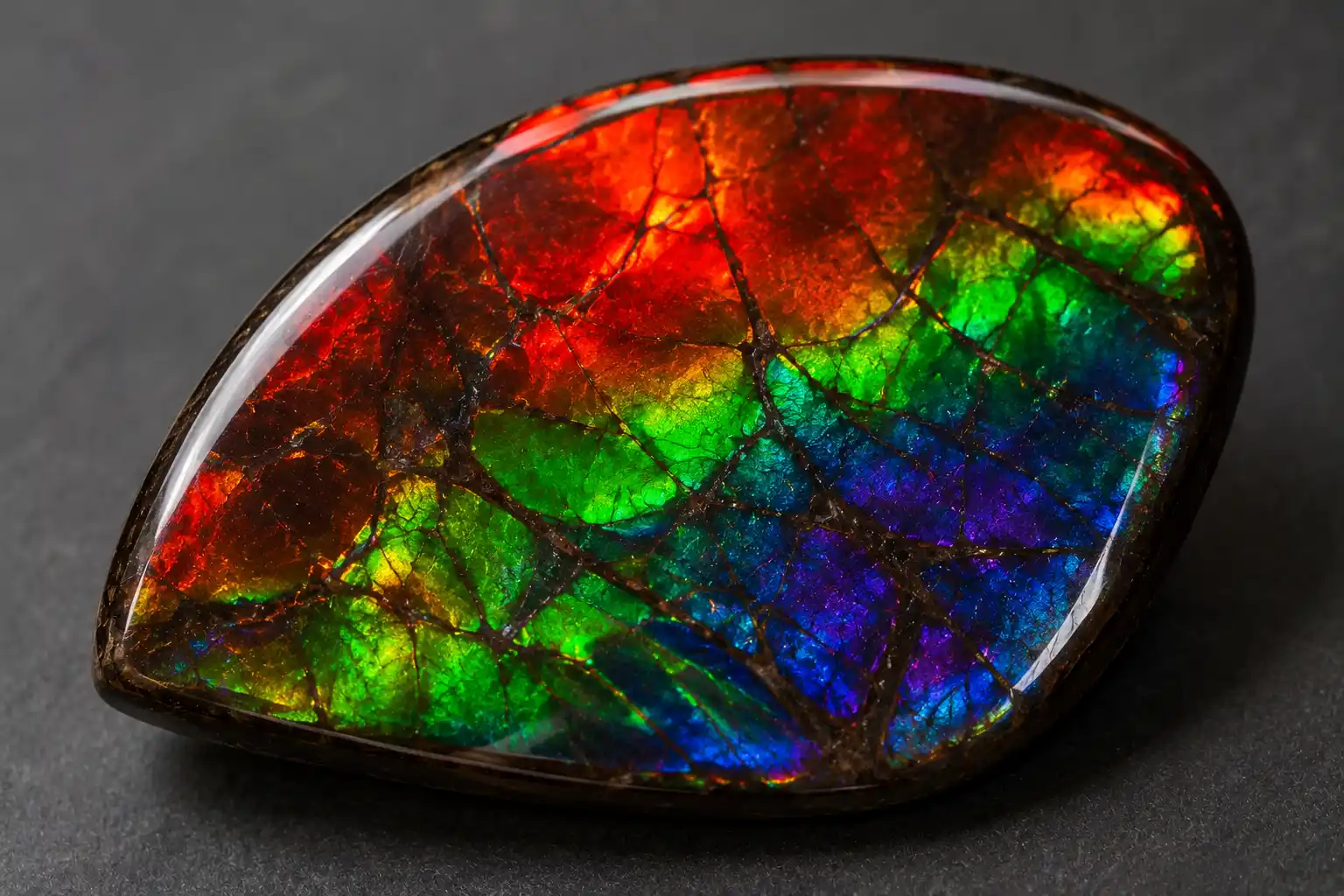
Color is the number-one factor, by far. Count the colors, and note how bright they are. Reds and greens are common, while blues and purples are rarer. A stone showing many vivid colors is the most prized.
Chromatic Shift
Ammolite’s color changes as you rotate it. This shifting effect is part of its magic. The best stones show a wide “rotational range,” staying colorful from many angles. A stone that goes dark when turned is worth less.
Brightness
Brightness matters alongside color. The finest ammolite flashes with an intense, metallic glow. Dull or hazy iridescence lowers value. Look for vivid, lively fire that catches the eye. Tilt the stone under good light to judge it properly.
Pattern
Ammolite comes in different patterns. Some show broad sheets of color, others a dragon-skin or floral mosaic. Pattern is a matter of taste, but even, attractive patterns are prized. Distracting cracks reduce beauty and value.
Which Ammolite Colors Are Most Valuable?
Since color drives value, it’s worth knowing the hierarchy. Not all colors are equal in ammolite.
Green and yellow are the most common, and the most affordable. Red and orange are a step up in value. Blue, purple, and violet are the rarest and most prized, since they’re the hardest for the stone to produce. A crimson-to-blue range is especially sought after.
Beyond single colors, the real prize is a wide spectrum. A stone flashing many bright colors at once sits at the top. So a vivid, multi-color ammolite with blues and purples will always outvalue a plain green one. Let the range and brilliance guide your eye.
Solid, Doublet, or Triplet?
This is essential to understand before buying. Ammolite is thin and fragile, so it’s often reinforced. There are three main types.
Solid ammolite is a natural piece with no cap. It’s rarer and prized, but more vulnerable to damage.
Doublets bond a thin ammolite layer to a dark matrix backing. This adds support and deepens the color.
Triplets add a clear protective cap on top, often quartz or synthetic spinel. This makes the most durable, wearable option, ideal for rings.
None of these is “fake.” But the type strongly affects price and durability. Always ask which one you’re buying.
Ammolite Grades
Ammolite is often sold by grade. Grades reflect color, brightness, and rotational range. You’ll see labels like AA, A, and standard.
Another approach counts the primary colors. One-color stones are the most affordable. Two-color stones cost more, and three-or-more-color gems are top tier. Brightness and a wide viewing angle push the grade higher. When comparing prices, check the grade closely.
Treatments and Stabilization
Most ammolite is treated, and that’s normal here. The gem is so delicate that it usually needs help. Stabilizing with resin strengthens it against cracking.
Capping in a triplet protects the surface too. None of this is a flaw, it’s practical. Our lab-grown vs. natural gemstones guide covers man-made materials like the spinel caps used. As always, a good seller discloses exactly how a stone is made.
Ammolite Durability and Care
Ammolite is beautiful but fragile, and this shapes everything. It’s soft, around 3.5 to 4.5 on the Mohs hardness scale. Our gemstone hardness chart shows how soft that is.
So choose settings wisely. Triplets suit rings, while solids are safer in pendants and earrings. Avoid knocks, scratches, and harsh chemicals. Clean it only with a soft, damp cloth, and never use an ultrasonic cleaner. Keep it away from prolonged water and heat.
Where Ammolite Comes From
Ammolite has a wonderfully specific origin. Nearly all gem-quality ammolite comes from one region. That’s the Bearpaw Formation in Alberta, Canada.
A single main producer supplies much of the market. This limited source adds to ammolite’s rarity and appeal. The gem formed in an ancient seabed, where ammonite shells were buried and slowly mineralized over eons. Canadian origin from a reputable producer is a good sign of quality and authenticity.
Ammolite in Feng Shui
Ammolite has a special place in feng shui belief. There it’s known as the “Seven Color Prosperity Stone.” Each color is thought to bring a different benefit.
For example, red is linked to growth and energy, green to wealth and wisdom, and blue to peace and health. Many people display ammolite or wear it hoping to attract good fortune. Whether or not you follow feng shui, it adds to the gem’s charm. It’s one more reason ammolite is so treasured.
How Much Does Ammolite Cost?
Ammolite prices vary widely by grade and type. Simple, single-color pieces are quite affordable. Top AA gems with red, blue, and many colors cost far more.
The type matters too. Solid ammolite generally costs more than a doublet or triplet. Larger, brighter, multi-color stones command a premium. Compared to some rare gems it’s accessible, but fine ammolite is a real investment in beauty. A suspiciously cheap “gem-grade” piece deserves a closer look.
A Quick Ammolite Buying Checklist
Keep this simple checklist in mind before you buy:
- Bright, vivid flash? Intense color beats dull iridescence.
- Many colors? More colors, especially blue and purple, means more value.
- Wide rotational range? It should stay colorful as you turn it.
- Solid, doublet, or triplet? Know which, since it affects price and durability.
- Right setting for the type? Triplets for rings, solids for pendants.
- Grade and treatment disclosed? A good seller states both.
Tick most boxes, and you’ve found a lovely stone. Ammolite rewards an eye for color and a little know-how.
Where to Buy Ammolite
Where you buy really matters here. Choose reputable sellers who know ammolite well. Look for clear disclosure of grade, type, and treatment.
Read reviews and ask questions. A good seller explains solid versus triplet openly. For fine pieces, ask about certification, as our gemstone certification guide explains. Our how to buy gemstones online guide covers safe buying step by step.
Frequently Asked Questions
What is ammolite made of?
Ammolite is an organic gemstone made from the fossilized shells of ammonites, ancient sea creatures. The shell’s aragonite developed a brilliant, iridescent play of color over millions of years. It’s one of the few gems created by living things, along with pearl and amber.
What makes ammolite valuable?
Color is the biggest factor: more colors, brighter flash, and a wide rotational range all raise value. Reds, blues, and purples are rarer than greens. Solid pieces, larger sizes, and even patterns also command higher prices.
What’s the difference between solid, doublet, and triplet ammolite?
Solid ammolite is a natural piece with no cap, rarer but more fragile. A doublet bonds ammolite to a dark backing for support. A triplet adds a clear protective cap on top, making it the most durable and best for rings.
Is ammolite durable enough for everyday wear?
Ammolite is soft and fragile, around 3.5 to 4.5 on the hardness scale. Triplets, with their protective cap, are best for rings and daily wear. Solid pieces are safer as pendants or earrings, away from knocks and scratches.
Where does ammolite come from?
Nearly all gem-quality ammolite is mined in the Bearpaw Formation of Alberta, Canada. This single main source adds to its rarity. Canadian origin from a reputable producer is a good sign of authenticity and quality.
Is treated or capped ammolite still real?
Yes. Because ammolite is so delicate, most is stabilized with resin and often capped in a triplet. This is standard and practical, not a defect. The ammolite itself is genuine, and a good seller discloses how the piece is made.
What color of ammolite is most valuable?
Blue, purple, and violet are the rarest and most prized, since they’re hardest for the stone to form. Green and yellow are the most common and affordable, with red and orange in between. A bright, multi-color stone showing many hues at once is the most valuable of all.
Can ammolite get wet?
It’s best to keep ammolite away from prolonged water, and never soak it. The gem is soft and porous, and many pieces are stabilized or assembled with adhesives that water can affect. Wipe it with a soft, damp cloth instead, and remove ammolite jewelry before swimming or bathing.
Where to Go From Here
Buying ammolite well comes down to a few things. Prize bright, multi-color flash with a wide rotational range, understand solid versus triplet, and handle it gently. Do that, and you’ll enjoy this fossil-born treasure for years.
Love organic gems? Our amber buying guide covers another gem made by nature over eons. Since ammolite flashes like opal, our real vs. fake opal guide is a fun compare. You can also explore more stones in our types of gemstones guide, or browse our crystal meanings chart. A dedicated ammolite meaning guide is on the way too.
Thinking of buying ammolite? Tell us what you’re looking for in the comments.