

Crystals do not scientifically run out of energy like batteries. A mineral does not become empty, powerless or permanently depleted because you have worn, carried or displayed it for a long time.
In spiritual practices, however, people may describe a crystal as feeling:
- Dull.
- Heavy.
- Unresponsive.
- Less meaningful.
- Overused.
- Disconnected from its original intention.
These experiences are personal and symbolic. They do not prove that the stone has lost a measurable form of healing energy.
A crystal may also seem different because its surface is dirty, its color has faded, it has developed fractures or your relationship with it has changed.
What Does “Crystal Energy” Mean?
The word energy can refer to two very different ideas.
Scientific Energy
In physics, energy is the capacity to perform work. Minerals interact with heat, light, pressure, electricity and electromagnetic radiation in measurable ways.
For example:
- Quartz can produce an electrical charge under mechanical pressure.
- Fluorite may fluoresce under ultraviolet light.
- Some crystals conduct heat or electricity.
- Certain minerals change color after exposure to light.
- Piezoelectric materials are used in watches and electronic devices.
These measurable properties do not establish that crystals store intentions, absorb emotions or release healing power.
Spiritual Energy
In crystal traditions, energy usually refers to the mood, symbolism or personal associations connected with a stone.
A person may use a crystal as:
- A reminder of an intention.
- A meditation object.
- A symbol of protection.
- A focus for journaling.
- A meaningful gift.
- Part of a spiritual or cultural practice.
This type of “energy” is subjective. It may change as your expectations, emotions and circumstances change.
Can a Crystal Become Spiritually Depleted?
Many spiritual traditions teach that crystals should be rested, cleansed or recharged after repeated use. There is no scientific evidence that a mineral becomes spiritually empty, but the ritual may still serve a practical reflective purpose.
Cleansing or charging can create an opportunity to:
- Pause.
- Reconsider your goal.
- Clean the physical stone.
- Notice damage.
- Refresh a display.
- Decide whether the crystal still has meaning for you.
- Reconnect the object with a deliberate action.
The process may renew your attention even though the mineral itself has not run out of a measurable energy supply.
Why Might a Crystal Feel Different?
Several factors can make a familiar stone seem less effective or appealing.
The Intention Is No Longer Relevant
A crystal selected for confidence during a particular project may feel less meaningful after the project ends.
That does not mean the stone failed or became depleted. Its original purpose may simply be complete.
You can:
- Give it a new intention.
- Return it to your collection.
- Use it decoratively.
- Pair it with another stone.
- Pass it to someone else.
- Retire it from active use.
You Have Become Used to It
A new object naturally attracts more attention. After carrying the same stone daily, it may become part of the background.
This is a normal psychological effect rather than proof that the crystal has lost power.
Rotating your stones may help you notice them more intentionally.
The Surface Is Dirty
Skin oils, dust, soap, cosmetics and fabric residue can reduce a stone’s luster.
A cloudy surface may make a crystal look physically dull even when the material has not changed internally.
Clean the stone only with a method appropriate for its mineral species, treatments and setting.
The Color Has Changed
Sunlight, heat, moisture and chemicals can alter some minerals.
Examples include:
- Amethyst fading in prolonged strong light.
- Fluorite losing color.
- Vivianite darkening.
- Pyrite oxidizing in humidity.
- Opal changing appearance after absorbing liquid.
- Coatings wearing away from treated stones.
These are physical or chemical changes, not evidence that the stone transferred all its spiritual energy.
The Crystal Is Damaged
A fracture, chip or loosened setting may change how a stone looks and feels.
Crystals commonly break because of:
- Impact.
- Cleavage.
- Internal fractures.
- Thermal shock.
- Pressure.
- Repeated jewelry wear.
- Improper storage.
The guide Why Did My Crystal Break? explains the physical causes and common spiritual interpretations without assuming every break is a supernatural sign.
Your Needs Have Changed
You may no longer connect with a stone because your goals, preferences or beliefs have changed.
A crystal associated with motivation may feel distracting when you currently need rest. A stone selected for a relationship may feel uncomfortable after that relationship ends.
Changing your mind does not mean the crystal is bad or depleted.
Do Crystals Absorb Negative Energy?
There is no scientific evidence that crystals absorb emotions, arguments, stress or “negative energy” as a measurable substance.
People may still associate a stone with an unpleasant experience. For example, jewelry worn during a difficult period may later trigger memories of that period.
In that situation, you might:
- Clean the stone physically.
- Perform a symbolic cleansing ritual.
- Store it temporarily.
- Give it a new purpose.
- Stop using it.
- Pass it on responsibly.
The useful question is not whether the stone has become contaminated by emotion, but whether keeping or using it supports your well-being and intentions.
Do Some Crystals Need More Charging Than Others?
No scientific evidence shows that one mineral needs more spiritual charging than another.
Within spiritual traditions, people may charge frequently used stones more often because those stones receive more attention.
For example, someone might choose to reset:
- A daily-wear bracelet once a week.
- A meditation stone after an intense session.
- A crystal grid when its goal changes.
- A gifted stone before personal use.
- A secondhand crystal after purchase.
- A bedside stone when changing a sleep routine.
The schedule is personal rather than mineralogically required.
How Often Should You Charge Crystals?
There is no mandatory schedule.
You may choose to charge a stone:
- When you first obtain it.
- When setting a new intention.
- After lending it to someone.
- After a stressful experience.
- When reorganizing your collection.
- When the ritual helps you refocus.
- Whenever the stone feels physically or symbolically neglected.
Daily charging is unnecessary unless it is part of a meaningful routine that does not damage the material.
The complete crystal-charging guide explains traditional methods and their physical limitations.
How to Refresh a Crystal Safely
A simple reset can combine physical care with personal reflection.
Step 1: Identify the Material
Confirm whether the object is:
- A mineral.
- A rock.
- A fossil.
- Natural glass.
- Organic gem material.
- Laboratory-grown crystal.
- Coated or dyed product.
- An assembled piece of jewelry.
Do not assume every object sold as a crystal tolerates water, salt or sunlight.
Step 2: Inspect Its Condition
Check for:
- Loose settings.
- Chips.
- New fractures.
- Flaking surfaces.
- Rust or oxidation.
- Powder.
- Fading.
- Coating damage.
- Sharp edges.
Stop wearing or carrying damaged material that could cut skin, shed residue or deteriorate further.
Step 3: Clean It Physically
Depending on the material, safe cleaning may involve:
- A soft dry cloth.
- A slightly damp cloth.
- Mild soap and brief water contact.
- A soft brush.
- Professional jewelry cleaning.
Avoid soaking an unidentified mineral.
Step 4: Cleanse It Symbolically
Symbolic cleansing methods may include:
- Sound.
- Quiet reflection.
- Gentle moonlight.
- Smoke where appropriate.
- Placing the stone on a clean cloth.
- Resting it away from use.
- Restating your intention.
The safe crystal-cleansing guide covers methods that do not require treating every mineral the same way.
Step 5: Set a New Intention
Decide what the stone now represents.
A useful intention is:
- Personal.
- Specific.
- Positive.
- Realistic.
- Connected to action.
For example:
“This stone reminds me to pause before responding.”
That intention can then support a practical behavior, such as taking three breaths before a difficult conversation.
The process is explained in How to Program Crystals.
Step 6: Rest or Rotate the Stone
You do not need to use every crystal continuously.
Place the stone:
- In a padded box.
- On a protected shelf.
- In a labeled drawer.
- Away from direct sunlight.
- Separate from harder materials.
- Outside damp or unstable environments.
A period of rest may refresh your attention even though the mineral itself has not required recovery.
Safe Ways to Charge a Crystal
Safer symbolic methods include:
Intention
Hold or place the stone nearby and state what it represents.
This method does not expose the material to water, salt, heat or light.
Sound
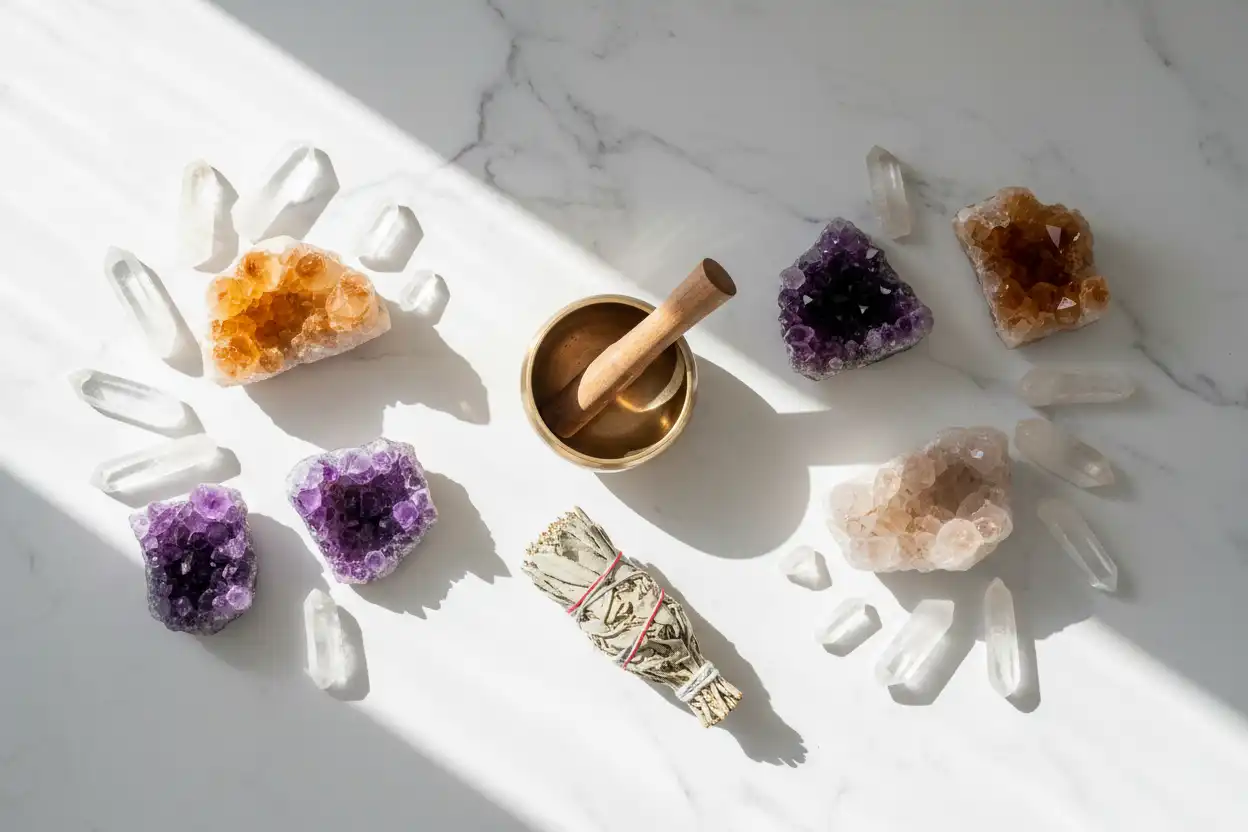
Use a bell, singing bowl, music or another meaningful sound.
Sound is generally non-contact, although strong vibration should be avoided around delicate clusters.
Gentle Moonlight
Place a stable stone in indirect moonlight for a limited period.
Protect it from dew, rain, theft, falling and temperature changes.
Resting on a Clean Surface
Place the crystal on a cloth, tray or protected display board.
The act of arranging and pausing can function as the ritual.
Pairing With a Meaningful Stone
Some people place a stone near clear quartz or another symbolic companion.
Physical compatibility still matters. A hard quartz point can scratch softer minerals during direct contact.
For pairing ideas, see Crystal Pairings.
Charging Methods That Can Damage Crystals
Avoid treating every stone with the same method.
Water
Water can dissolve, stain, rust or destabilize materials such as:
- Halite.
- Selenite.
- Pyrite.
- Some zeolites.
- Porous opal.
- Treated turquoise.
- Soft carbonates.
Salt
Salt may scratch polished surfaces, enter fractures, retain moisture or corrode metal settings.
Direct Sunlight
Prolonged sunlight may fade or alter:
- Amethyst.
- Fluorite.
- Kunzite.
- Some topaz.
- Certain opals.
- Dyed stones.
- Coated materials.
Heat
Heat may damage:
- Opal.
- Treated gemstones.
- Fracture-filled stones.
- Organic materials.
- Stones with internal fractures.
- Adhesives in assembled jewelry.
Soil Burial
Burial can expose crystals to:
- Moisture.
- Fertilizer.
- Acids.
- Roots.
- Abrasion.
- Loss.
- Environmental contamination.
A symbolic practice should not require physically damaging the object.
Can Another Person Drain a Crystal?
There is no scientific evidence that another person can remove or drain a crystal’s energy by touching it.
However, another person may:
- Leave fingerprints or oils.
- Damage a fragile surface.
- Disturb a carefully arranged display.
- Create an unwanted personal association.
- Handle a private or culturally significant object without consent.
It is reasonable to set handling boundaries based on hygiene, preservation and personal meaning.
Do Crystal Bracelets Run Out of Energy?
Crystal bracelets do not become empty through ordinary wear.
They can, however, experience:
- Surface abrasion.
- Faded color.
- Stretched elastic.
- Damaged thread.
- Loose clasps.
- Chipped beads.
- Residue from cosmetics or perspiration.
Inspect the bracelet regularly. Physical maintenance is more important than frequent ritual charging.
Do Crystals Expire?
Crystals do not have an expiration date in the way food, batteries or medication do.
A mineral may nevertheless deteriorate because of:
- Humidity.
- Oxidation.
- Light.
- Chemical exposure.
- Dehydration.
- Repeated impact.
- Poor storage.
Organic and assembled gem materials may also age differently from stable mineral crystals.
What Should You Do With a Crystal You No Longer Want?
You are not required to keep every crystal permanently.
Responsible options include:
- Selling it with accurate identification.
- Giving it to someone who wants it.
- Donating it.
- Returning it to a seller where possible.
- Reusing it in a display.
- Storing it for later.
- Disposing of damaged material safely.
Do not bury polished, treated, toxic or non-native materials simply because returning crystals to nature sounds symbolic.
The guide to disposing of crystals responsibly explains safer options.
Frequently Asked Questions
Do crystals lose their power over time?
There is no scientific evidence that a crystal stores a spiritual power that is gradually used up. Personal meaning and attention can change over time.
Can a crystal become overcharged?
There is no measured state of spiritual overcharging. A display may feel overstimulating or cluttered, which can be addressed by using fewer stones.
Do I need to charge a new crystal?
No. Charging is optional. You may clean, inspect and set an intention for it if that practice is meaningful to you.
Can I use a crystal immediately after buying it?
Yes, provided it is safe, clean and accurately identified.
Does a dull crystal need charging?
A dull appearance may come from oil, dust, scratches, coating wear or physical damage. Inspect and clean it appropriately before assuming a spiritual cause.
Does a broken crystal still work?
A broken piece remains the same basic material unless it has chemically altered. Whether it retains symbolic meaning is a personal decision.
Can I recharge a crystal forever?
You may repeat a safe intention-setting ritual whenever it is helpful. Avoid methods that gradually damage the stone.
Do crystals need rest?
Minerals do not require biological rest. Temporarily storing a stone can help you rotate your collection and renew your attention.
Can a crystal stop connecting with me?
Yes, in the sense that your preferences, memories or goals may change. You can redefine its purpose or stop using it.
Continue Exploring
Browse practical crystal-care and meaning guides in the Crystals 101 collection.