
Chinese Zodiac Crystals: Best Stones for All 12 Signs

Chinese zodiac crystals bring together two different ideas: the traditional twelve-animal zodiac cycle and modern gemstone symbolism. The zodiac itself has deep historical roots in Chinese calendrical culture, while most crystal-to-animal pairings used today are contemporary interpretations rather than an ancient, standardized mineral system.
That distinction makes Chinese zodiac crystals more useful, not less. Instead of treating a gemstone as a fixed prescription for everyone born in one year, you can choose a stone whose symbolism, color, durability, cultural meaning, or appearance fits the person and the quality they want to reflect on.
At Gems Lore, Chinese zodiac crystals are treated as a modern interpretive bridge between an old calendrical tradition and contemporary gemstone symbolism—not as a historical mineral prescription or a scientific method for predicting personality, luck, health, relationships, or fate.
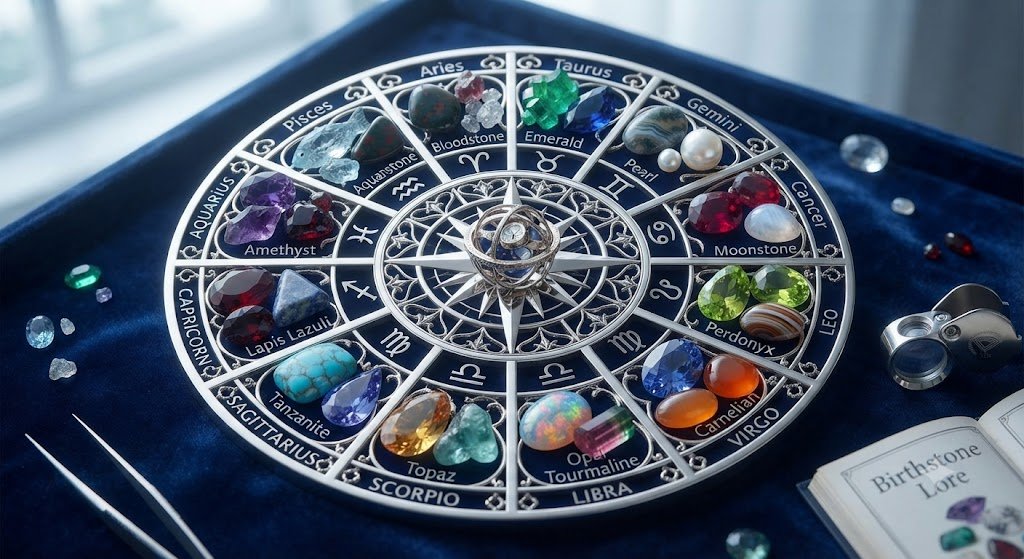
If you also use Western astrology, keep the systems separate. The zodiac birthstones framework follows Western zodiac signs and their gemstone traditions, while Chinese zodiac crystals are organized around the twelve-year animal cycle.
Chinese Zodiac Crystals at a Glance
| Chinese zodiac animal | Suggested stones | Useful symbolic theme |
|---|---|---|
| Rat | Garnet, citrine, clear quartz | Resourcefulness, planning, follow-through |
| Ox | Jade, smoky quartz, hematite | Patience, steadiness, practical effort |
| Tiger | Tiger’s eye, carnelian, red jasper | Courage, judgment, sustainable action |
| Rabbit | Rose quartz, moonstone, jade | Diplomacy, kindness, healthy boundaries |
| Dragon | Citrine, garnet, pyrite | Confidence, ambition, responsible leadership |
| Snake | Amethyst, obsidian, labradorite | Observation, discernment, perspective |
| Horse | Carnelian, turquoise, aquamarine | Movement, independence, communication |
| Goat | Rose quartz, green aventurine, moonstone | Creativity, compassion, steadiness |
| Monkey | Citrine, purple fluorite, agate | Curiosity, adaptability, concentration |
| Rooster | Clear quartz, tiger’s eye, sodalite | Precision, structure, clear expression |
| Dog | Lapis lazuli, black tourmaline, garnet | Loyalty, truth, boundaries |
| Pig | Jade, rose quartz, citrine | Generosity, enjoyment, wise stewardship |
These Chinese zodiac crystals are suggestions, not restrictions. Someone born in a Rabbit year can prefer tiger’s eye, a Dragon can wear moonstone, and an Ox can choose aquamarine. Personal preference and physical suitability matter more than forcing a correspondence.
How the Chinese Zodiac Works
The Chinese zodiac uses a repeating cycle of twelve animals: Rat, Ox, Tiger, Rabbit, Dragon, Snake, Horse, Goat or Sheep, Monkey, Rooster, Dog, and Pig or Boar. The animals are associated with the twelve Earthly Branches, which form part of a much broader traditional calendrical system.
The twelve-animal cycle also interacts with the ten Heavenly Stems. Together, stems and branches form a sixty-year cycle. The Five Phases—Wood, Fire, Earth, Metal, and Water—are part of that larger framework, which is why two people born twelve years apart can share the same animal but not the same complete traditional year designation.
Chinese zodiac crystals should not flatten this system into a simplistic personality chart. Popular descriptions of Rat as resourceful or Tiger as courageous are symbolic archetypes, not psychological diagnoses. A birth year does not determine intelligence, temperament, compatibility, financial ability, health, or future success.
Check the Year Boundary Carefully
Do not assume that everyone born in the same Gregorian calendar year has the same Chinese zodiac animal. Popular Chinese zodiac references generally change the animal around Lunar New Year rather than January 1, while some traditional metaphysical systems use solar-term conventions such as the Beginning of Spring.
For a January or February birthday, verify the convention being used and check the date for the specific birth year before choosing Chinese zodiac crystals as a personalized gift.
Rat Chinese Zodiac Crystals
Rat symbolism is commonly associated with alertness, adaptability, strategy, social awareness, and making good use of available resources. Rat Chinese zodiac crystals work best when they reinforce planning and follow-through rather than promising wealth or luck.
Garnet fits this theme because traditional garnet symbolism often emphasizes commitment and sustained effort. It can represent finishing an important responsibility instead of constantly chasing the next opportunity.
Citrine is often linked in contemporary practice with optimism, generosity, and abundance. For Rat Chinese zodiac crystals, a grounded interpretation is resource awareness: review the actual budget, compare options, and make a deliberate choice. Citrine does not attract money by itself, and much commercial material is heat-treated amethyst, so treatment disclosure matters when buying.
Clear quartz can represent clarity and one defined priority. For a person juggling several possibilities, the stone can serve as a physical reminder to decide what deserves attention first.
Ox Chinese Zodiac Crystals
Ox symbolism commonly emphasizes patience, reliability, persistence, practical work, and steadiness. Ox Chinese zodiac crystals should support consistent effort while also leaving room to change a method that is no longer working.
Jade is especially meaningful here because jade has a long and complex history in Chinese art, ritual, craftsmanship, status, morality, and personal adornment. That cultural importance is broader than any modern claim that jade is an exclusive Ox stone. Jade primarily refers to jadeite and nephrite, two different materials with exceptional toughness and different market characteristics.
Smoky quartz can symbolize perspective and grounded decision-making. It suits the idea of persistence with awareness: continue when effort is producing progress, but reassess when repetition is only consuming time and resources.
Hematite is an iron oxide mineral with a dense metallic appearance. Modern crystal traditions associate it with grounding and structure. As one of the more practical Ox Chinese zodiac crystals, it can represent working with evidence, schedules, measurements, deadlines, and real constraints instead of relying on wishful thinking.
Tiger Chinese Zodiac Crystals
Tiger symbolism is often linked with courage, independence, initiative, intensity, and willingness to act. Tiger Chinese zodiac crystals are most useful when they balance boldness with judgment.
Tiger’s eye is an obvious name association, but its symbolic fit goes deeper. The stone is commonly connected with confidence and discernment, making it a useful reminder to ask whether a decision is genuinely brave or simply impulsive.
Carnelian traditionally represents action, creativity, and motivation. For Tiger Chinese zodiac crystals, its value lies in turning intention into a concrete first step rather than expecting the stone to guarantee success.
Red jasper adds a steadier theme. It is commonly associated with endurance and practical strength, which can balance the Tiger archetype’s preference for fast movement. A strong beginning matters less if the plan cannot be sustained.
Rabbit Chinese Zodiac Crystals
Rabbit symbolism often emphasizes diplomacy, sensitivity, cooperation, grace, caution, and preference for harmony. Rabbit Chinese zodiac crystals should support kindness without suggesting that peace requires silence, avoidance, or weak boundaries.
Rose quartz is traditionally associated with affection, compassion, and self-kindness. For Rabbit Chinese zodiac crystals, it can represent warmth alongside the ability to say no when necessary. Compassion does not require accepting disrespect or unwanted pressure.
Moonstone is commonly linked with cycles, transition, and reflection. It can symbolize the difference between thoughtful caution and avoiding necessary change. Moonstone is also a feldspar with cleavage, so jewelry needs more protection from impact than many quartz varieties.
Jade can fit Rabbit symbolism through themes of harmony, continuity, refinement, and cultural significance. The same stone can appear in more than one animal section because modern correspondences are not exclusive ownership rules.
Dragon Chinese Zodiac Crystals
The Dragon is the only mythical creature in the twelve-animal sequence and carries especially strong cultural symbolism. Popular descriptions often connect Dragon years with visibility, confidence, ambition, energy, charisma, and leadership. Dragon Chinese zodiac crystals should therefore pair confidence with accountability.
Citrine can represent constructive optimism: set a large goal, but also decide what evidence will show whether the plan is working. Garnet adds the symbolism of commitment after the excitement of a new beginning fades.
Pyrite is often marketed as a stone of prosperity because of its bright metallic appearance. Among Dragon Chinese zodiac crystals, a more responsible use is to let pyrite represent financial awareness, planning, and stewardship. It cannot attract revenue, prevent losses, or substitute for budgeting and risk assessment.
Snake Chinese Zodiac Crystals
Snake symbolism is commonly associated with observation, strategy, privacy, discernment, patience, and restraint. Snake Chinese zodiac crystals should encourage careful interpretation without turning intuition into a claim of supernatural certainty.
Amethyst is traditionally associated with reflection, moderation, and clear judgment. It can represent the pause between noticing a pattern and deciding what that pattern actually means.
Obsidian is natural volcanic glass rather than a mineral crystal. Modern practices often connect it with boundaries, truth, and confronting uncomfortable information. That makes it useful symbolically when a person needs to examine evidence that challenges a preferred conclusion. Obsidian can chip into extremely sharp edges, so damaged pieces need careful handling.
Labradorite is known for labradorescence, an optical effect that can reveal shifting colors as the viewing angle changes. For Snake Chinese zodiac crystals, that changing appearance makes a natural symbol for looking at a problem from more than one perspective.
Horse Chinese Zodiac Crystals
Horse symbolism usually centers on movement, independence, social energy, enthusiasm, and freedom. Horse Chinese zodiac crystals should encourage purposeful movement rather than constant motion for its own sake.
Carnelian suits the action-oriented side of the Horse archetype. A useful question is whether movement serves a chosen direction or merely avoids stillness and reflection.
Turquoise has important histories across many cultures and regions and is commonly associated in modern symbolic practice with travel, protection, and communication. Those meanings should not be turned into promises of physical safety. Travel safety comes from planning, awareness, appropriate equipment, and good decisions. Turquoise is also porous and commonly stabilized, dyed, or reconstructed, so treatment disclosure is important.
Aquamarine is blue to blue-green beryl and is often associated with calm communication. For Horse Chinese zodiac crystals, it can symbolize expressing a need for independence while still respecting other people’s boundaries and agreements.
Goat Chinese Zodiac Crystals
Goat, Sheep, and Ram are all translations that can appear for the eighth zodiac animal depending on language and regional convention. Modern descriptions often connect this sign with creativity, kindness, aesthetic sensitivity, cooperation, and supportive relationships.
Goat Chinese zodiac crystals work best when compassion is paired with sustainable boundaries. Rose quartz can symbolize giving willingly rather than giving until resentment develops.
Green aventurine is commonly associated with opportunity, experimentation, and growth. For Goat Chinese zodiac crystals, it can represent moving a creative idea into an actual project instead of keeping it permanently in the imagination.
Moonstone can add a theme of adaptation during change. Sensitivity can provide useful information, but it does not need to control every decision.
Monkey Chinese Zodiac Crystals
Monkey symbolism frequently emphasizes curiosity, intelligence, humor, experimentation, adaptability, and quick problem-solving. The challenge is maintaining focus long enough for a clever idea to become useful.
Citrine can represent optimistic exploration, but Monkey Chinese zodiac crystals should also include an element of structure. Purple fluorite is widely associated with organization and concentration, making it a natural symbolic choice when several ideas compete for attention.
Fluorite is physically softer than quartz and has perfect cleavage, so it needs careful handling. A desk specimen may be a better choice than an exposed everyday ring.
Agate adds a different kind of symbolism. Its layered or patterned appearance can represent building something in stages. For Monkey Chinese zodiac crystals, that makes agate a reminder to develop one promising idea before abandoning it for the next interesting possibility.
Rooster Chinese Zodiac Crystals
Rooster symbolism commonly includes organization, confidence, directness, attention to detail, standards, and precision. Rooster Chinese zodiac crystals are most useful when they distinguish careful work from perfectionism.
Clear quartz can represent defining what “finished” means before beginning. Tiger’s eye can represent the judgment required to decide whether another revision will materially improve the result.
Sodalite is often associated with logic, truth, and organized communication. Among Rooster Chinese zodiac crystals, it works well as a reminder to explain standards clearly instead of assuming everyone else can see the same problem or expectation.
Dog Chinese Zodiac Crystals
Dog symbolism is often associated with loyalty, fairness, honesty, service, dependability, and protectiveness. Dog Chinese zodiac crystals should preserve those strengths without suggesting that loyalty means tolerating harm or abandoning personal boundaries.
Lapis lazuli has a long history as a valued blue ornamental material. Modern symbolism often connects it with truth, wisdom, and communication. For Dog Chinese zodiac crystals, it can represent honest loyalty rather than agreement at any cost.
Black tourmaline is strongly associated in modern crystal traditions with protection and grounding. A practical interpretation is to treat it as a reminder of a boundary and the action you will take if that boundary is crossed. A stone cannot create an invisible barrier against harmful behavior.
Garnet can represent commitment and continuity, but commitment should remain reciprocal and safe. No zodiac interpretation should be used to justify abuse, coercion, exploitation, or unsafe circumstances.
Pig Chinese Zodiac Crystals
Pig or Boar completes the twelve-animal cycle. Popular interpretations often associate the sign with generosity, sincerity, sociability, pleasure, comfort, and appreciation of life. Pig Chinese zodiac crystals are strongest when enjoyment is paired with discernment.
Jade can represent stewardship and continuity. Rose quartz can symbolize generosity that is freely chosen rather than demanded. Citrine can represent enjoyment of resources alongside deliberate financial choices.
For Pig Chinese zodiac crystals, abundance should never be framed as a guarantee of wealth. A gemstone cannot change probability, eliminate financial risk, or replace saving, budgeting, due diligence, or qualified advice.
The Five Elements and Chinese Zodiac Crystals
The twelve animals are only one part of the traditional system. Wood, Fire, Earth, Metal, and Water interact with the stem-and-branch cycle, creating more specific year combinations across the sixty-year sequence.
It is tempting to turn those elements into rigid rules for Chinese zodiac crystals—for example, saying every Wood year requires a green stone or every Fire year must use a red stone. That approach is a modern simplification, not a universally established historical gemstone prescription.
Color can still be personally meaningful. A Water-associated year may inspire someone to choose a blue gemstone, while an Earth-associated year may make brown, yellow, or smoky stones visually appealing. The important point is to describe that choice as contemporary symbolism rather than ancient fact.
Chinese Zodiac Crystals vs Western Zodiac Stones
Chinese zodiac crystals and Western zodiac stones use different organizing systems. The Chinese zodiac is primarily year-based, while Western tropical astrology organizes signs by periods within the solar year. A person can therefore be both, for example, a Dragon-year individual and a Gemini.
The two systems may suggest different stones, and there is no problem with that because neither creates a mineral requirement. Someone interested in Western sign symbolism can compare the separate crystals for Gemini material without treating it as interchangeable with Chinese zodiac crystals.
Calendar birthstones are different again. If the purpose is simply to choose a conventional birthday gemstone, a month-based birthstone may be clearer than combining several symbolic systems.
How to Choose Chinese Zodiac Crystals
Start with the correct animal, then decide what the stone should represent. Do not begin by asking which crystal is “most powerful.” A Rat-year person may want a symbol of follow-through, a Tiger-year person may want a reminder to assess risk, and a Dog-year person may care most about loyalty with boundaries.
Next, consider the physical material. Chinese zodiac crystals used as jewelry need to survive the intended wear. Quartz varieties such as amethyst, citrine, rose quartz, smoky quartz, clear quartz, tiger’s eye, and many agates generally offer useful durability. Fluorite is softer and cleavage-prone. Moonstone can chip along cleavage. Turquoise is porous and often treated. Obsidian can form sharp broken edges.
Finally, choose for the person rather than the stereotype. Color preference, cultural meaning, jewelry style, budget, treatment tolerance, and practicality can all outweigh a modern correspondence list.
Buying, Authenticity, and Treatment Considerations
Chinese zodiac crystals are sold in forms ranging from inexpensive tumbled stones to fine jewelry and collector specimens. Price alone does not establish authenticity, and a spiritual label does not tell you what the material actually is.
Jade deserves particular care because the name covers jadeite and nephrite, while serpentine, dyed quartzite, glass, and other materials can be marketed with jade-like names. Valuable jade can also be bleached, polymer-impregnated, dyed, coated, waxed, or assembled. The real vs fake jade guide explains why high-value jade should be evaluated by material identity and treatment rather than simple scratch, sound, or temperature tests.
Citrine is another useful example. Natural citrine exists, but heat-treated amethyst is common in the market and can still be attractive when accurately disclosed. Turquoise may be stabilized, dyed, reconstructed, or imitated. Agate is frequently dyed. Lapis lazuli may be dyed or impregnated. Obsidian can be confused with manufactured glass, especially in unusually bright colors.
For Chinese zodiac crystals bought as meaningful jewelry or gifts, ask the seller for the material name, treatment disclosure, dimensions, metal composition, and return terms. For expensive stones whose value depends strongly on identity or treatment, independent testing can be more useful than seller-created authenticity cards.
Jewelry, Carvings, and Specimens
Chinese zodiac crystals can be worn, carried, or displayed, but the best format depends on the mineral. Rings receive more impact and abrasion than pendants or earrings. Bracelets repeatedly contact desks, clothing, door frames, and other surfaces.
A fluorite carving may be beautiful on a protected shelf yet unsuitable for rough everyday wear. Jade’s toughness makes it well suited to many carvings and bangles, although treatment and fractures still matter. Obsidian carvings should be checked for chips. Turquoise jewelry should be kept away from harsh chemicals, cosmetics, and unnecessary soaking.
If symbolism is the main reason for choosing a form, the crystal shapes meaning overview explains modern associations with hearts, spheres, towers, points, eggs, pyramids, and other carved forms while keeping the underlying mineral’s real properties separate from shape symbolism.
Using Chinese Zodiac Crystals in Daily Life
The most grounded way to use Chinese zodiac crystals is to connect one stone with one behavior. A Tiger-year person might keep tiger’s eye near a notebook used for risk assessment. An Ox-year person could keep smoky quartz near a project plan as a reminder to review whether persistence is still producing progress. A Monkey-year person might place fluorite at a desk while finishing one defined task before opening another.
The stone is the cue; the behavior is the action. No supernatural event has to occur for the practice to feel personally meaningful.
At home, keep placement practical. Heavy, pointed, brittle, or unstable pieces should sit on secure surfaces, especially around children or pets. The broader crystals at home guidance covers placement, sunlight, moisture, heat, stability, and household safety.
Chinese Zodiac Crystal Gifts
Chinese zodiac crystals can make thoughtful gifts for people who already enjoy gemstones, Chinese zodiac symbolism, meaningful jewelry, mineral collecting, or decorative objects. Confirm the correct zodiac animal first, especially for January and February birthdays.
Then choose for the recipient. A Rat-year person who dislikes red may not want garnet. A Horse-year person who never wears jewelry may prefer a small mineral specimen. A Dragon-year recipient who values geology more than metaphysical symbolism may appreciate a well-identified specimen with locality information rather than a “luck” bracelet.
The broader crystal gifts guide covers recipient preferences, jewelry, polished stones, carvings, specimens, authenticity, care, and buying considerations when the occasion matters as much as the zodiac symbolism.
Caring for Chinese Zodiac Crystals
There is no universal cleaning method for Chinese zodiac crystals because the suggested materials have very different physical properties. The animal association never overrides mineral composition.
Quartz varieties are generally more tolerant of ordinary careful handling than fluorite or turquoise, but even quartz can chip, scratch, fade, or be damaged by harsh cleaning depending on fractures, treatments, and jewelry construction. Moonstone needs protection from impact. Pyrite should be kept reasonably dry. Obsidian can scratch and chip. Jade treatments may alter cleaning requirements.
When several stones are stored together, harder pieces can scratch softer ones and sharp edges can damage neighboring surfaces. The how to store crystals safely guide explains separation, padding, humidity, sunlight, cleavage, sharp points, and mixed-material storage.
Symbolic cleansing is different from physical cleaning. Water, salt, sunlight, smoke, and heat are not automatically safe for every mineral or jewelry setting. Choose any spiritual ritual only after checking what the actual material can tolerate.
Frequently Asked Questions
What are Chinese zodiac crystals?
Chinese zodiac crystals are modern gemstone correspondences linked with the twelve Chinese zodiac animals. They combine animal symbolism with contemporary crystal meanings rather than representing one universally standardized ancient gemstone system.
What are the 12 Chinese zodiac animals?
The sequence is Rat, Ox, Tiger, Rabbit, Dragon, Snake, Horse, Goat or Sheep, Monkey, Rooster, Dog, and Pig or Boar.
How do I find my Chinese zodiac animal?
Check the Chinese zodiac year for your exact birth date rather than assuming the Gregorian year begins the zodiac cycle on January 1. This is especially important for January and February birthdays.
Is there one official crystal for each Chinese zodiac sign?
No. Chinese zodiac crystals vary between modern authors, shops, spiritual practices, and personal interpretations. There is no single universally authoritative historical list assigning one mandatory modern gemstone to every animal.
What are good Chinese zodiac crystals for Rat?
Garnet, citrine, and clear quartz are useful modern choices for Rat symbolism because they can represent commitment, resource awareness, planning, and clarity.
What are good Chinese zodiac crystals for Ox?
Jade, smoky quartz, and hematite fit common Ox themes of patience, steadiness, persistence, and practical work. Jade also brings substantial cultural and material history that extends far beyond zodiac correspondence.
What are good Chinese zodiac crystals for Tiger?
Tiger’s eye, carnelian, and red jasper work well as modern Tiger Chinese zodiac crystals. Their symbolism can emphasize judgment, action, courage, and sustained effort without claiming to alter personality or risk tolerance.
What are good Chinese zodiac crystals for Dragon?
Citrine, garnet, and pyrite are common modern choices. They can symbolize optimism, commitment, ambition, resources, and responsible leadership, but they cannot guarantee prosperity or success.
Can Chinese zodiac crystals bring luck?
There is no scientific evidence that Chinese zodiac crystals change probability or guarantee favorable events. Luck, prosperity, protection, and destiny associations belong to cultural, astrological, spiritual, or personal interpretation.
Are Chinese zodiac crystals the same as birthstones?
No. Chinese zodiac crystals are linked with a year-based animal system, while conventional birthstones are associated with calendar months. Western zodiac stones use another separate astrological framework.
Does my Chinese zodiac element change which crystal I should use?
The traditional system includes Wood, Fire, Earth, Metal, and Water, but there is no single standardized historical rule that converts every animal-element combination into a required modern gemstone. Element-inspired color choices are better framed as contemporary symbolism.
Can I wear a crystal associated with another Chinese zodiac animal?
Yes. Chinese zodiac crystals are optional correspondences, not ownership rules. Anyone can choose a stone for its color, mineral properties, jewelry suitability, cultural meaning, craftsmanship, or personal significance.
Can I wear several Chinese zodiac crystals together?
Yes, provided the combination is physically practical. Two or three stones with different symbolic roles are usually easier to use meaningfully than a large set in which every crystal is assigned the same purpose. Consider hardness, cleavage, treatments, and jewelry construction before combining stones.
Choose Chinese Zodiac Crystals as Symbols, Not Rules
Chinese zodiac crystals can create a thoughtful connection between gemstone symbolism and the twelve-animal cycle when the two traditions are kept in proper context. The zodiac provides a cultural and calendrical framework; modern crystal practice adds optional symbolic correspondences.
The strongest Chinese zodiac crystals are not the stones claimed to be the most powerful. They are the ones whose material, craftsmanship, history, appearance, or symbolism has a clear reason for being chosen.
Use Chinese zodiac crystals as reminders of qualities you want to practice—resourcefulness, patience, measured courage, diplomacy, responsible leadership, discernment, purposeful movement, compassion, focus, precision, loyal boundaries, or wise generosity. Let the stone carry the symbolism, and let real decisions and behavior determine the outcome.
Chinese zodiac personality descriptions, crystal correspondences, lucky-stone traditions, elemental symbolism, and metaphysical meanings are cultural, astrological, spiritual, or personal interpretations rather than scientifically established assessments or predictions. Gemstones do not determine personality, health, compatibility, wealth, luck, or future events.