
Best Crystals for Spring: Renewal, Growth and Fresh Energy

Spring crystals are traditionally selected for themes of renewal, growth, clarity and re-engagement after a quieter season. Their green, blue, pink and clear colors reflect emerging plants, brighter skies and the gradual return of activity.
Moss agate is the strongest all-purpose spring stone, while chrysoprase represents renewal after disappointment. Aventurine suits opportunity, aquamarine reflects seasonal clarity and carnelian supports the action needed to turn fresh intentions into established routines.
Best Spring Crystals at a Glance
| Crystal | Traditional spring theme | Best seasonal use | Practical spring cue |
|---|---|---|---|
| Moss agate | Growth, patience and nature connection | Gradual habit-building | Track small signs of progress |
| Chrysoprase | Renewal, hope and openness | Beginning again after disappointment | Try one new possibility |
| Green aventurine | Opportunity and fresh momentum | Social, creative or professional openings | Increase exposure to realistic opportunities |
| Clear quartz | Clarity and intention | Seasonal planning | Define one measurable priority |
| Aquamarine | Freshness, communication and courage | March transitions and honest conversations | State the next need clearly |
| Peridot | Renewal and reduced comparison | Releasing stale expectations | Choose priorities based on personal values |
| Rose quartz | Compassion and connection | Relationships and gentle self-care | Reconnect without overextending |
| Citrine | Optimism and constructive energy | Brighter routines and new projects | Pair enthusiasm with preparation |
| Carnelian | Initiative and creativity | Returning to active interests | Complete the first visible action |
| Prehnite | Preparation and thoughtful foresight | Organizing the season ahead | Prepare without attempting to predict everything |
Why Crystals Are Associated with Spring
Spring is commonly linked with renewal because daylight increases, plants emerge and many animals enter new activity cycles. However, the season does not arrive identically everywhere.
Climate, latitude and hemisphere affect how spring is experienced. Some regions have a dramatic change from winter, while others move between wet and dry seasons with less visible temperature variation.
Therefore, a spring crystal practice should reflect actual local conditions and personal life rather than a rigid calendar image.
The crystals provide seasonal symbolism. They do not scientifically absorb spring energy or cause plants, relationships and goals to grow.
Spring Versus General New Beginnings
Spring naturally overlaps with fresh-start symbolism, but a seasonal practice has a distinct focus.
The completed guide to crystals for new beginnings addresses life transitions such as moving, changing careers or rebuilding after an ending.
A spring practice concentrates on seasonal renewal: revisiting routines, clearing physical space, returning to outdoor activity and deciding what deserves development during the next several months.
Not every spring intention needs to become a major life transformation. Small adjustments may better match the gradual nature of the season.
1. Moss Agate for Gradual Growth
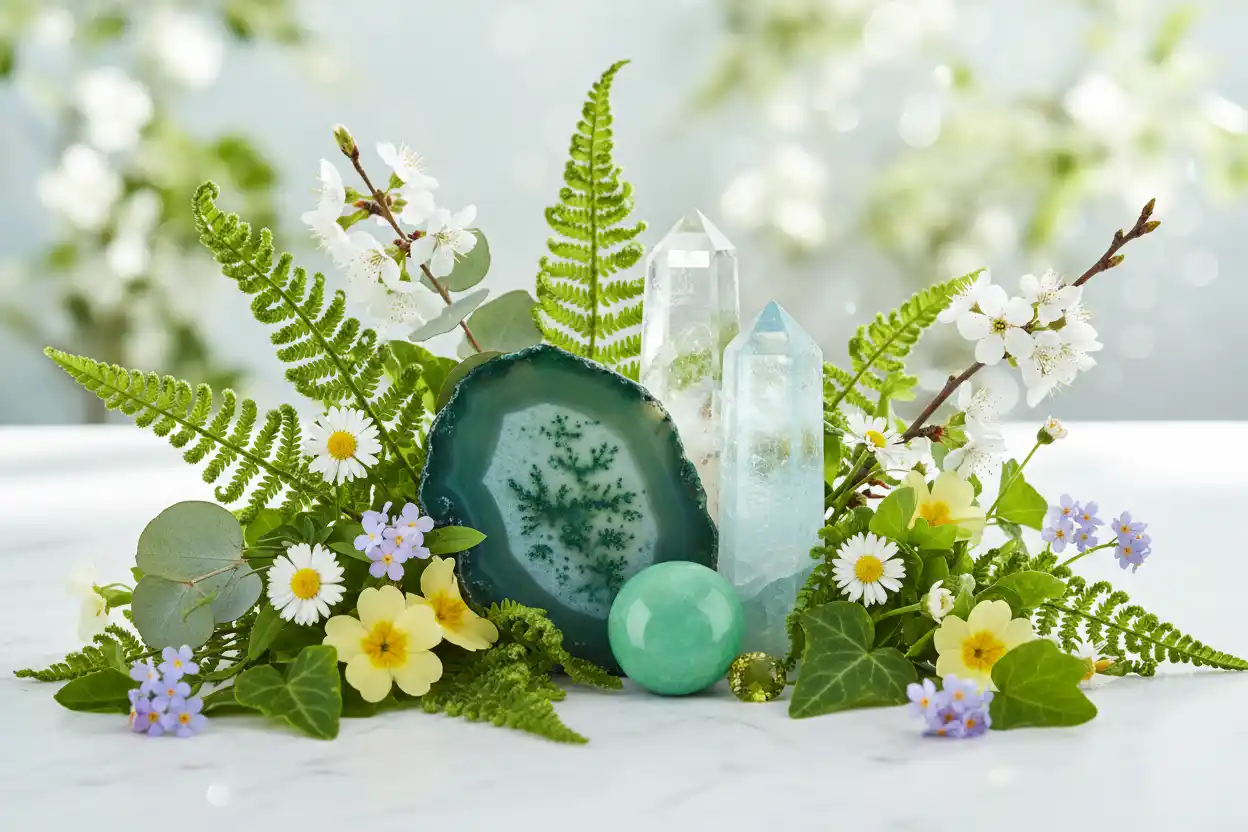
Moss agate is the strongest general spring crystal because its green inclusions resemble moss, branches and garden growth.
Traditional meanings connect it with patience, nature and steady development. Those themes suit habits and projects that need time to become established.
Place moss agate near a plant, calendar or progress tracker. Record small indicators rather than waiting for a dramatic result.
A routine that becomes slightly easier or a project that reaches its first stable stage represents meaningful growth.
Moss agate also provides balance when spring enthusiasm creates pressure to change everything at once.
2. Chrysoprase for Renewal
Chrysoprase is traditionally associated with hope, renewal and emotional openness. Its bright apple-green color gives it a distinctly fresh appearance.
Use chrysoprase when the season follows disappointment, isolation or a period of limited activity.
Choose one possibility that feels worth exploring without requiring immediate commitment. Attend an event, return to an interest or revise a plan that previously stalled.
Renewal does not mean pretending that winter or a difficult period had no effect. It means creating space for something new alongside what has been learned.
3. Green Aventurine for Opportunity
Aventurine is traditionally associated with opportunity, confidence and gradual growth. Green aventurine is especially popular in spring because its color reflects new leaves and expanding landscapes.
The completed guide to aventurine’s meaning and properties explains the broader quartz material and its characteristic aventurescence.
Use aventurine while increasing exposure to realistic possibilities. Apply, attend, ask or begin a conversation connected with the desired opportunity.
The stone cannot change probability or guarantee a favorable outcome. Its role is to remind the user that opportunities often require participation before they can be evaluated.
4. Clear Quartz for Seasonal Clarity
Clear quartz is commonly used for intention-setting. It suits spring planning because several goals may appear appealing at the same time.
Review the coming months and select one principal intention. Then define how progress will be recognized.
For example, “refresh my life” might become “walk outdoors three times each week” or “complete the first section of the garden project.”
Place clear quartz beside the written plan. Its useful role is to reduce vagueness, not to amplify spring energy scientifically.
5. Aquamarine for Spring Communication
Aquamarine is associated with courage, clarity and calm communication. Its pale blue-green color also reflects water, clear skies and March birthstone traditions.
Spring may bring new plans involving family, work or shared space. Use aquamarine while preparing a direct conversation about expectations.
State what needs to happen, why it matters and which parts remain negotiable.
The March birthstone guide examines aquamarine’s calendar tradition and history. Within a seasonal crystal practice, it remains focused on clear communication and transition.
6. Peridot for Releasing Comparison
Peridot is traditionally associated with renewal, prosperity and the release of envy or resentment.
Spring imagery can create pressure to become more productive, social or physically active. Peridot may symbolize separating personal needs from comparisons with other people’s visible progress.
Ask what improvement would genuinely support your life. Then choose a scale that fits current health, time and resources.
Renewal does not require following every seasonal trend or producing a visually impressive transformation.
7. Rose Quartz for Gentle Reconnection
Rose quartz represents compassion, affection and emotional gentleness.
Spring can create opportunities to reconnect socially after a quieter period. Use rose quartz while making one specific invitation or expressing appreciation to someone supportive.
Reconnection should remain reciprocal and respectful. A person does not need to resume every relationship or social commitment simply because the season feels active.
Rose quartz can also support gentleness toward changing energy. Increased daylight does not remove health conditions, grief or exhaustion automatically.
8. Citrine for Constructive Spring Optimism
Citrine is traditionally associated with optimism, confidence and opportunity. Its warm yellow color reflects the brighter light commonly connected with spring.
Place citrine near a project that needs a positive but realistic start. Identify what could go well and what preparation would support that outcome.
Constructive optimism leaves room for delays, changing weather and unexpected constraints.
The completed guide to crystals for positive energy explores uplifting routines more broadly. In spring, citrine should remain attached to a seasonal action rather than general promises of happiness.
9. Carnelian for Returning to Action
Carnelian is traditionally connected with initiative, creativity and courage. It suits the stage when spring planning needs to become visible action.
Choose one physical step: prepare the materials, begin the first outdoor task, contact the group or restart the creative practice.
Avoid attempting every seasonal project during the first burst of motivation. Carnelian works best when it represents one beginning rather than constant activity.
Its orange-red color also introduces warmth to collections dominated by green and clear stones.
10. Prehnite for Thoughtful Preparation
Prehnite is traditionally associated with foresight, calm awareness and preparation.
Spring plans may involve travel, gardening, study, home maintenance or social events. Use prehnite while identifying what needs to be arranged before the active period becomes busy.
Preparation should remain proportionate. It cannot remove uncertainty or predict every future complication.
A simple calendar, budget and materials list may provide more value than extensive planning that prevents the activity from beginning.
Choosing a Spring Crystal by Intention
| Spring intention | Suggested crystals | Practical seasonal action |
|---|---|---|
| Build a new habit | Moss agate and clear quartz | Define and track one repeatable behavior |
| Begin again after disappointment | Chrysoprase and rose quartz | Try one gentle new possibility |
| Pursue an opportunity | Green aventurine and citrine | Complete one appropriate application or introduction |
| Improve communication | Aquamarine | Prepare one clear seasonal conversation |
| Reduce comparison | Peridot and smoky quartz | Choose goals according to personal capacity |
| Reconnect socially | Rose quartz and chrysoprase | Make one specific invitation |
| Start a creative project | Carnelian and clear quartz | Complete the first visible stage |
| Plan the coming months | Prehnite and tiger’s eye | Set priorities, dates and limits |
| Spend more time in nature | Moss agate and aquamarine | Schedule a safe outdoor activity |
| Refresh a living space | Clear quartz and selenite | Clear one functional area at a time |
Spring Birthstones: March, April and May
Spring in the Northern Hemisphere overlaps with the traditional birthstones of March, April and May.
Aquamarine is the principal modern March birthstone. Diamond represents April, while emerald is associated with May.
The April birthstone guide examines diamond’s history and symbolism, while the May birthstone guide explores emerald’s longstanding association with growth and renewal.
These calendar traditions differ from selecting a crystal for a seasonal intention. Someone may wear a monthly birthstone while choosing moss agate or chrysoprase for a spring routine.
Spring and Zodiac Transitions
Spring in Western tropical astrology includes parts of Aries, Taurus and Gemini seasons in the Northern Hemisphere.
Zodiac timing and seasonal experience do not align identically in every climate or hemisphere. Astrology also uses symbolic conventions rather than local weather conditions.
The completed zodiac birthstone guide compares gemstone correspondences across the signs.
A spring crystal practice does not require a particular zodiac identity. Choose according to the seasonal intention rather than assuming one stone is mandatory for everyone born during spring.
A Spring Crystal Reset
Select one crystal and one area of life. Write what feels dormant, what has begun changing and what should receive attention now.
Remove one unnecessary obstacle. This might involve clearing a work surface, canceling an outdated obligation or organizing the materials needed for a project.
Then complete one visible action. Place the crystal near the routine until the next review.
A reset should simplify the season rather than create an extensive list of rituals and goals.
Spring Journaling Prompts
A concise spring journal can use the following questions:
- What is beginning to feel possible?
- What needs more time?
- Which old expectation no longer fits?
- What deserves consistent care?
- Which action can happen this week?
The answers do not need to be entirely positive. Spring may include uncertainty, grief and fatigue alongside renewal.
The completed guide to crystals for gratitude can complement seasonal appreciation, but gratitude should not replace attention to a real difficulty.
Spring Cleaning with Crystals
A crystal can provide a visual cue during spring cleaning, but it does not physically cleanse a home.
Clear quartz may mark the selected area, while moss agate can represent gradual progress. Complete one functional space before opening several new projects.
Avoid placing stones in cleaning water. Chemicals, moisture and impacts may damage crystals, and loose pieces can create slipping or obstruction hazards.
Keep crystals away from buckets, sinks and active work surfaces until cleaning is complete.
Spring Crystal Grid
A simple spring grid may place clear quartz at the center, with moss agate, chrysoprase, carnelian and rose quartz representing growth, renewal, action and compassion.
The completed crystal grid guide explains how to assign each stone a role and arrange it safely.
The geometry does not produce a scientifically measurable seasonal field. Its practical value lies in presenting the intentions visually.
Keep the grid away from children, pets, open windows and walking routes.
Spring Crystals for the Garden
Moss agate and green aventurine are popular garden-themed stones, but crystals should not replace soil testing, appropriate planting and species-specific care.
Avoid burying crystals outdoors. Stones may be lost, damaged by weather or introduced into an environment where they do not belong.
Place the crystal beside a gardening journal or indoor seed-starting area instead.
Never add unknown minerals or crystal-infused water to soil used for food crops.
Wearing Spring Crystals
Aquamarine, peridot, rose quartz and citrine can all appear in seasonal jewelry.
Choose the stone according to durability and intended activity. Gardening, sports and outdoor work can expose rings and bracelets to impacts, soil and chemicals.
Remove jewelry before heavy physical work. A pendant or protected earring may be more practical than a delicate ring.
Sunlight, heat and treatments also affect care, so store each piece according to its material.
Caring for Spring Crystals
Different spring stones require different cleaning methods. Peridot needs protection from acids and sudden temperature changes, while aquamarine and quartz varieties generally offer better durability.
Prehnite, opal-like materials and treated stones may need additional caution.
The completed guide to cleansing crystals safely outlines low-contact symbolic options.
Spring rain, garden soil and outdoor sunlight are not universally safe cleansing methods.
Spring Versus Autumn Crystal Themes
Spring generally emphasizes beginning, growth and renewed participation. Autumn crystal traditions tend to emphasize grounding, harvest and release.
The completed guide to crystals for autumn explores those contrasting seasonal themes.
The two seasons still share some stones. Moss agate may represent growth in spring and appreciation for natural cycles in autumn.
The intention, not the calendar alone, determines how a crystal is used.
When Spring Energy Feels Difficult
Not everyone feels more energetic or hopeful during spring. Seasonal changes can disrupt sleep, allergies may increase and personal circumstances may not match the cultural expectation of renewal.
A crystal practice should not pressure someone to become productive or cheerful. Choose grounding, rest and professional support when those responses are more appropriate.
Persistent low mood, severe fatigue or major changes in functioning deserve qualified assessment.
Spring symbolism remains optional and should adapt to the person rather than becoming another standard they must meet.
Conclusion
The best spring crystals connect renewal with gradual and practical action. Moss agate represents steady growth, chrysoprase symbolizes beginning again and green aventurine supports openness to opportunity. Aquamarine encourages clear communication, while clear quartz, carnelian and prehnite turn seasonal inspiration into defined plans.
Spring does not require a complete personal transformation. A meaningful seasonal practice may involve one growing habit, one cleared space and one realistic step toward something newly possible.
Frequently Asked Questions
1. What is the best overall crystal for spring?
Moss agate is one of the strongest spring stones because it symbolizes nature, patience and gradual growth.
2. Which crystal represents spring renewal?
Chrysoprase represents renewal and hope, while clear quartz can define the new seasonal intention.
3. Which green crystals are suitable for spring?
Moss agate, chrysoprase, green aventurine, peridot and prehnite all fit traditional spring color and growth symbolism.
4. What are the traditional spring birthstones?
In the Northern Hemisphere, spring commonly overlaps with aquamarine for March, diamond for April and emerald for May.
5. Can I combine several spring crystals?
Yes. A balanced set might include moss agate for growth, clear quartz for intention and carnelian for action.
6. Which spring crystal is suitable for new opportunities?
Green aventurine and citrine are popular symbolic choices for opportunity and constructive optimism.
7. Which spring crystal supports gardening?
Moss agate carries strong garden symbolism. Keep it beside a garden journal rather than burying it or adding it to irrigation water.
8. Can spring crystals be left outside in rain?
Not every crystal tolerates water, weather or temperature changes. Indoor placement is safer for most collections.
9. Can crystals be added to plant water?
No. Do not place crystals in water used for plants or food crops because mineral composition, treatments and residue may be uncertain.
10. Where should spring crystals be placed?
Place them near the seasonal behavior they represent, such as a planner, creative area, plant or decluttering project.
11. Do spring crystals need sunlight?
No. Sunlight is not required and may fade or damage certain stones after prolonged exposure.
12. Can spring crystals improve mood or energy medically?
No. Crystals cannot treat depression, fatigue, allergies or another health condition. Persistent symptoms require appropriate professional care.
Disclaimer: Seasonal and crystal correspondences are symbolic traditions, not scientifically established forces or medical treatments. Do not place crystals in drinking water, plant water or food-growing soil, and seek qualified care for persistent mood, sleep or health concerns.