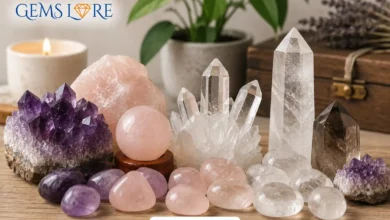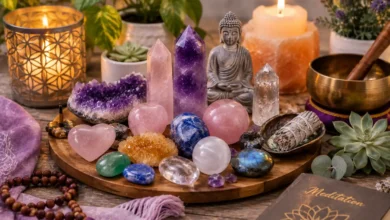

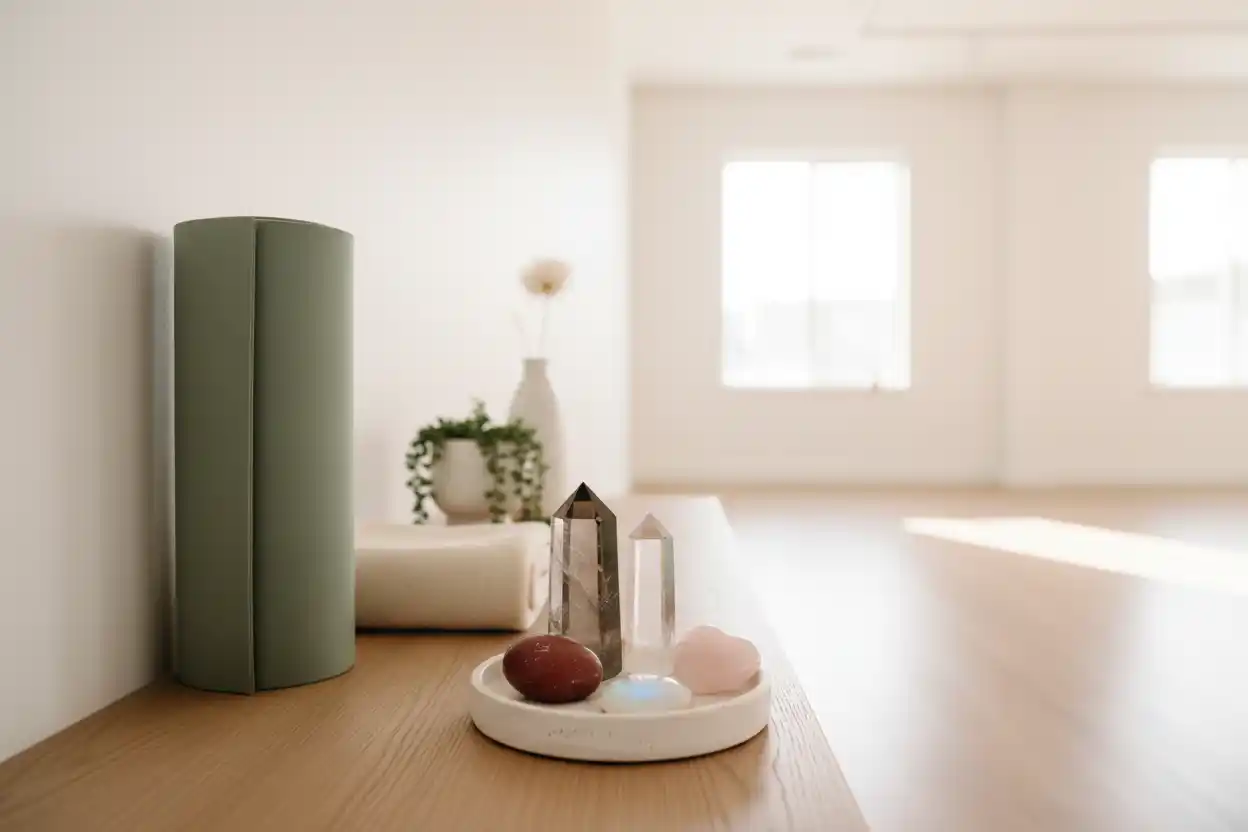

Crystals for yoga are traditionally used as intention markers, meditation focal points and symbols of grounding or self-awareness. They cannot improve flexibility, correct alignment or treat an injury, but they may help define the purpose of a practice before movement begins.
Smoky quartz supports grounding, while red jasper represents stability and consistent effort. Clear quartz can mark the session’s intention, howlite encourages patience and rose quartz reinforces a compassionate response to changing physical capacity.
For safety, keep crystals off the mat and outside the movement area. Loose, heavy or pointed stones can create tripping, pressure and impact hazards.
Top 10 Yoga Crystals at a Glance
| Rank | Crystal | Traditional yoga theme | Best practical use |
|---|---|---|---|
| 1 | Smoky quartz | Grounding and present-moment awareness | Arrive mentally before beginning movement |
| 2 | Red jasper | Stability and steady action | Maintain a consistent, proportionate practice |
| 3 | Clear quartz | Intention and clarity | Define the purpose of the session |
| 4 | Howlite | Patience and reduced reactivity | Avoid forcing progress |
| 5 | Rose quartz | Compassion and emotional gentleness | Respect physical and emotional limits |
| 6 | Carnelian | Initiative and embodied action | Begin an active or creative sequence |
| 7 | Tiger’s eye | Balance, confidence and discernment | Make safer decisions about challenge |
| 8 | Moonstone | Cycles and changing needs | Adapt practice to current capacity |
| 9 | Blue lace agate | Calm communication | Ask questions and communicate discomfort |
| 10 | Black tourmaline | Boundaries and grounding symbolism | Protect the practice from distractions and pressure |
How Crystals Can Fit into Yoga
A crystal can mark the beginning or end of a yoga session. For example, clear quartz may sit beside a written intention before practice, while smoky quartz accompanies a brief grounding pause afterward.
The stone does not need to touch the body or remain visible during movement.
In fact, placing crystals around the mat may create unnecessary risk. A foot, hand or knee can land on a stone during transitions, while a heavy specimen can fall from a nearby shelf.
The safest approach uses crystals before or after physical practice and stores them securely while movement occurs.
Respecting Yoga’s Cultural Context
Yoga has deep roots in South Asian philosophical, spiritual and contemplative traditions. Modern posture-based classes represent only one part of a much broader history.
Crystals are not required for yoga, and many contemporary crystal correspondences come from modern wellness culture rather than classical yogic texts.
A respectful practice avoids presenting retail crystal combinations as ancient requirements. It also recognizes that yoga includes ethical, philosophical and meditative dimensions beyond exercise.
Crystals may remain optional personal symbols without being described as necessary for an authentic practice.
1. Smoky Quartz for Grounding Before Practice
Smoky quartz is one of the strongest general yoga crystals because it is traditionally associated with grounding and present-moment perspective.
Before stepping onto the mat, notice the stone’s weight, temperature and visible details. Then place it safely on a shelf or inside a closed container.
Bring attention to the feet, breath and immediate physical environment.
Grounding should not become a demand to eliminate thoughts. The purpose is to notice where attention has gone and return it gently to the current practice.
The drafted guide to crystals for grounding offers additional sensory approaches that can be adapted outside active poses.
2. Red Jasper for Stability and Consistency
Red jasper carries traditional associations with stability, endurance and practical action.
It may represent maintaining a regular practice without treating intensity as the only sign of progress.
Choose a schedule that fits actual health, time and recovery needs. A short, appropriate session performed consistently may offer more value than occasional extreme effort.
Red jasper cannot increase muscular endurance or protect joints.
Stability in yoga comes from suitable technique, controlled transitions and respecting physical limits.
3. Clear Quartz for Setting an Intention
Clear quartz is commonly used for intention-setting.
Before practice, define one intention that relates to behavior rather than a guaranteed outcome.
Examples include:
- Move with attention rather than speed.
- Notice discomfort before it becomes pain.
- Keep the breath comfortable.
- Rest when the body requires it.
- End the session without evaluating appearance.
Place the crystal away before beginning movement.
Clear quartz does not amplify yoga’s medical or spiritual effects scientifically. It makes the selected principle easier to remember.
4. Howlite for Patience
Howlite is traditionally associated with patience, awareness and reduced reactivity.
Yoga progress can become distorted by comparison. Someone may force a pose because another participant appears more flexible or because an earlier version of the body moved differently.
Howlite can symbolize allowing the current practice to begin from present capacity.
Progress does not require reaching the deepest visible shape. Control, comfort and consistency often provide more useful information.
The stone is porous and commonly dyed, so keep it dry and away from sweat-soaked towels and cleaning sprays.
5. Rose Quartz for Self-Compassion
Rose quartz represents compassion and emotional gentleness in modern crystal traditions.
It may support a yoga practice that includes rest, modification and recovery without shame.
Use rose quartz while deciding what a fair practice looks like today. The answer may differ after poor sleep, illness, injury or emotional stress.
Compassion does not mean ignoring a medical restriction. It includes taking symptoms seriously and asking for appropriate guidance.
The drafted guide to crystals for self love examines compassionate self-respect beyond movement practices.
6. Carnelian for Active Participation
Carnelian is traditionally associated with initiative, creativity and embodied action.
It may suit an active sequence or the decision to return to practice after an ordinary lapse.
Choose a manageable session rather than compensating with excessive intensity. Carnelian should represent beginning, not proving commitment through discomfort.
The stone also fits creative movement and transitions, provided experimentation remains physically controlled.
Do not hold carnelian during weight-bearing or balancing poses. Store it before movement begins.
7. Tiger’s Eye for Discernment
Tiger’s eye carries traditional associations with confidence, balance and practical judgment.
It may support decisions about when to continue, modify or stop.
Ask whether the sensation reflects ordinary muscular effort, instability, pain or an unfamiliar symptom. When uncertain, reduce the intensity and seek qualified guidance.
Confidence should never require ignoring pain to complete a pose.
Tiger’s eye can also symbolize choosing an appropriate class level rather than the most advanced option available.
8. Moonstone for Changing Capacity
Moonstone is traditionally associated with cycles, transitions and emotional awareness.
Physical capacity can change across days because of sleep, health, stress, hormonal changes and many other factors.
Moonstone may accompany a short practice log. Record the type of session, modifications, comfort and recovery afterward.
The aim is not to assign every variation a mystical cause. It is to notice patterns that may inform future choices or a conversation with a healthcare professional.
Moonstone can chip along cleavage planes, so keep it off the floor.
9. Blue Lace Agate for Communication
Blue lace agate is traditionally associated with calm and considerate expression.
In a class, communication matters when instructions are unclear, touch-based adjustments are offered or a movement causes discomfort.
Ask questions before attempting a pose that feels unsafe. State clearly when you do not consent to physical adjustment.
A qualified teacher should respect boundaries and offer appropriate options within their training.
Blue lace agate does not open the throat medically or improve breathing capacity. Its role involves communication and consent.
10. Black Tourmaline for Practice Boundaries
Black tourmaline is traditionally associated with grounding and symbolic protection.
Its most practical yoga role involves boundaries around time, attention and outside pressure.
Place it near the device-storage area as a reminder that nonurgent notifications can wait during practice.
Black tourmaline may also symbolize declining a pose, adjustment or teaching style that does not feel appropriate.
The crystal cannot create a literal energetic shield. Clear communication and physical action establish the boundary.
Choosing a Yoga Crystal by Practice Intention
| Yoga intention | Recommended crystals | Grounded practice behavior |
|---|---|---|
| Arrive in the present moment | Smoky quartz | Use sensory orientation before movement |
| Build consistency | Red jasper | Choose a realistic schedule |
| Define the session’s purpose | Clear quartz | Write one behavioral intention |
| Reduce comparison | Howlite and rose quartz | Begin from current capacity |
| Start an active sequence | Carnelian | Warm up and increase challenge gradually |
| Make safer decisions | Tiger’s eye | Modify or stop when needed |
| Adapt to changing needs | Moonstone | Track response and recovery |
| Communicate discomfort | Blue lace agate | Ask questions and state limits |
| Protect attention | Black tourmaline | Remove notifications and interruptions |
| End with reflection | Smoky quartz and clear quartz | Record one observation without judgment |
Crystals and the Eight Limbs of Yoga
In classical yoga philosophy, physical postures form only one part of a wider system that may include ethical principles, breath practices, sense withdrawal, concentration, meditation and contemplative absorption.
A crystal may accompany reflection or concentration, but it does not replace study, ethical practice or qualified instruction.
Reducing yoga entirely to flexibility or chakra products can overlook the tradition’s depth.
When using crystals, frame them as optional modern additions rather than essential classical tools.
Yoga Crystals and Chakra Practices
Chakra systems belong to complex South Asian spiritual traditions and have been interpreted in many ways across time.
The completed guide to crystals for chakras provides a broad modern correspondence overview.
A stone’s color does not diagnose an energy center or medical condition. Chakra language may support spiritual reflection, but physical symptoms still require appropriate healthcare.
Use correspondences as personal symbolism rather than anatomical claims.
Root Chakra and Grounding Poses
Smoky quartz, red jasper and black tourmaline commonly appear in modern root-chakra practices.
The root chakra crystal guide discusses symbolism involving stability, belonging and security.
Within yoga, these stones may accompany preparation for standing or seated grounding work. They should remain off the mat.
Stable movement comes from suitable technique, strength, balance and support rather than the crystal.
Sacral and Solar Plexus Symbolism
Carnelian often appears in sacral-chakra practices involving creativity and movement, while tiger’s eye is commonly associated with solar-plexus themes of confidence and agency.
The completed sacral chakra guide and solar plexus crystal guide explain those modern correspondences.
During yoga, carnelian may symbolize participation, while tiger’s eye supports proportionate challenge.
Neither stone changes biological energy or core strength.
Throat, Third Eye and Crown Practices
Blue lace agate may complement throat-chakra reflection involving communication and consent.
The completed throat chakra crystal guide examines those spiritual associations.
Moonstone and clear quartz sometimes appear in intuitive or contemplative practices connected with the third eye and crown. The third-eye crystal guide and crown-chakra guide provide that context.
These traditions should not be used to diagnose headaches, vision problems, breathing concerns or neurological symptoms.
Crystals for Yoga Meditation
A brief seated meditation can use clear quartz or smoky quartz as a visual focal point before the stone is placed aside.
The drafted guide to crystals for meditation explores focal-object and breath-based methods more fully.
Meditation does not require an empty mind. Notice distraction and return to the selected focus without treating the interruption as failure.
Stop when the practice increases panic, dissociation, pain or severe distress.
Crystals During Restorative Yoga
Rose quartz, howlite and moonstone suit the symbolism of rest, patience and adaptation.
However, crystals should not be placed beneath the body, inside blankets or on props where pressure could break them.
Comfort should come from properly arranged bolsters, blocks, blankets and room conditions.
Someone with injuries, pregnancy-related considerations or medical restrictions should seek suitable guidance before adopting unfamiliar positions.
Crystals During Active Yoga
Carnelian and red jasper complement active symbolism, although they should remain on a shelf rather than around the mat.
Warm up gradually and choose transitions that remain controlled.
Sweat, fatigue and rapid movement can increase slipping and balance risks. Clear the complete practice area of stones, candles, glass objects and unnecessary furniture.
A stimulating crystal does not make a high-intensity sequence appropriate for every person.
Holding Crystals During Yoga
Do not hold crystals during weight-bearing, balancing or flowing movement.
A stone can reduce grip, fall onto the foot or prevent the hand from supporting body weight safely.
Holding a small smooth stone may be acceptable during seated reflection when the person remains stable and comfortable. Put it aside before changing position.
Pointed, brittle and heavy specimens should never be held during physical practice.
Placing Crystals on the Body
Avoid placing heavy, sharp or unstable stones on the body during yoga or relaxation.
A crystal may fall, create pressure or interfere with breathing and movement. Chest, abdomen, throat, face and injured areas require particular caution.
Body placement is not necessary for spiritual symbolism.
Use a nearby secure shelf and keep the movement area completely clear.
Yoga During Pregnancy
Pregnancy changes balance, circulation, joint stability and physical comfort.
A crystal cannot determine which poses are appropriate or protect a pregnancy. Seek guidance from the maternity care team and a suitably qualified instructor.
Do not place stones on the abdomen or use crystal elixirs.
The drafted guide to crystals for pregnancy and birth provides broader safety-first guidance for symbolic crystal use during pregnancy.
Yoga with Injuries or Medical Conditions
Pain, dizziness, fainting, breathing difficulty, numbness and unusual weakness should not be interpreted as energetic release.
Stop the movement and seek appropriate assessment.
A qualified teacher may offer modifications within their scope, but diagnosis and treatment belong with healthcare professionals.
Crystals cannot repair tissue, reduce inflammation or correct structural injury.
Creating a Safe Yoga Space
Use a stable nonslip mat with enough clearance around it.
Move furniture, crystals, candles and glass objects outside the reach of hands and feet. Confirm that pets and children cannot enter unexpectedly during movement.
Lighting should allow the practitioner to see the floor and props clearly.
A peaceful-looking room is not safe when objects obstruct transitions or emergency access.
A Simple Pre-Yoga Crystal Routine
Choose one stone and one behavioral intention.
Observe the crystal while seated or standing safely. State the intention, such as moving with attention or respecting current limits.
Place the stone on a secure shelf outside the practice area.
Complete the yoga session, then return to the crystal only after movement has ended. Record one useful observation rather than grading the entire practice.
Cleansing Yoga Crystals
Crystals used around exercise may collect sweat, dust or residue from hands and mats.
Keep them outside the active area to reduce contamination. Clean each mineral according to its properties.
Howlite and certain other porous stones should not be soaked, while raw tourmaline may need gentle dry care.
The completed guide to cleansing crystals safely separates physical cleaning from symbolic resetting.
Conclusion
The best yoga crystals support intention without entering the physical movement space. Smoky quartz grounds attention, red jasper represents consistency and clear quartz defines the session’s purpose. Howlite and rose quartz encourage patience and compassion, while tiger’s eye supports safer judgment.
Carnelian, moonstone, blue lace agate and black tourmaline add participation, adaptability, communication and boundaries. Crystals remain optional modern companions; technique, consent, cultural respect and physical safety matter more than any stone.
Frequently Asked Questions
1. What is the best overall crystal for yoga?
Smoky quartz is one of the strongest general choices because it symbolizes grounding and present-moment awareness.
2. Which crystal supports balance during yoga?
Tiger’s eye represents discernment and balance, but physical balance comes from technique, strength and appropriate practice.
3. Which crystal is suitable for yoga meditation?
Clear quartz and smoky quartz can serve as brief focal objects before being placed safely aside.
4. Can crystals improve flexibility?
No. Crystals cannot improve joint mobility, muscle length or physical flexibility.
5. Should crystals be placed around the yoga mat?
No. Loose stones around the mat create tripping, pressure and impact hazards.
6. Can I hold a crystal during yoga?
Only during stable seated reflection. Do not hold stones during balancing, flowing or weight-bearing poses.
7. Can crystals be placed on the body during yoga?
Avoid body placement because stones can fall, create pressure or interfere with movement and breathing.
8. Which crystal supports a consistent yoga routine?
Red jasper symbolizes steady action, while clear quartz can mark a defined practice schedule.
9. Are crystals required for chakra yoga?
No. Crystals are optional modern additions and are not required for yoga or chakra practice.
10. Can crystals prevent yoga injuries?
No. Crystals cannot prevent injury. Suitable instruction, technique, progression and modifications are essential.
11. Can yoga crystals replace medical treatment?
No. Crystals and yoga cannot replace medical assessment, rehabilitation or prescribed treatment.
12. How should yoga crystals be cleaned?
Keep them away from sweat and mat-cleaning products, then use a method appropriate to the individual mineral.
Disclaimer: Crystals cannot improve flexibility, prevent injury or treat pain and medical conditions. Keep all stones off the mat and body during movement, respect consent and physical limits, and seek qualified guidance for pregnancy, injury, severe symptoms or health restrictions.