
Solar Plexus Chakra: Meaning, Healing, Stones and Balancing

The solar plexus chakra is the third primary energy center in many modern chakra systems. Known in Sanskrit as Manipura, it is traditionally connected with fire, transformation, will, disciplined action and the ability to direct personal energy with purpose.
Modern spiritual practice often associates this chakra with confidence, boundaries and personal power. These ideas can provide a useful framework for reflection, but they should not be treated as anatomical facts, medical diagnoses or substitutes for professional care.
Solar Plexus Chakra at a Glance
| Association | Solar Plexus Chakra |
|---|---|
| Sanskrit name | Manipura |
| Common English name | Solar plexus chakra |
| Position in seven-chakra system | Third |
| Traditional region | Navel or upper abdominal region |
| Modern color association | Yellow or golden yellow |
| Traditional element | Fire |
| Common symbol | Ten-petaled lotus |
| Seed syllable | Ram |
| Central themes | Will, confidence, identity, action and transformation |
| Common modern practices | Breathwork, visualization, mantra, yoga, journaling and crystals |
| Neighboring centers | Sacral chakra below and heart chakra above |
| Important distinction | Spiritual framework, not a medical organ |
What Is the Solar Plexus Chakra?
Manipura is commonly translated as “city of jewels,” “jewel city” or “lustrous gem.” Within yogic and tantric traditions, it occupies the third position in the sequence of primary chakras.
Historical descriptions often place Manipura at or behind the navel. Modern Western chakra teaching frequently shifts the focus slightly upward toward the upper abdomen and identifies it with the solar or celiac plexus. Those systems overlap, but they are not identical.
The anatomical solar plexus is a real network of nerves in the upper abdomen. The solar plexus chakra, by contrast, is a spiritual and symbolic concept. A person can work with the chakra as a contemplative framework without claiming that it is a measurable physical structure.
Historical and Cultural Context
Chakra teachings developed across diverse Hindu, Buddhist and tantric traditions rather than from one universal diagram. Different texts describe varying numbers of chakras, locations, colors, deities, syllables and contemplative purposes.
Manipura appears in later systems as an important center associated with fire and transformative power. Traditional imagery often includes a ten-petaled lotus, a downward-pointing triangle and the fire element.
The bright yellow color now used almost universally in commercial chakra charts belongs largely to modern standardized systems. Earlier traditions could emphasize different colors within the same symbol, including red, blue or combinations of several colors.
Consequently, a yellow crystal is not historically required for solar plexus work. Color can support modern symbolism, but intention, cultural understanding and personal response matter more than following a rigid chart.
Location and the Meaning of “Solar Plexus”
In many practices, the solar plexus chakra is visualized between the navel and the lower end of the breastbone. Some practitioners focus directly behind the navel, while others place attention several centimeters above it.
There is no need to locate one precise point. During meditation, the upper abdominal region can serve as a broad center of awareness.
The chakra should not be confused with the anatomical celiac plexus. Upper abdominal pain, digestive symptoms, unexplained weight changes, persistent nausea or other physical concerns require medical assessment rather than chakra balancing alone.
Symbolism of Fire
Fire is the traditional element associated with Manipura. In this context, fire symbolizes transformation: food becomes nourishment, intention becomes action and experience becomes understanding.
A well-managed fire provides warmth and direction. An uncontrolled fire consumes resources, while a weak fire struggles to sustain momentum. This metaphor explains why modern practitioners connect the solar plexus chakra with balanced confidence rather than domination.
The aim is not to become forceful in every situation. Healthy personal power includes restraint, accountability and the ability to act without diminishing other people.
Solar Plexus Chakra Meaning
The solar plexus chakra is commonly associated with identity, confidence, decision-making and the willingness to take purposeful action.
Within this symbolic model, a balanced center supports a realistic sense of capability. A person can acknowledge strengths without pretending to be invulnerable and recognize limitations without treating them as permanent failures.
Personal power also involves choice. Saying yes deliberately, saying no respectfully and changing direction when evidence changes can all reflect a mature expression of solar plexus energy.
For readers primarily interested in stones, the dedicated guide to solar plexus chakra crystals compares individual materials for confidence, motivation and personal-power practices.
What a Balanced Solar Plexus Chakra Represents
A balanced solar plexus chakra is traditionally described through qualities rather than physical symptoms. These may include steady confidence, appropriate boundaries, realistic motivation and the ability to complete decisions.
Balance does not mean feeling certain all the time. It means uncertainty does not automatically prevent action.
Someone working from a centered place may accept feedback without losing all self-trust. They can revise a plan, admit an error and remain responsible for the next step.
This position sits between passivity and control. The person neither abandons personal agency nor attempts to dominate every outcome.
Underactive Solar Plexus Patterns
Modern chakra practitioners sometimes use “underactive” to describe a recurring sense of hesitation, powerlessness or difficulty acting on personal decisions.
Possible reflective themes include waiting continually for permission, abandoning goals after small setbacks, apologizing for reasonable needs or allowing other people’s preferences to determine every choice.
These experiences have many possible causes. Stress, depression, anxiety, trauma, unsafe relationships, exhaustion and practical barriers cannot be reduced to an energy-center explanation.
The chakra model becomes most useful when it encourages compassionate inquiry. Instead of asking, “What is wrong with me?” a person might ask, “What is the smallest choice I can make responsibly today?”
The broader guide to crystals for confidence approaches self-esteem from a crystal-practice perspective without treating stones as psychological treatment.
Overactive Solar Plexus Patterns
An “overactive” solar plexus is often described as force without flexibility. Symbolic themes can include perfectionism, controlling behavior, defensiveness or treating every disagreement as a threat to identity.
Ambition itself is not a problem. Difficulty arises when achievement becomes the only measure of worth or when personal confidence depends on keeping other people beneath one’s control.
A balancing practice may therefore emphasize listening, patience and shared decision-making rather than generating still more intensity.
Because these patterns can also relate to stress, relationship dynamics or mental-health concerns, chakra language should remain a tool for reflection rather than a label imposed on oneself or anyone else.
Relationship With the Sacral Chakra
The sacral chakra is commonly associated with feeling, creativity, pleasure and adaptability. The solar plexus chakra then gives direction to that creative movement.
A person may have many ideas but struggle to choose one. In chakra symbolism, sacral energy generates possibility while solar plexus energy commits resources to a decision.
The companion guide to sacral chakra crystals focuses on stones traditionally used for creativity and emotional flow.
When the two centers are considered together, action need not suppress feeling. Instead, emotion informs the choice while discipline supports its completion.
Relationship With the Root Chakra
The root chakra represents foundations, safety and practical stability in modern chakra systems. Personal power is harder to use constructively when basic needs and boundaries feel continuously threatened.
For that reason, grounding may be more appropriate than confidence-building during overwhelming periods. The guide to root chakra crystals explores materials used symbolically for steadiness and security.
A person can imagine the root chakra as the base that supports action and the solar plexus as the center that directs it.
Relationship With the Heart Chakra
The heart chakra is associated with compassion, connection and emotional openness. Linking it with the solar plexus can prevent confidence from becoming self-centered.
Healthy boundaries protect both the individual and the relationship. Compassion without boundaries may lead to resentment, while willpower without empathy may become harsh.
The guide to heart chakra crystals covers stones commonly chosen for love and compassion practices.
Relationship With the Upper Chakras
The throat chakra symbolically expresses decisions through speech. Solar plexus work may clarify what a person intends, while throat-focused practice considers how to communicate it honestly.
The third-eye chakra is associated with discernment and insight. Reflection can help determine whether a goal arises from genuine values, social pressure or fear.
Finally, the crown chakra places personal action within a broader spiritual context. In a balanced model, individual will does not become the only source of meaning.
The overview of crystals for chakras compares the full sequence without requiring every person to use the same stone or system.
Solar Plexus Chakra Stones
Yellow and golden stones dominate modern solar plexus practice because their colors resemble sunlight and fire. However, orange, brown and metallic stones also appear when their symbolism emphasizes courage, action or steadiness.
Citrine is commonly chosen for optimism and purposeful action. Tiger’s Eye represents measured confidence and practical judgment, while Pyrite is associated with determination and structured ambition.
Sunstone is used symbolically for independence and warmth. Honey Calcite and Yellow Calcite offer softer visual associations with clarity and gradual confidence.
Yellow Jasper is often selected for patient endurance. Carnelian can bridge sacral creativity and solar-plexus action.
The complete yellow crystals guide provides a broader color-based list. Color alone, however, does not determine a stone’s spiritual role.
Meditation for the Solar Plexus Chakra
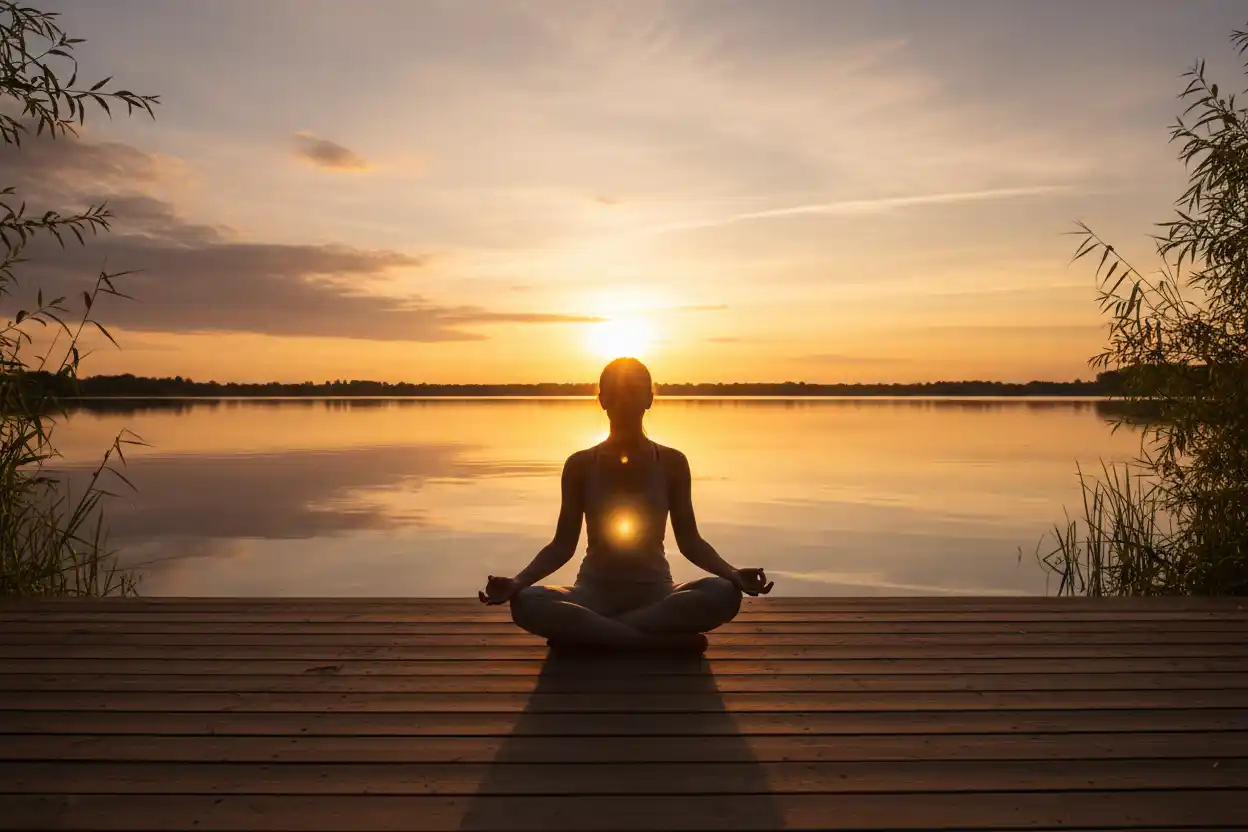
Sit in a comfortable position and allow the spine to remain upright without forcing it rigid. Place one hand over the upper abdomen if that feels comfortable.
Breathe slowly and notice the natural movement beneath the hand. On each exhalation, release unnecessary tension from the jaw, shoulders and abdomen.
Next, imagine a small steady flame rather than a dramatic explosion of light. A controlled flame offers enough energy to illuminate the next choice without consuming everything around it.
Bring one realistic decision to mind. Ask what action belongs to you, what belongs to someone else and what cannot be controlled.
End by naming one practical step. The value of the exercise lies in connecting reflection with responsible action.
Working With the Ram Mantra
Ram is traditionally associated with Manipura as a seed syllable. Practitioners may repeat it quietly, aloud or internally during meditation.
A mantra does not need to be treated as a mechanical switch. Repetition can support concentration, regulate the pace of a practice and return attention when the mind wanders.
People using Sanskrit mantras should approach them respectfully and recognize their cultural and religious contexts. Anyone uncomfortable with mantra practice can use a simple phrase such as, “I will take the next responsible step.”
Breathwork and Embodied Awareness
Slow diaphragmatic breathing can create a useful pause before decision-making. Breathe in comfortably, then allow the exhalation to become slightly longer without straining or holding the breath.
Avoid forceful breathwork when pregnant, lightheaded, recovering from surgery or managing cardiovascular, respiratory or neurological conditions unless a qualified professional has advised it.
The purpose is not to force energy through the body. It is to create enough space to observe reactions before acting on them.
Yoga and Movement
Modern yoga classes often associate core-engaging postures with the solar plexus chakra. Boat pose, plank variations, warrior poses and gentle twists are common examples.
A posture should never be used to prove strength. Modifications, supports and shorter holds can preserve the intention without creating unnecessary strain.
Walking with deliberate posture can serve the same symbolic purpose. Relax the shoulders, look ahead and move at a pace that feels steady rather than aggressive.
Anyone with pain, injury or a medical condition should seek appropriately qualified guidance before beginning unfamiliar exercises.
Journaling for Personal Power
Journaling can make solar plexus themes concrete. Begin with a recent situation in which a decision felt difficult.
Write three separate statements: what is known, what is assumed and what action remains available. This structure reduces the tendency to treat every fear as a fact.
Another useful prompt is, “Where am I asking for permission that I do not actually need?” The answer may reveal a small choice that can be made without disrespecting anyone else.
Personal power becomes more sustainable when it is tied to values rather than temporary intensity.
Boundaries as a Balancing Practice
Boundaries are not punishments or tools for controlling other people. They describe what a person will participate in, what they will decline and what action they will take if a limit is ignored.
A solar plexus practice may therefore involve rehearsing one clear sentence. “I cannot take that on this week” often communicates more effectively than a long justification.
Healthy boundaries remain flexible when circumstances change. Rigidity can become another form of fear, while endless accommodation can erase personal responsibility.
A Simple Ten-Minute Practice
Spend the first two minutes noticing the breath and releasing abdominal tension. During the next two minutes, visualize a steady golden flame.
Use three minutes to write one decision, one boundary or one unfinished task. Then spend two minutes identifying the smallest responsible action.
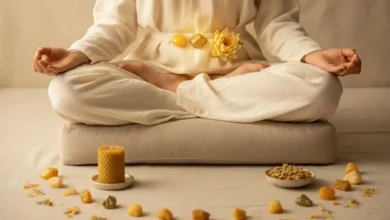
During the final minute, place a chosen stone nearby or hold it as a reminder. The crystal represents the commitment; it does not make the decision on the user’s behalf.
When Chakra Work Is Not Enough
Persistent fear, low self-worth, controlling behavior, indecision or loss of motivation may deserve support beyond a spiritual routine. A counselor, therapist, physician, support organization or trusted professional may help identify factors that chakra language cannot address.
Physical pain near the solar plexus also requires ordinary medical reasoning. A spiritual framework should never delay assessment of severe, recurring or unexplained symptoms.
Chakra practice is most constructive when it increases self-awareness while preserving respect for evidence-based care.
Frequently Asked Questions
1. What is the solar plexus chakra?
It is the third primary chakra in many modern seven-chakra systems. Known as Manipura, it is traditionally associated with fire, transformation, will and purposeful action.
2. Where is the solar plexus chakra located?
Traditional sources commonly place Manipura at or behind the navel. Modern systems often focus on the upper abdomen between the navel and breastbone.
3. Is the solar plexus chakra an anatomical structure?
No. The chakra is a spiritual concept. The anatomical solar or celiac plexus is a real nerve network, but it is not the same thing as Manipura.
4. What color represents the solar plexus chakra?
Yellow or golden yellow is the most common modern association. Historical chakra traditions used varying colors and symbolic schemes.
5. What element is linked with Manipura?
Fire is its traditional element. It symbolizes transformation, disciplined energy and the movement from intention to action.
6. What is the solar plexus chakra mantra?
Ram is the seed syllable traditionally associated with Manipura. It may be repeated during meditation as a concentration practice.
7. What does a balanced solar plexus chakra represent?
Modern teachings associate balance with realistic confidence, responsible action, healthy boundaries and the ability to make decisions without dominating others.
8. What are signs of an underactive solar plexus chakra?
Practitioners may use that phrase for hesitation, low self-trust or difficulty acting. These experiences can also have psychological, social or medical causes and should not be self-diagnosed solely through chakra theory.
9. What are signs of an overactive solar plexus chakra?
Symbolic themes include perfectionism, excessive control, defensiveness and tying self-worth entirely to achievement or authority.
10. Which crystals are used for the solar plexus chakra?
Citrine, Tiger’s Eye, Pyrite, Sunstone, Yellow Calcite, Honey Calcite, Yellow Jasper and Carnelian are common modern choices.
11. Can solar plexus meditation improve digestion?
Relaxation practices may help some people feel calmer, but chakra meditation does not diagnose or treat digestive disease. Persistent symptoms require medical assessment.
12. How often can I practice solar plexus balancing?
A brief reflective practice can be used whenever it remains comfortable and constructive. Consistency matters more than long or forceful sessions.
Chakra healing, energy blockages and crystal effects belong to spiritual and cultural traditions; they are not scientifically established diagnoses or medical treatments. Seek qualified care for physical pain, digestive symptoms, persistent anxiety, depression, trauma or other health concerns.