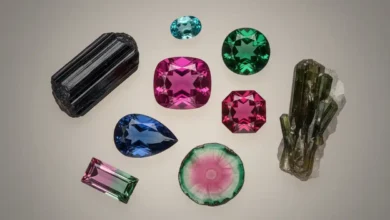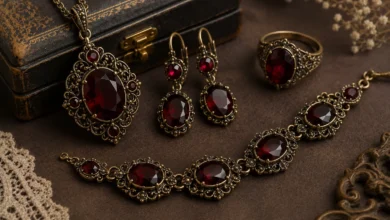


Wedding jewelry is everything the engagement ring isn’t: the wedding band, the bridal earrings and necklace, the “something blue,” the bridesmaid gifts, and the groom’s cufflinks. Each piece has different demands. A wedding band is worn every day for fifty years, so it needs sapphire-grade toughness. Bridal earrings are worn once, so almost anything works. Matching the stone to the piece is the whole game.
This guide covers wedding jewelry piece by piece. You’ll learn what each one actually needs, the “something blue” options, and how to buy for a wedding party without overspending. At Gems Lore, we want your jewelry to outlast the photos.
A quick note first. This is general educational information, not appraisal advice. For the engagement ring specifically, see our best gemstones for engagement rings guide.
The Short Answer
- Wedding band: sapphire, ruby, diamond, spinel. Worn forever, needs toughness.
- Bridal earrings and necklace: almost anything. Worn once.
- Something blue: sapphire, aquamarine, blue topaz, lapis.
- Bridesmaid gifts: garnet, amethyst, peridot. Affordable and pretty.
Every Piece Has Different Demands
This is the insight that makes wedding jewelry easy once you see it.
People agonize over “the best gemstone for a wedding,” as though there’s one answer. There isn’t, because the pieces face wildly different lives.
A wedding band is worn every day, forever, on the hand you use for everything. It’s the single hardest-worn piece of jewelry that exists.
Bridal earrings and a necklace are worn for roughly eight hours, once. Durability is nearly irrelevant.
Bridesmaid gifts need to be affordable and wearable afterwards.
So the question isn’t “which stone?” It’s “which stone, for which piece?” Our best gemstones for everyday wear guide covers the underlying principle.
The Wedding Band: Toughness Is Everything
This is the piece that matters most, because it never comes off.
The rule: hardness 8 or above, and no cleavage. Household dust contains quartz at hardness 7, so anything softer is slowly abraded by ordinary life. Our gemstone hardness chart covers the scale.
The excellent choices:
Sapphire (9, no cleavage). The smartest pick available. Every color, effectively indestructible, far cheaper than diamond. A row of blue or teal sapphires in an eternity band is both durable and distinctive.
Ruby (9, no cleavage). Identical toughness, and red reads beautifully in a band.
Diamond (10). The classic eternity band stone. Lab-grown is chemically identical at a fraction of the price, as our lab-grown vs. natural gemstones guide covers.
Spinel (8, no cleavage). Underrated, usually untreated, and available in red, pink, blue, and grey.
Moissanite (9.25, no cleavage). Maximum sparkle per dollar, though its high fire reads differently from diamond. Our best diamond alternatives guide covers this.
What to avoid in a band: emerald (cleavage, and the oiling needs renewing), opal, pearl, moonstone, tanzanite, and topaz (hard at 8 but it cleaves perfectly).
Setting matters. Channel and flush settings protect stones in a band far better than prongs, which catch and expose facet edges.
Bridal Earrings and Necklace: Wear Anything
Here’s the liberating part.
These pieces are worn for one day, hanging free, colliding with nothing. Durability is essentially irrelevant. So choose entirely on beauty and budget.
Pearl is the traditional bridal stone, and its soft luster against skin is genuinely lovely. It’s very soft at 2.5 to 4.5 and dissolved by acid, but for one day that doesn’t matter. Just put it on after perfume and wipe it afterwards.
Opal is spectacular and fragile. Perfect as a bridal pendant. Our opal meaning guide covers it.
Moonstone gives that dreamy floating blue sheen, and its softness is irrelevant at your throat. Our moonstone necklaces guide covers styles.
Aquamarine is cool, clean, and hard enough to keep wearing afterwards. Our aquamarine necklaces guide covers it.
The practical tip: buy something you’ll wear again. Bridal jewelry that only works with a wedding dress is expensive for one day’s use.
“Something Blue”
A genuinely fun tradition with excellent gemstone options.
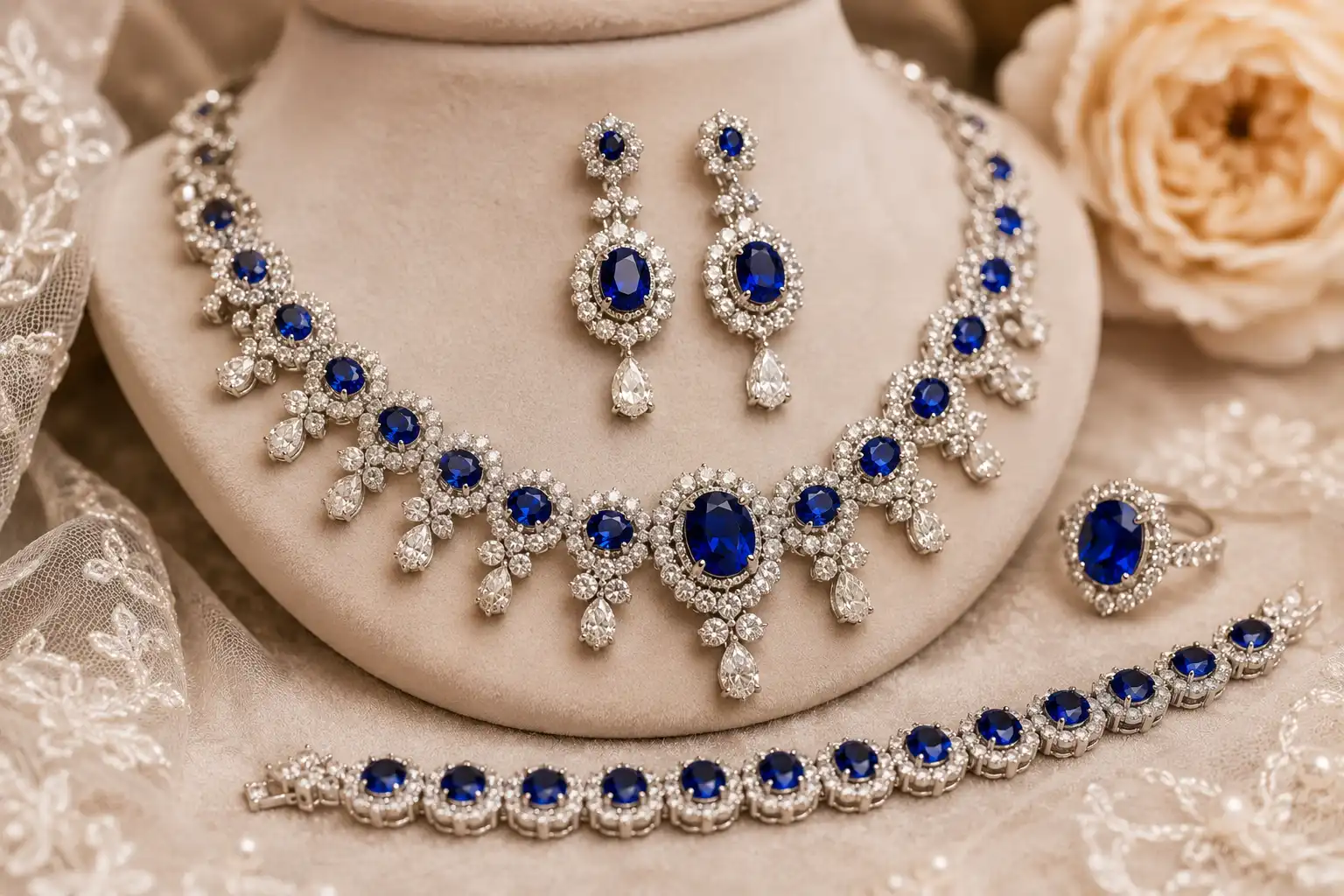
Sapphire. The obvious and best choice, and it doubles as a wedding band stone. Blue sapphire needs no explanation.
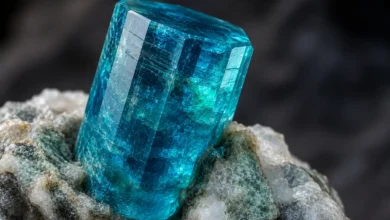
Aquamarine. Softer, cooler blue, affordable in large sizes, and hard enough at 7.5 to 8 for lasting wear. Our aquamarine rings guide covers styles.
Blue topaz. Very cheap and bright. Note it’s almost always irradiated colorless topaz, and topaz cleaves perfectly despite hardness 8. Fine for a pendant.
Lapis lazuli. Deep ultramarine with gold pyrite flecks, and five thousand years of history. Soft at 5 to 6, so a pendant or earrings. Our lapis lazuli meaning guide covers it.
Turquoise. Distinctive and meaningful in many cultures. Porous and soft, so keep it away from perfume and lotion. Our turquoise meaning guide covers care.
Blue zircon. Genuinely fiery and underrated, and not cubic zirconia.
A charming option: many brides have a small sapphire set into the underside of the band, hidden against the finger. Something blue, permanently.
Bridesmaid and Groomsmen Gifts
The brief here is specific: affordable, pretty, and genuinely wearable afterwards.
Garnet. The best value in gemstones. Tough, untreated, light-stable, and cheap. Available in red, raspberry rhodolite, and mandarin spessartite, so you can give each bridesmaid a different color from the same family. Our types of garnet guide maps it.
Amethyst. Beautiful purple, hardness 7, very cheap in large clean sizes. Our amethyst rings guide covers it. Note it fades in prolonged sunlight.
Peridot. Vivid natural green, untreated, and affordable. Our peridot meaning guide covers it.
Citrine. Warm golden yellow and cheap, though most is heat-treated amethyst. Our citrine rings guide covers the treatment question.
For groomsmen: black onyx or lapis cufflinks are classic, affordable, and actually get worn. Our onyx meaning guide covers onyx.
Budget tip: a generous 3-carat amethyst pendant reads more impressively than a tiny sapphire, and costs a fraction. Our affordable gemstones guide covers value buying.
Matching Metals Across the Wedding Set
A practical point people miss until it’s too late.
Your wedding band sits next to your engagement ring forever. If the engagement ring is white gold and the band is yellow, they’ll rub against each other, and the softer metal wears faster. Matching metals is both an aesthetic and a practical decision.
Also consider hardness clash. A diamond eternity band worn against a softer colored stone in the engagement ring will slowly abrade it. Diamonds scratch everything.
For sensitive skin, ask specifically whether white gold is alloyed with nickel or palladium. Our best gemstones for sensitive skin guide covers this.
Buying for a Wedding: Practical Advice
Start early. Sizing, sourcing, and resetting all take time, and custom work takes longer than anyone expects.
Ask about treatments. Sapphire and ruby are nearly always heated (stable, standard). Emerald is oiled (needs renewal). Blue topaz is irradiated. Garnet and spinel are usually untreated.
Get certification for anything expensive, especially to confirm lab-grown versus mined diamond, which affects price enormously. Our gemstone certification guide explains reports.
Insure the rings. They’re worn daily for decades.
Our how to buy gemstones online guide covers buying safely.
Frequently Asked Questions
What is the best gemstone for a wedding band?
Sapphire, at hardness 9 with no cleavage, is the smartest choice, matched by ruby and followed by diamond, moissanite, and spinel. A wedding band is worn every day for decades, so it needs genuine toughness. Avoid emerald, opal, pearl, and topaz, which cleave or are soft.
Can I wear soft gemstones in bridal jewelry?
In earrings and necklaces, absolutely. They’re worn for one day, hanging free and colliding with nothing, so durability is essentially irrelevant. Pearl, opal, and moonstone are all superb bridal choices. Just keep soft stones out of the wedding band, which is worn constantly.
What gemstone works for “something blue”?
Sapphire is the classic and toughest choice. Aquamarine is affordable and hard enough to keep wearing. Blue topaz is cheapest, though almost always irradiated. Lapis lazuli offers deep ultramarine with real history. Many brides also have a small sapphire set into the underside of the band.
What are good affordable gemstone bridesmaid gifts?
Garnet is the standout: tough, untreated, cheap, and available in red, raspberry, and orange from the same family so each bridesmaid can have a different color. Amethyst, peridot, and citrine are all inexpensive and pretty. A generous 3-carat stone reads better than a tiny expensive one.
Should my wedding band match my engagement ring metal?
Ideally yes, for two reasons. Aesthetically they sit together forever. Practically, if the metals differ in hardness they’ll wear against each other over decades. Also consider that a diamond band will slowly abrade a softer colored stone in the engagement ring beside it.
Is pearl a good wedding jewelry choice?
For earrings and necklaces, yes, and it’s the traditional bridal stone with a genuinely lovely luster. It’s very soft at 2.5 to 4.5 and damaged by acids including perfume and sweat, but for one day that hardly matters. Put it on after perfume and wipe it afterwards.
Where to Go From Here
Wedding jewelry gets easy once you stop asking “which stone?” and start asking “which stone, for which piece?” Sapphire for the band you’ll wear forever, pearl or opal for earrings you’ll wear once, garnet for bridesmaids, and a hidden sapphire under the band if you want something blue that lasts.
For the engagement ring specifically, see our best gemstones for engagement rings guide, linked above. Match stones to pieces with our best gemstones for everyday wear guide, or browse our types of gemstones guide.
Planning a wedding? Tell us what you’re choosing in the comments.
This guide is for general educational purposes and is not appraisal advice.